

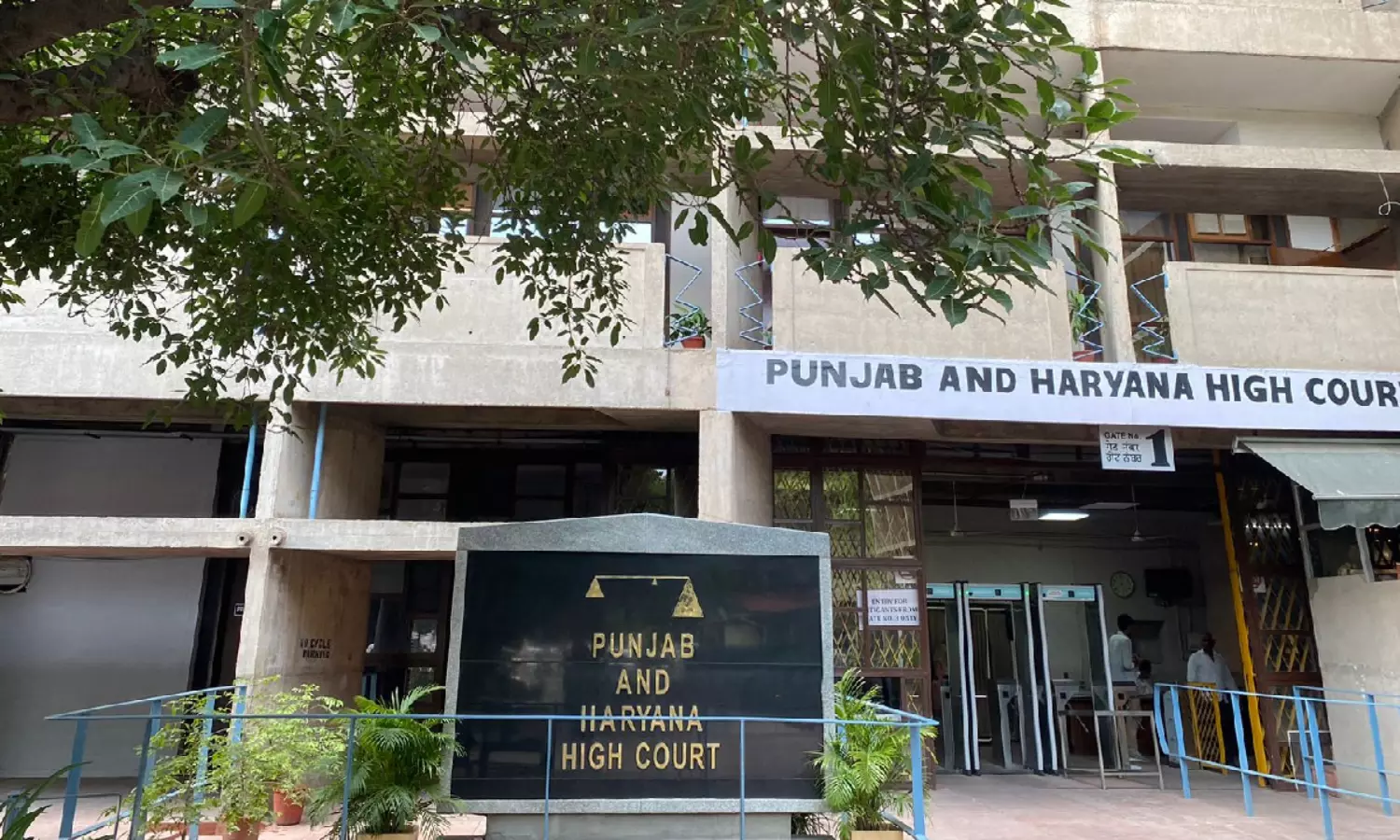

A ruling by the Punjab and Haryana High Court has clarified that government employees granted retrospective promotions cannot be denied the financial benefits attached to those promotions by invoking the “no work, no pay” principle.
High Court Rules on Retrospective Promotions and Pay Benefits
The Punjab and Haryana High Court has ruled that government employees granted retrospective promotions cannot be denied the financial benefits associated with those promotions merely on the ground that they did not physically serve in the higher post during that period.
In a judgment delivered by Justice Sandeep Moudgil, the court observed that the principle of “no work, no pay” cannot be rigidly applied when the delay in granting promotion occurred due to administrative error rather than any fault of the employee.
The ruling came while allowing a petition filed by a government employee who had challenged clauses in departmental orders that denied him arrears of salary despite granting him retrospective promotions.
The court noted that the employee had been found eligible for promotion earlier but was denied the advancement due to administrative lapses. When the government later corrected the mistake and granted retrospective promotion, it simultaneously refused to release salary arrears for the earlier period. According to the court, such an approach would unfairly penalize the employee for an error committed by the administration.
FCRF Launches Flagship Certified Fraud Investigator (CFI) Program
“No Work, No Pay” Not an Absolute Rule
In its judgment, the court emphasized that the “no work, no pay” doctrine is not an inflexible rule applicable in every circumstance. Referring to precedents established by the Supreme Court of India, the court cited several cases where the principle was held to be inapplicable when an employee was willing and eligible to perform duties but was prevented from doing so due to administrative decisions.
Among the cases cited were Union of India vs. K.V. Jankiraman (1991), State of Kerala vs. E.K. Bhaskaran Pillai (2007), Ramesh Kumar vs. Union of India (2015), and North Delhi Municipal Corporation vs. Ram Naresh Sharma (2021).
The court observed that these precedents establish that the principle generally does not apply where the employee was kept away from the higher position through no fault of their own. Justice Moudgil noted that denying financial benefits in such situations would effectively allow the state to benefit from its own administrative error.
Career Progression Dispute Behind the Petition
The case arose from a long-running dispute over promotions within a government department. The petitioner had joined the department on April 24, 1987, as a clerk in Narwana in Haryana. His services were regularized in April 1993. Over the years, he rose through the ranks and was eventually promoted to the position of clerk in 2011 and later to sub-inspector in 2014.
However, several junior employees were promoted earlier to higher posts, including the ranks of sub-inspector and inspector. Claiming discrimination, the petitioner submitted a representation in 2017 seeking promotion dates equivalent to those granted to his juniors.
Following an internal review of the case while the petition remained pending, the state government issued orders dated September 4, 2020 and November 12, 2020. These orders granted the petitioner retrospective promotions.
The revised promotion timeline recognized him as having been promoted as a clerk from September 9, 2008, as a sub-inspector from April 20, 2012, and as an inspector from June 17, 2016.
Court Directs Payment of Arrears
Although the government granted retrospective promotions, it inserted clauses in the orders denying salary arrears for the earlier periods on the ground that the petitioner had not actually worked in those positions.
The petitioner challenged these clauses, arguing that once the government had acknowledged that he was entitled to promotion from earlier dates, denying financial benefits amounted to discrimination and arbitrary treatment.
He also maintained that he had always been ready and capable of performing the duties of the higher posts but was prevented from doing so due to administrative errors. After reviewing the matter, the court agreed with the petitioner’s argument. Justice Moudgil held that the delay in promotion had not occurred because of any fault or misconduct by the employee but due to administrative oversight.
The court observed that if financial benefits were denied after acknowledging the rightful promotion, it would effectively permit the state to take advantage of its own mistake. Setting aside the restrictive clauses in the departmental orders, the court directed the authorities to grant the petitioner all financial benefits arising from the retrospective promotions.
The judgment also instructed the department to revise and release salary arrears based on the corrected promotion dates, recalculating the employee’s pay as clerk from September 9, 2008, sub-inspector from April 20, 2012, and inspector from June 17, 2016.
