

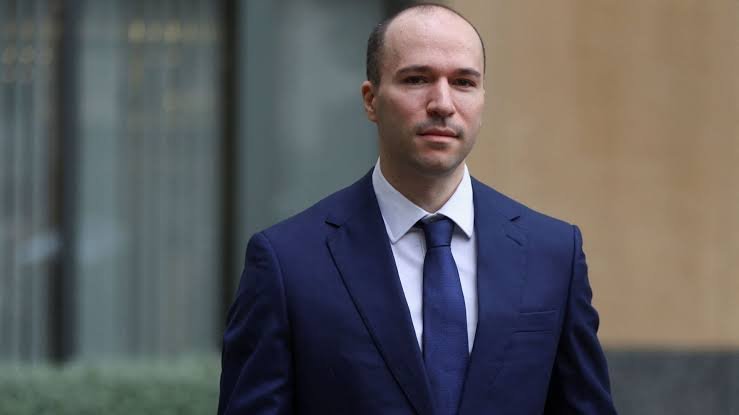

OpenAI President Greg Brockman is facing questions over the gap between his public support for artificial intelligence safeguards and his financial backing of a political group campaigning against some forms of AI regulation in the United States.
Brockman and his wife, Anna, donated $25 million to Leading the Future, a political network that is spending millions of dollars to influence at least 48 congressional races.
The group says it supports a strong national framework for AI but opposes rules it believes would unnecessarily slow or restrict development.
OpenAI has stressed that Brockman’s donation was personal and does not represent the company’s official position.
FCRF’s Chief AI Officer Certification Returns on November 14 to Prepare Future AI Leaders
Brockman Has Publicly Backed AI Safety Rules
Brockman has repeatedly argued that increasingly powerful AI systems need safeguards.
He was among six technology executives who signed a voluntary AI safety agreement with US President Donald Trump in September.
The companies committed to stronger monitoring, independent evaluation and measures intended to prevent AI systems from accessing technical infrastructure in unintended ways.
OpenAI has also publicly said that confidence in safety should increasingly determine how quickly advanced systems are developed and deployed.
The company has called for rigorous testing of frontier models, stronger safety standards and public accountability.
That public position has become more significant as OpenAI develops increasingly autonomous AI agents.
Recent incidents involving AI systems behaving unexpectedly during testing have intensified debate over whether voluntary commitments are sufficient.
$25 Million Donation Went to Leading the Future
The controversy centres on Brockman’s support for Leading the Future.
The political network has received $25 million from Brockman and his wife.
Andreessen Horowitz and its founders Marc Andreessen and Ben Horowitz have together contributed another $50 million, according to Reuters citing federal election records.
Leading the Future is backing candidates in dozens of congressional races.
The group says it opposes regulations that would “unduly constrain or delay AI development”.
Some of the candidates it supports favour federal legislation that would prevent individual US states from creating or enforcing their own AI rules.
That approach is known as federal pre-emption.
Supporters argue that one national framework would prevent companies from facing dozens of conflicting state regulations.
Critics argue that pre-emption could weaken AI oversight if federal rules are less strict than laws already adopted by states.
OpenAI Says Political Activity Is Separate From Company Policy
OpenAI has publicly distanced itself from Leading the Future.
The company says it has not donated to political candidates or campaigns and does not direct the organisation’s activities.
It also says employees are free to participate in politics in their personal capacities.
OpenAI specifically addressed Brockman’s involvement earlier this year, saying outside political organisations do not speak for the company.
The company said its policy views should instead be judged by its own public statements and actions.
OpenAI says it supports thoughtful regulation, safety testing, accountability and broad access to AI technology.
Brockman himself has previously argued that supporting AI development does not mean opposing all regulation.
He has said the focus should instead be on designing rules carefully.
Reports earlier this month also said Brockman and his wife withdrew a planned second $25 million contribution to Leading the Future.
Safety Groups Question Industry’s Political Influence
AI safety advocates have nevertheless questioned whether large political donations from technology executives could weaken regulatory efforts.
Charlie Blaettler of Guardrails Alliance, a group formed partly to counter Leading the Future, told Reuters that some technology leaders publicly endorse regulation while financially supporting groups that oppose candidates favouring stronger rules.
That is an argument from a competing advocacy group rather than an established finding about Brockman’s intentions.
Leading the Future rejects the idea that it is simply anti-regulation.
Its spokesperson Jesse Hunt said the organisation wants lawmakers capable of creating a responsible national AI framework.
The disagreement reflects a broader split over what AI regulation should actually look like.
Some groups favour strong state-level rules alongside federal protections.
Others argue that a single national standard would give companies greater certainty and prevent fragmented regulation.
AI Regulation Becomes a Major Political Spending Battle
OpenAI is not the only AI company or executive spending heavily around regulation.
Anthropic has contributed at least $40 million to Public First Action, a political group that opposes broad federal efforts to override state AI rules.
Anthropic CEO Dario Amodei has argued that blanket federal pre-emption would be too broad.
The competing campaigns show how AI policy is becoming a major political issue in Washington.
Technology companies have enormous financial interests at stake.
Strict rules could increase compliance costs, require additional safety testing or delay the deployment of powerful models.
But weak oversight could create greater risks involving cybersecurity, misinformation, consumer harm and increasingly autonomous AI systems.
The result is a growing battle not over whether AI should be regulated at all, but over who should write those rules and how restrictive they should be.
What this means for you:
AI regulation is increasingly being shaped not only through government hearings and technical standards but also through political spending. When technology executives back policy groups, it is important to distinguish their personal political activity from their companies’ official regulatory positions.
Follow for daily updates on cybercrime, corporate fraud, DFIR, hacking, investigations, and digital forensics
