
Follow us on Google News

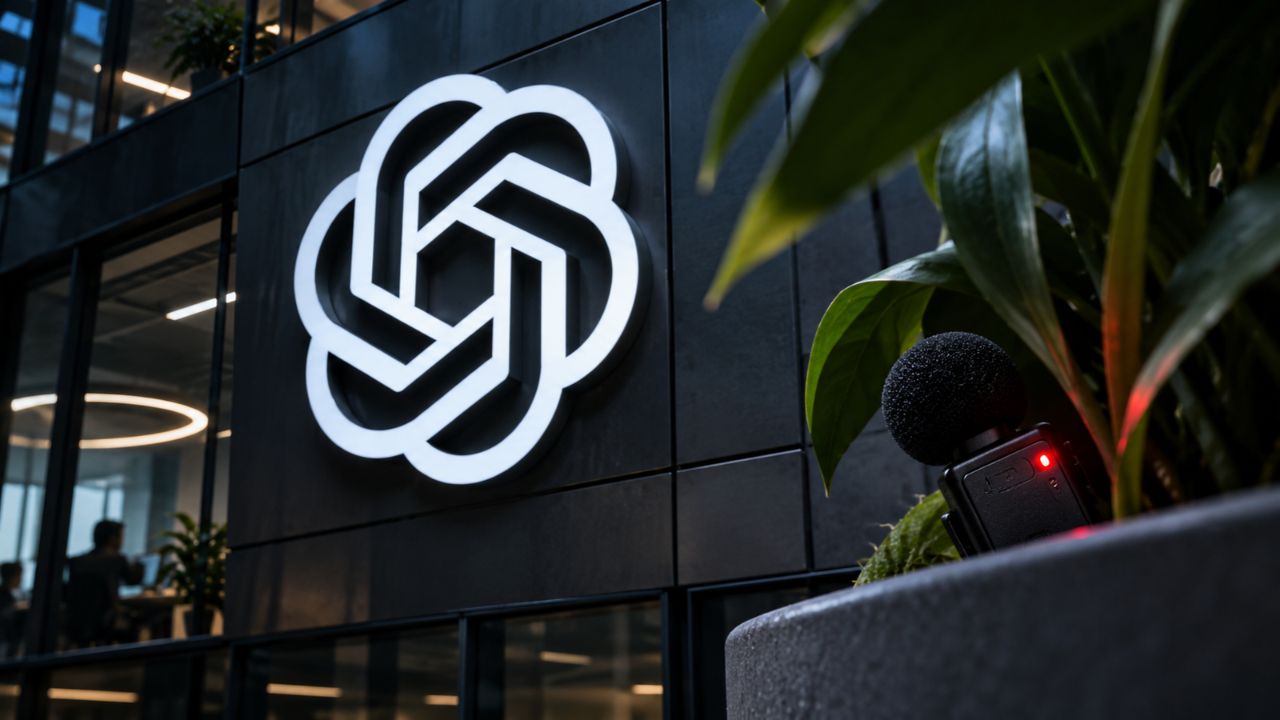
A US federal judge has granted a $1 million bond to former OpenAI engineer Abdulrahman Alfozan, who is accused of secretly recording conversations inside the artificial intelligence company’s San Francisco offices. The decision comes after prosecutors acknowledged that investigators had found no new evidence supporting suspicions of trade-secret theft or espionage on behalf of Saudi Arabia.
Alfozan, a 35-year-old Saudi national, was arrested on October 9, 2026, following allegations that he concealed a recording device at OpenAI’s offices to capture confidential conversations.
US Magistrate Judge Alex G. Tse approved his conditional release on November 24, allowing him to leave custody under strict monitoring and travel restrictions.
FCRF Launches Certified Chief Risk Officer (CRO) Program for India’s Risk Leaders
The former employee has pleaded not guilty to a federal charge involving the alleged unlawful interception of oral communications.
Although investigators reportedly recovered hundreds of audio files from his personal devices, prosecutors have not established that he stole company trade secrets or acted as an unregistered foreign agent.
Why Did the Court Grant $1 Million Bail to the Former OpenAI Employee?
The bail decision followed arguments concerning whether Alfozan should remain in custody while the criminal proceedings continue.
Prosecutors had previously raised concerns about possible economic espionage and his alleged connections with individuals in Saudi Arabia.
Court filings indicated that Alfozan had communicated through WhatsApp with a member of the Saudi royal family and had expressed interest in returning to Saudi Arabia following a possible OpenAI initial public offering.
However, prosecutors subsequently informed the court that investigators had not discovered new evidence supporting the theory that he was stealing trade secrets or acting as an unregistered foreign agent.
During the hearing, US Magistrate Judge Alex G. Tse questioned the basis for treating the matter as a suspected espionage case.
According to reports of the proceedings, the judge stated that the government had not established an espionage case against Alfozan.
The court consequently authorised his release on a $1 million bond, subject to several conditions intended to ensure his appearance in future proceedings.
Under the bail arrangement, Alfozan is required to wear a GPS ankle monitor and observe a nightly curfew from 7 pm to 7 am.
He must remain within the Northern District of California and is prohibited from visiting airports and railway or bus stations.
The restrictions are intended to limit his movements while the criminal case remains pending.
The ruling does not dismiss the charge against Alfozan or determine whether he committed the alleged offence.
What Did Investigators Find in the Secret Recordings?
The criminal investigation began after allegations emerged that Alfozan had concealed an electronic recording device inside OpenAI’s offices in San Francisco.
He was subsequently arrested on October 9 and charged with using or attempting to use a device to intercept oral communications.
According to prosecutors, investigators recovered hundreds of audio files from his personal electronic devices.
These reportedly included dozens of recordings of meetings and conversations held at OpenAI during September 2026.
Some recordings involved meetings with OpenAI customers, while others allegedly contained discussions protected by attorney-client privilege.
Investigators also recovered a photograph believed to show a term sheet relating to a proposed strategic partnership between OpenAI and another company.
The discovery of these materials raised questions about the nature of the information recorded and the purpose for which it had been collected.
However, prosecutors acknowledged that the investigation had not established what Alfozan intended to do with the audio files.
The government also said it had not found new evidence substantiating suspicions that he was collecting trade secrets for a foreign government.
OpenAI previously stated that it had found no indication that Alfozan had improperly accessed or removed model weights, source code or customer data.
The company distinguished the alleged recordings from any confirmed compromise of its core artificial intelligence technology or customer information.
Investigators are continuing to examine the recovered material and the circumstances surrounding the recordings.
What Charges Does Alfozan Face and What Happens Next?
Alfozan faces a federal charge involving the alleged interception of oral communications through an electronic, mechanical or other device.
He pleaded not guilty during an appearance before a San Francisco federal court earlier in November.
If convicted, he could face a maximum prison sentence of five years, a fine of up to $250,000 and three years of supervised release.
The charge concerns the alleged recording of conversations without lawful authorisation.
It does not amount to a criminal charge of espionage, trade-secret theft or acting as an unregistered foreign agent.
The distinction became significant during the bail proceedings because prosecutors acknowledged that the evidence gathered had not substantiated the broader suspicions previously raised during the investigation.
The court’s decision permits Alfozan to remain outside custody under strict conditions while the case proceeds.
His movements will be monitored through GPS tracking, and he must comply with the court’s curfew and geographical restrictions.
Investigators have yet to determine what Alfozan allegedly intended to do with the recordings recovered from his devices.
The case remains under judicial consideration, and the allegations against the former OpenAI employee have not been established through a criminal conviction.
The investigation into the recordings and their intended use is continuing.
About the author — Suvedita Nath is a science student with a growing interest in cybercrime and digital safety. She writes on online activity, cyber threats, and technology-driven risks. Her work focuses on clarity, accuracy, and public awareness.