
Follow us on Google News

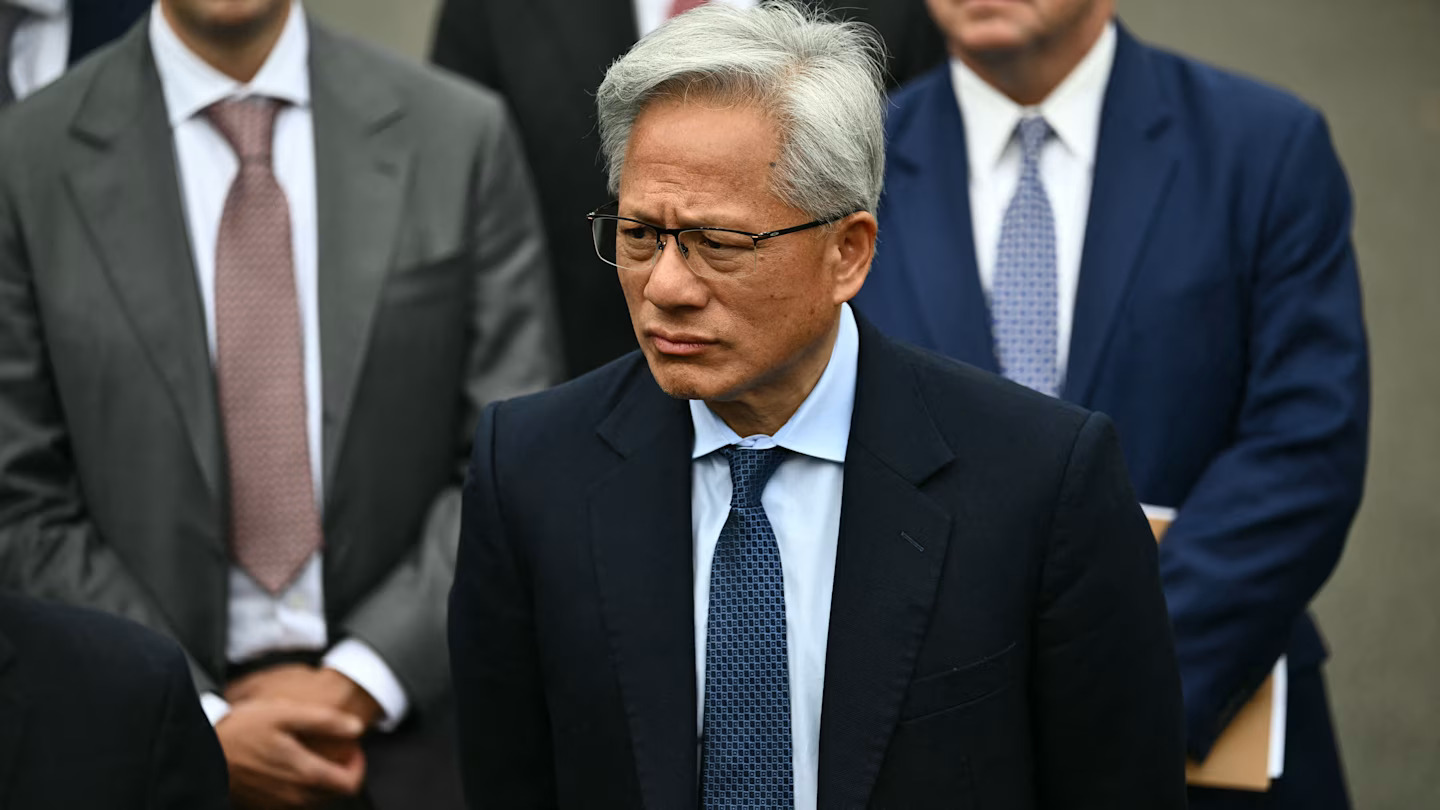
Nvidia CEO Jensen Huang’s defence of chip sales to China has drawn fresh attention amid an alleged Chinese espionage probe.
The remarks were made during a Bloomberg interview recorded weeks before Nvidia’s board announced an independent investigation into reports that Huang had been targeted by a foreign intelligence operation. The investigation follows allegations that Alice Huang, a former executive at Singapore-based Megaspeed International, was recruited by Chinese intelligence to develop a relationship with the Nvidia chief and gather information about him.
https://the420.in/fcrf-certified-chief-ai-officer-second-cohort-november-2026/
What Did Jensen Huang Say About China?
During an interview with Bloomberg’s Emily Chang for The Circuit, Huang defended Nvidia’s continued engagement with China and criticised US restrictions limiting the company’s access to the Chinese market. He said he had tried to convince American policymakers that maintaining commercial ties with China was important for the semiconductor industry.
Huang acknowledged that US restrictions had created difficulties for chipmakers and described the policy approach as a mistake that would be difficult to reverse. He also rejected the idea that China should be treated as an enemy because of competition in artificial intelligence. Huang argued that both countries should maintain dialogue, particularly on AI safety, and continue cooperating despite their technological rivalry.
Why Did Huang Defend China’s Economic Growth?
Huang defended China’s ambition to expand its economy, arguing that both the United States and China had legitimate interests in pursuing prosperity. He said economic progress in China had improved opportunities for hundreds of millions of people and benefited other countries, including the United States.
The Nvidia chief also emphasised China’s substantial contribution to artificial intelligence research. He maintained that competition between American and Chinese technology companies should not prevent cooperation on issues affecting global AI development and safety.
His comments have attracted renewed scrutiny because they preceded reports concerning an alleged Chinese intelligence operation involving a business executive connected to Nvidia’s commercial ecosystem.
What Triggered Nvidia’s Espionage Investigation?
According to a report by The New York Times, US intelligence officials suspected that Alice Huang, formerly associated with Megaspeed International, had been recruited by China’s Ministry of State Security. The reported objective was to collect information about Jensen Huang and potentially influence access to advanced American AI chips.
Megaspeed, which purchases Nvidia processors, has separately faced scrutiny over suspicions that restricted chips were being diverted to China in violation of US export controls. Nvidia has previously maintained that it checked whether Megaspeed had illegally transferred its AI processors to China and found no evidence of such activity.
The allegations concerning Alice Huang were attributed to unnamed sources familiar with US intelligence reporting. They have not resulted in any reported finding that Jensen Huang disclosed confidential information.
How Has Nvidia Responded to the Allegations?
Nvidia’s board announced an independent investigation on November 8 to examine reports that its chief executive had been targeted by a foreign intelligence operation. A committee of independent directors, supported by external legal counsel, will oversee the inquiry and examine available information. The company stated that its board currently had no reason to believe Nvidia’s confidential information or US national security had been compromised.
In a message to employees, Huang acknowledged being unfaithful to his wife and apologised to his family and colleagues. He also expressed support for the board’s investigation and pledged full cooperation. The inquiry will examine whether the alleged intelligence operation affected Nvidia’s technology, confidential information or business dealings.
No finding has been reported that Huang supplied confidential information to China or that Nvidia’s national security interests were compromised.