

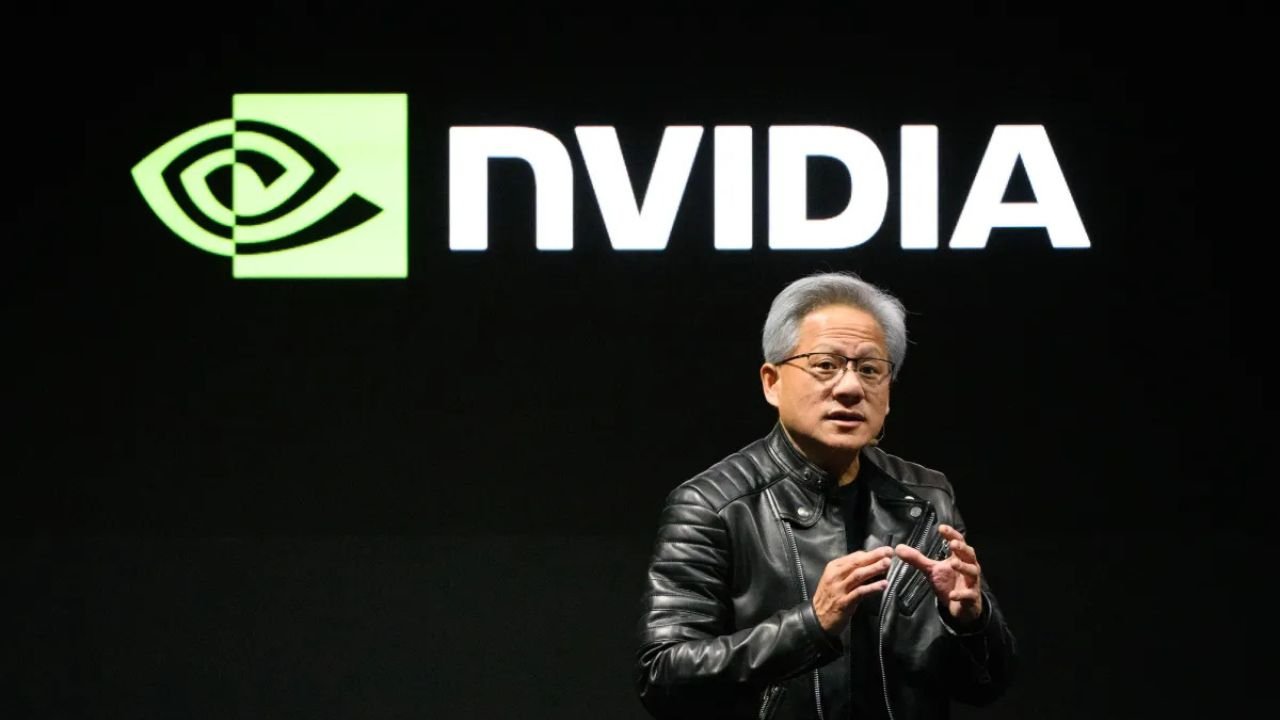

New Delhi | Amid growing global anxiety over job losses driven by artificial intelligence (AI), tech industry heavyweight Nvidia CEO Jensen Huang has offered a nuanced and reassuring assessment of the future of work. Speaking at the World Economic Forum in Davos, Switzerland, Huang said it would be simplistic to view AI purely as a “job killer”. While AI will undoubtedly transform many traditional IT and coding roles, it is also set to create significant opportunities for manual and skilled trade workers.
Huang emphasised that panic around AI is misplaced. Instead, workers and policymakers should focus on understanding how the nature of work is changing. According to him, jobs that are heavily dependent on code, data processing and repetitive software-based tasks are likely to face automation pressure first.
Certified Cyber Crime Investigator Course Launched by Centre for Police Technology
Coding and IT Roles Set to Evolve
During the WEF session, the Nvidia chief noted that AI systems are increasingly capable of writing code, testing software and handling debugging tasks with speed and accuracy. As a result, a single professional equipped with AI tools may soon be able to perform work that previously required an entire team of engineers.
This shift, Huang said, will inevitably put pressure on conventional coding and certain IT roles. However, he was quick to clarify that this does not mean the end of jobs in the technology sector. Instead, roles will evolve, with growing demand for professionals who can effectively work alongside AI systems and apply multiple skill sets.
A New Opportunity Cycle for Trade Workers
According to Huang, the AI boom will trigger massive global investment in data centres, semiconductor fabrication units and digital infrastructure. These projects, he said, will rely far more on plumbers, electricians, steel workers, construction labourers and other skilled trades than on software engineers alone.
“AI could drive the largest infrastructure build-out in human history,” Huang said. “When you construct large-scale data centres, you need power, cooling, piping and construction far more than lines of code.” For this reason, he described the current phase as a potential “golden period” for trade workers.
Reiterated Message in Davos Conversations
Huang repeated this assessment during conversations with global financial leaders at Davos, including the head of the world’s largest asset management firm. He said the expansion of AI would generate sustained demand in sectors such as energy, cooling systems, steel and construction.
Skills that are difficult to automate or replace with machines, he argued, will command higher value in the coming years, reshaping the balance between digital and physical labour.
Lessons from Radiology
To illustrate how AI reshapes rather than destroys jobs, Huang cited the example of radiology. While AI has automated several tasks traditionally performed by radiologists, employment in the sector has not declined. Instead, the technology has improved speed and accuracy, expanding healthcare services and increasing overall demand.
This, Huang said, demonstrates how AI can augment human capability rather than eliminate it, leading to job transformation instead of job destruction.
AI: A Job Transformer, Not a Destroyer
The Nvidia CEO has consistently maintained that AI should be viewed as a job transformer rather than a mass job eliminator. Echoing this view, AI pioneer Geoffrey Hinton has previously stated that people engaged in manual and skilled work are likely to be the most secure in an AI-driven future.
Experts believe Huang’s remarks are particularly relevant at a time when young professionals are uncertain about long-term career paths. The takeaway is clear: the future will not belong exclusively to coders or machines, but to a balanced workforce where technology, skill and human hands work together.
About the author — Suvedita Nath is a science student with a growing interest in cybercrime and digital safety. She writes on online activity, cyber threats, and technology-driven risks. Her work focuses on clarity, accuracy, and public awareness.
