

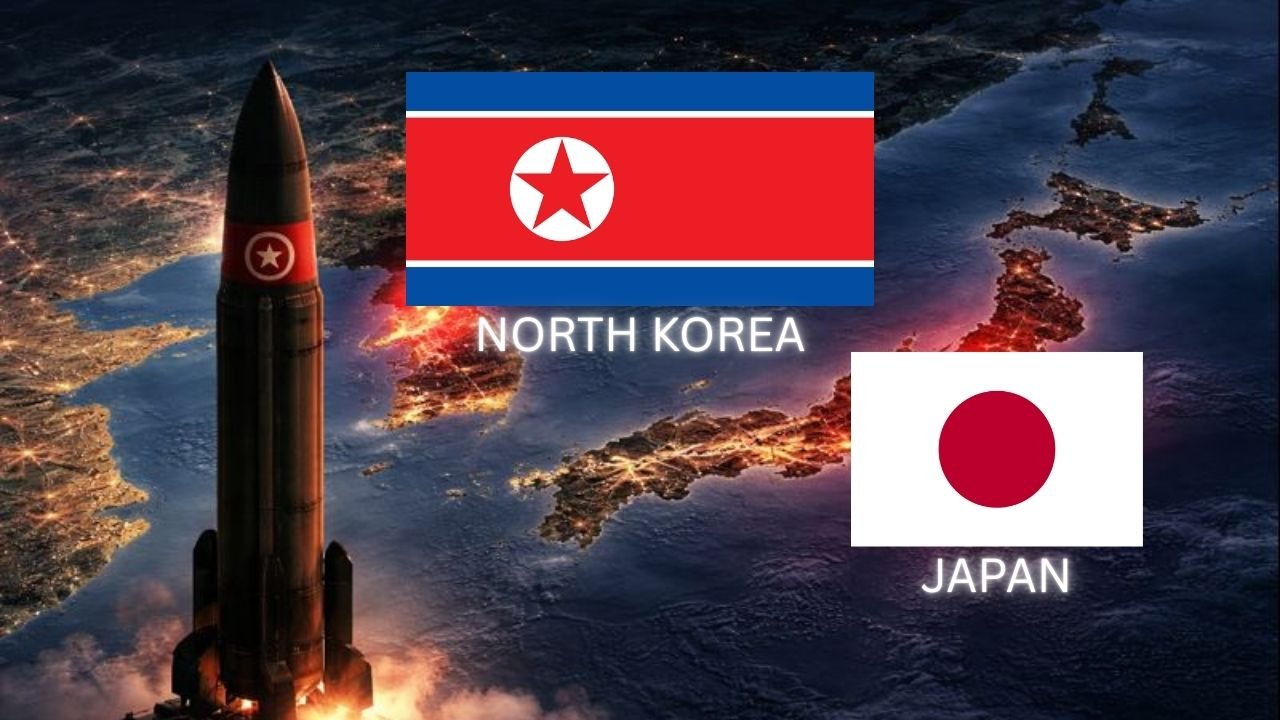

Seoul | North Korea on Sunday issued a sharp warning against Japan, declaring that any attempt by Tokyo to acquire nuclear weapons “must be prevented at any cost.” The reaction followed media reports quoting a Japanese government official as suggesting that Japan should possess atomic weapons to safeguard its security.
Pyongyang said the remarks showed Japan was “openly revealing its ambition to possess nuclear weapons, going beyond the red line,” and warned that such a move would have catastrophic consequences for the region and beyond.
What Triggered the Warning
The response came after Kyodo News reported that an unnamed official in the Japanese prime minister’s office had said, “I think we should possess nuclear weapons,” while discussing Japan’s security posture. According to the report, the official had been involved in shaping Japan’s national security policy and argued that “in the end, we can only rely on ourselves.”
North Korea seized on the remarks as evidence of what it called Japan’s long-standing nuclear ambitions, accusing Tokyo of attempting to overturn post-war restraints and destabilise regional security.
Pyongyang’s Official Statement
In a statement carried by the state-run Korean Central News Agency, the director of the Institute for Japan Studies under North Korea’s foreign ministry said Japan’s nuclearisation would “bring mankind a great disaster.”
“This is not a misstatement or a reckless assertion,” the official said, adding that the remarks “clearly reflect Japan’s long-cherished ambition for nuclear weaponisation.” The statement warned that if Japan were to acquire nuclear weapons, “Asian countries will suffer a horrible nuclear disaster, and mankind will face a great catastrophe.”
The North Korean official was not named, consistent with Pyongyang’s practice in issuing foreign policy statements through institutions rather than individual spokespersons.
Silence on Its Own Nuclear Programme
Notably, the statement did not address North Korea’s own nuclear weapons programme, which began with its first atomic test in 2006 in defiance of United Nations resolutions. Pyongyang is believed by international experts to possess dozens of nuclear warheads and has conducted multiple missile and nuclear tests over the past two decades.
Despite sweeping international sanctions, North Korea has repeatedly vowed to retain its nuclear arsenal, arguing that it is essential to deter what it describes as hostile military pressure from the United States and its allies in the region, including Japan and South Korea.
Firm Stance at the United Nations
In an address to the United Nations in September, North Korea’s vice foreign minister Kim Son Gyong said the country would never surrender its nuclear weapons, describing them as a matter of state law and national sovereignty.
“We will never give up nuclear weapons, which are our state law, national policy and sovereign power, as well as the right to existence,” he said. “Under any circumstances, we will never walk away from this position.”
North Korean leader Kim Jong Un has also indicated that he is open to talks with Washington, but only if Pyongyang is allowed to retain its nuclear arsenal, a condition the United States has consistently rejected.
Rising Regional Tensions
The episode underscores growing tensions in East Asia, where North Korea’s expanding nuclear capabilities, China’s military assertiveness, and debates in Japan over defence policy are increasingly intertwined. Japan, the only country to have suffered atomic bombings, remains officially committed to its non-nuclear principles, though debates over deterrence have intensified amid North Korean missile tests and shifting regional power dynamics.
Pyongyang’s warning adds another layer of volatility to an already fragile security environment, signalling that any perceived shift in Japan’s nuclear posture would provoke a strong and potentially destabilising response from North Korea.
