

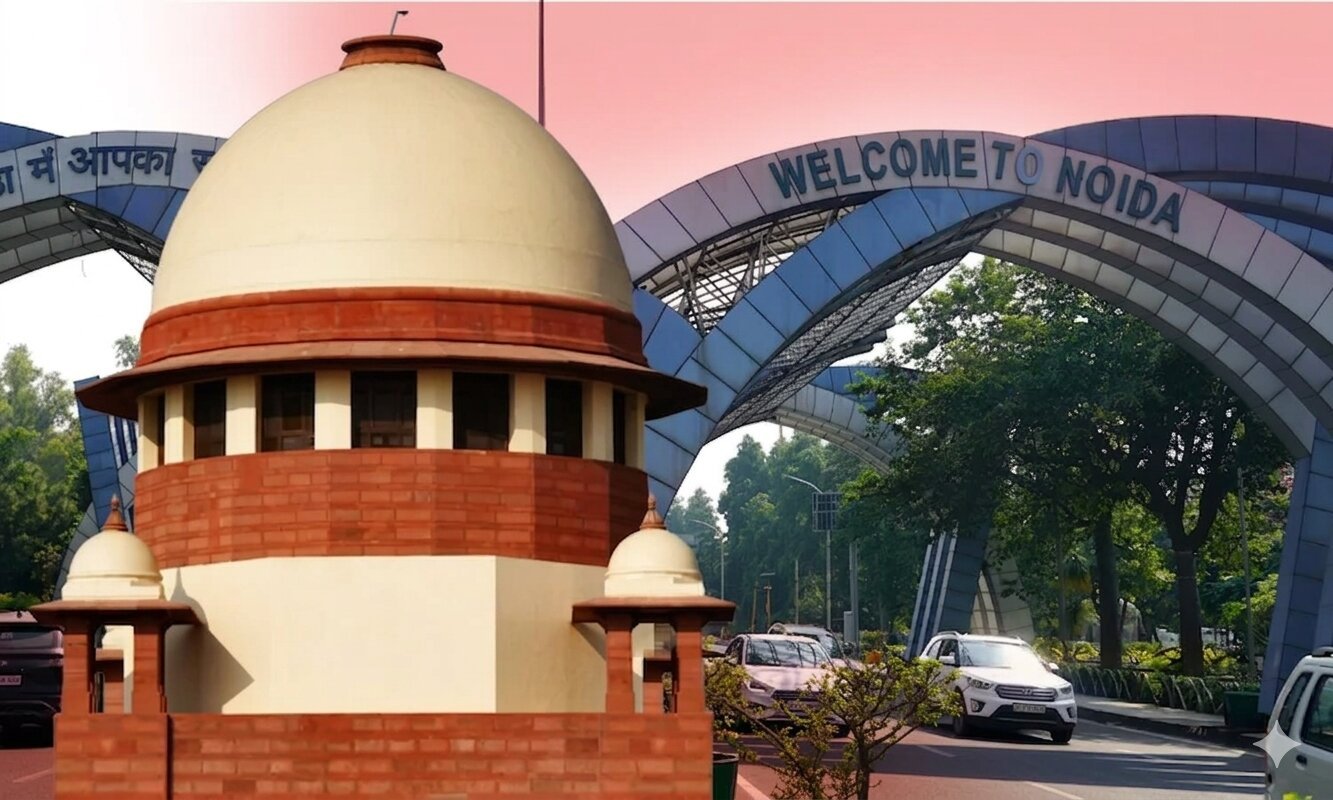
The compensation scam in Noida has once again come under intense scrutiny, with fresh revelations indicating that the scale of irregularities runs into hundreds of crores of rupees. The seriousness of the matter can be gauged from the fact that the Supreme Court of India is continuously monitoring the investigation and has taken a firm stance on ensuring accountability.
The probe, being carried out by a Special Investigation Team (SIT) under the court’s directions, has uncovered alarming details in its preliminary findings. According to submissions made before the court, officials allegedly collected a 10 percent commission in exchange for facilitating inflated compensation payouts to landowners under the guise of land acquisition benefits.
FCRF Launches Premier CISO Certification Amid Rising Demand for Cybersecurity Leadership
SIT Reveals Commission Nexus in Preliminary Findings
During the hearing, the SIT informed the bench that the scam involved manipulation of compensation amounts far beyond the officially determined rates. In several cases, beneficiaries were allegedly promised higher payouts in return for a fixed percentage of the excess amount, which was reportedly paid in cash.
The preliminary report—technically termed an initial findings report—was presented before a bench headed by the Chief Justice. The bench also includes other senior judges, and it examined the details of the alleged financial irregularities and procedural lapses in depth.
Legal representatives informed the court that multiple farmers, in their statements, confirmed that they were asked to pay 10 percent of the enhanced compensation amount to officials. However, the SIT also acknowledged the method involved in tracing financial transactions in a case that spans over a decade, making the investigation both complex and time-consuming.
Court Expresses Concern Over Slow Pace, Sets Deadline
Expressing dissatisfaction over the pace of the probe, the court refused to grant additional time sought for completing the investigation. Instead, it directed the SIT to wrap up the inquiry within six weeks and submit a comprehensive report.
The next hearing in the matter has been scheduled for July 13. The court had earlier, in December 2025, directed the SIT to examine the role of all key officials who held decision-making positions over the past 10 to 15 years, along with other individuals potentially linked to the scam.
Importantly, the court clarified that farmers who received excess compensation would not face punitive action during the investigation. It emphasized that they should not be harassed, as the focus of the probe remains on identifying those responsible for orchestrating and facilitating the незаконные transactions.
How the Compensation Manipulation Unfolded
The roots of the scam trace back to land acquisition processes initiated decades ago. In the early 1980s, farmers were compensated at relatively low rates for their land. Over the years, disputes over compensation led to litigation, with courts revising payout amounts periodically.
In one illustrative case, a landowner initially received compensation at a modest rate, which was later enhanced following a district court order. Years later, despite a legal challenge being dismissed by a higher court, officials allegedly processed a significantly inflated compensation amount by misrepresenting the case status as pending.
This manipulation reportedly resulted in a payout of ₹7.28 crore in a single instance. Investigators believe that similar methods were used in multiple cases, leading to a massive financial drain and exposing systemic loopholes.
Wider Implications and Ongoing Probe
The unfolding of the scam has raised serious concerns about governance, oversight, and transparency in urban development authorities. Experts suggest that the matter may not be limited to isolated instances but could reflect a broader pattern of institutional weaknesses.
The SIT has already recorded statements from a majority of the 160 beneficiaries who received additional compensation, and further verification is underway. Authorities are also in the process of seeking necessary approvals to initiate prosecution against those found culpable.
As the investigation progresses, more revelations are expected, potentially leading to further action against individuals involved. The case highlights the urgent need for stronger audit mechanisms, transparent procedures, and strict enforcement to prevent misuse of public funds.
The outcome of this high-stakes probe is likely to set an important precedent for handling similar cases in rapidly developing urban regions, where land acquisition and compensation processes remain highly sensitive and vulnerable to manipulation.
About the author – Rehan Khan is a law student and legal journalist with a keen interest in cybercrime, digital fraud, and emerging technology laws. He writes on the intersection of law, cybersecurity, and online safety, focusing on developments that impact individuals and institutions in India.
