
Follow us on Google News

India has generated nearly 40 lakh Digital Life Certificates in the first five days of November 2026, marking a 60% increase over the corresponding period last year, as more pensioners turn to smartphone-based face authentication instead of visiting banks or government offices.
Union Minister Jitendra Singh announced the figures on November 6 while formally launching the fifth Nationwide Digital Life Certificate Campaign in New Delhi.
The government said approximately 80% of the certificates issued during the first five days were generated using face authentication, compared with 61% in the corresponding period last year.
The campaign, which began on November 1 and will continue until November 30, aims to simplify the annual verification process for pensioners, particularly elderly citizens who face difficulties travelling to banks or pension offices.
Nearly 3,000 locations across the country are being covered through special camps, with doorstep services planned for pensioners unable to visit them.
FCRF’s Chief AI Officer Certification Returns on November 14 to Prepare Future AI Leaders
Face Authentication Reduces Need For Bank Visits
A Digital Life Certificate, also known as Jeevan Pramaan, is an electronic document used to verify that a pensioner is alive and eligible to continue receiving pension payments.
Traditionally, pensioners had to visit a bank, pension office or another authorised institution to submit a life certificate.
The digital system allows eligible pensioners to complete verification electronically using Aadhaar-based authentication.
Earlier versions primarily relied on biometric devices capable of scanning fingerprints or irises.
However, fingerprint recognition can sometimes be difficult for elderly people because of age-related changes in their skin.
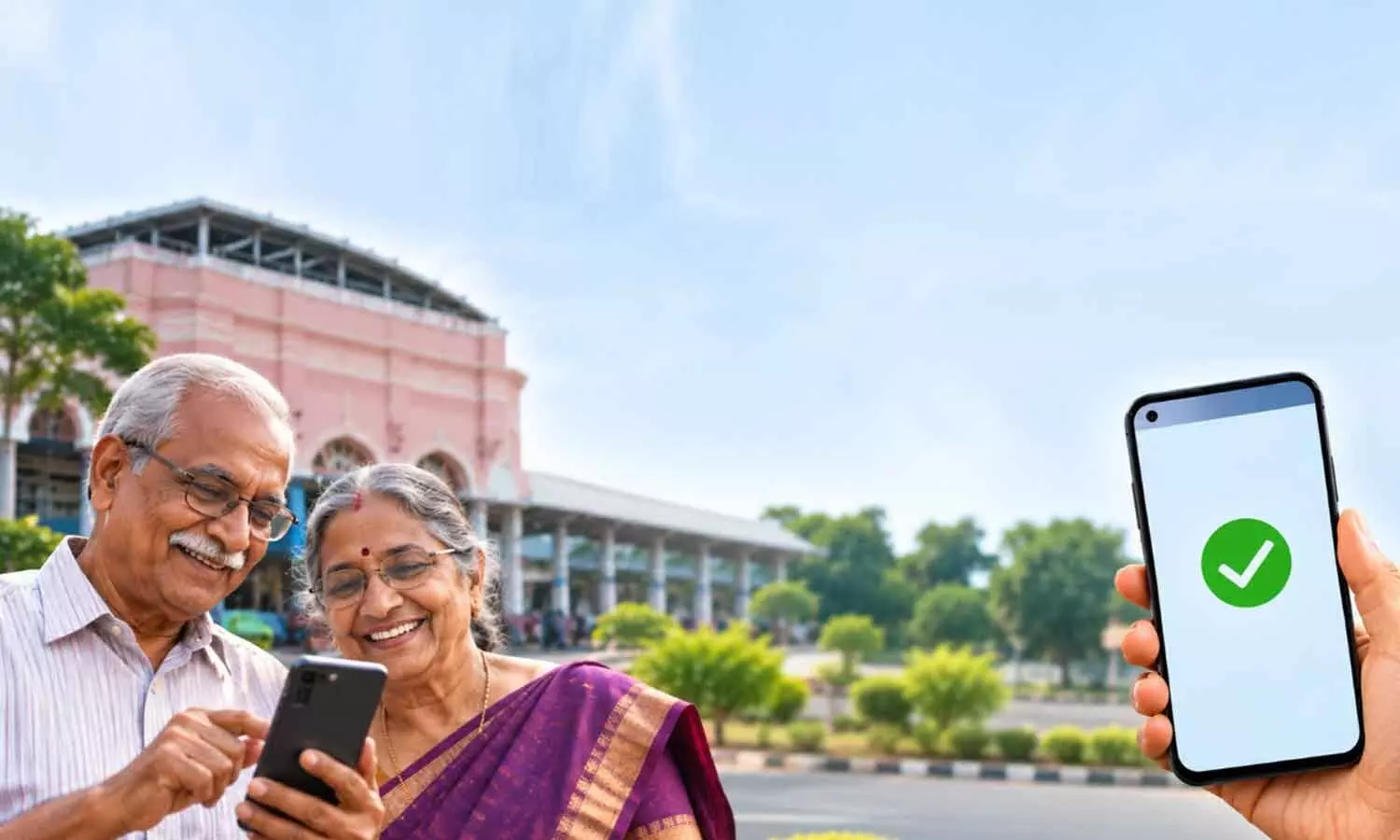
Face authentication offers another option by allowing pensioners to use the camera on a compatible smartphone.
Instead of travelling to an office or purchasing an external fingerprint scanner, users can complete the process through authorised applications.
The official Jeevan Pramaan service supports face authentication through its mobile application and AadhaarFaceRD.
A successful authentication generates a digital certificate that can be accessed by the relevant pension-disbursing agency.
The process does not require pensioners to send photographs or identity documents to unknown individuals through messaging applications.
Certificate Generation Jumps 60% In Early November
The figures released by the government indicate a substantial increase in the use of digital pension verification.
Approximately 25 lakh Digital Life Certificates were generated during the first five days of the corresponding campaign period in 2025.
That number rose to nearly 40 lakh during the same period in 2026.
The share generated through face authentication also increased to approximately 80%.
According to the minister, 1.92 crore Digital Life Certificates were generated during the previous year, including approximately 1.17 crore through face authentication.
Those annual figures represent a separate reporting period and should not be confused with the current campaign’s five-day results.
The government has attributed the increased adoption to greater awareness and the convenience of generating certificates without physical visits.
Families and pensioners’ associations have also played a role in helping elderly users navigate the technology.
The minister said younger family members frequently assist older pensioners with the verification process, improving access for those who may not be familiar with smartphone applications.
However, the announcement does not provide a detailed state-wise breakdown of the latest certificates or independent measurements of authentication failures.
Doorstep Services Planned Across Nearly 3,000 Locations
The fifth nationwide campaign is being coordinated by the Department of Pension and Pensioners’ Welfare.
It involves pension-disbursing banks, India Post Payments Bank, UIDAI, the Ministry of Electronics and Information Technology, the Ministries of Defence and Railways, state governments and pensioners’ associations.
Special camps are being organised across more than 2,000 cities and towns, with activities covering nearly 3,000 locations.
Officials are placing particular emphasis on pensioners aged 80 and above, women pensioners and individuals facing health or mobility difficulties.
Doorstep arrangements are also being made for those unable to reach designated camps.
Such assistance can be important for people living alone or in areas where accessing banks and government offices requires substantial travel.
The government said India now has nearly 70 lakh central government pensioners, compared with approximately 50 lakh serving central government employees.
That growing pensioner population makes the accessibility and reliability of verification services increasingly significant.
The initiative also builds on other pension administration reforms, including pension adalats and the CPENGRAMS grievance mechanism.
These systems are intended to help resolve long-pending pension-related complaints and administrative difficulties.
Pensioners Must Remain Alert To Fake Verification Links
The expansion of smartphone-based pension verification also highlights the need for clear information about authentic digital services.
Cybercriminals have previously impersonated government and banking applications to distribute malicious Android software.
Fraudulent messages may claim that pension payments will stop unless the recipient immediately updates personal information or installs an application.
Such messages can be particularly concerning for elderly users who depend on regular pension payments.
Pensioners should therefore access the service through the official Jeevan Pramaan website or verified application listings rather than unfamiliar links.
The government’s website provides the required application downloads, supported device information and instructions for authentication.
Users should also avoid sharing banking passwords, one-time verification codes or other sensitive credentials with people claiming to help renew life certificates.
The government has not announced that physical life certificate submission has been abolished.
Pensioners who cannot use smartphone-based face authentication may continue using other authorised verification methods, subject to the requirements of their pension-disbursing institution.
The campaign will continue through November, with officials expecting broader participation as outreach camps and doorstep arrangements expand.
What This Means For You:
Eligible pensioners can use the official Jeevan Pramaan service to generate life certificates through smartphone face authentication. Verify applications through jeevanpramaan.gov.in, and never install an APK received through an unsolicited WhatsApp message or share banking OTPs for pension verification.