


Over a ten-week span between June and August, a WhatsApp group calling itself ‘F6 | Equity’ methodically convinced a 50-year-old Mihan resident that she had found a genuine path to stock market profits. By the time she realised the group and its accompanying trading app existed only to extract her money, the homemaker had transferred approximately ₹17 lakh through multiple RTGS transactions, funds that vanished along with any trace of the fraudsters who orchestrated the scheme.
Nagpur cyber police have registered a case against three named individuals under provisions of the Bharatiya Nyaya Sanhita covering cheating and criminal breach of trust, though no arrests have been made as investigators work through the digital and financial trail.
An Entry Point Through a Husband’s Number
According to police, the accused used multiple mobile numbers to add the woman’s husband’s phone number to the ‘F6 | Equity’ WhatsApp group, a detail that suggests deliberate targeting rather than random recruitment, since fraudsters typically acquire phone numbers through data leaks or purchased contact lists before initiating contact. Between 12 June and 21 August, the group circulated messages centred on stock market investment opportunities and claims of attractive, consistent returns.
This entry method, reaching a woman through her husband’s registered number before she herself became the primary target of the scheme, reflects a recruitment pattern investigators have documented repeatedly across Maharashtra this year, where WhatsApp groups built around trading themes have targeted homemakers and working women alike with near-identical scripts, regardless of which family member’s number initially received the invitation.
Algoritha Security Launches ‘Make in India’ Cyber Lab for Educational Institutions
The App That Made the Deception Feel Real
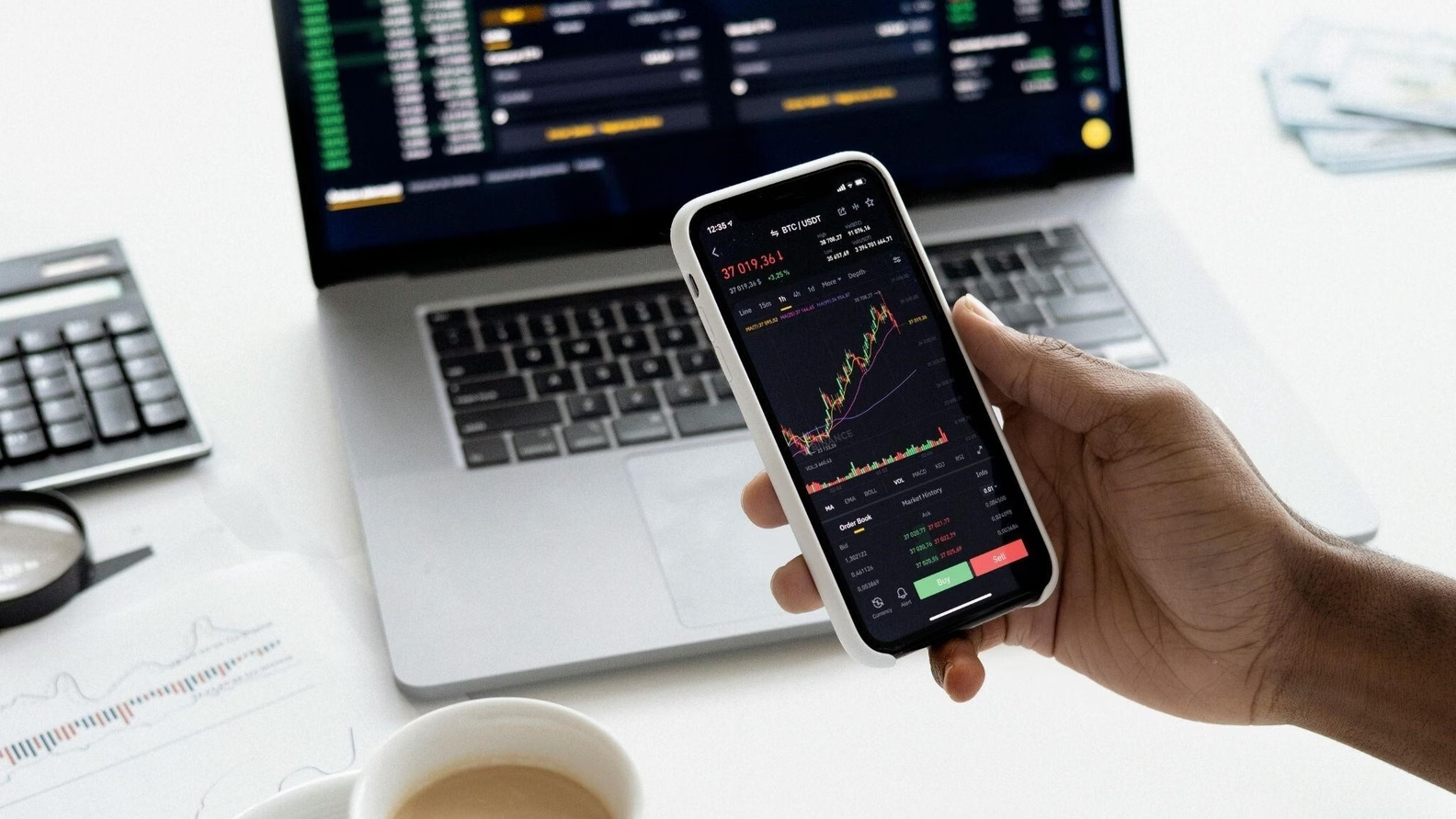
Once sufficiently engaged with the group’s messaging, the woman was directed to download a mobile application called JBX One, presented as capable of generating substantial returns within a short investment period. This pairing of a WhatsApp group with a dedicated trading application mirrors a structure now well documented across Maharashtra, where a Mumbai project manager lost ₹1.23 crore earlier this year through an almost identical progression, first joining a WhatsApp group, then being guided toward a branded trading app that displayed an immediate ten per cent profit on his very first, modest deposit, a fabricated gain specifically designed to justify larger subsequent transfers.
Convinced by the application’s apparent legitimacy and the sustained engagement from the WhatsApp group, the Nagpur homemaker proceeded to transfer roughly ₹17 lakh across several RTGS transactions, believing each payment represented a genuine investment building toward the promised returns.
When Neither Profits Nor Principal Arrived
The fraud became apparent only when the woman found herself unable to access either the profits she had been shown or her original invested capital, a withdrawal barrier that has become the near-universal trigger point across India’s fake trading app fraud cases this year. Her subsequent suspicion led her to approach Nagpur’s cyber police, who have since begun tracing the mobile numbers used to operate the WhatsApp group, the ownership and control of the JBX One application itself, and the complete banking trail behind the ₹17 lakh transfer.
Investigators are working to establish which bank accounts ultimately received the funds and how the money moved onward from there, a process complicated by the likelihood that proceeds were rapidly dispersed across multiple accounts specifically to frustrate straightforward recovery.
Part of a Pattern Nagpur Has Seen Repeatedly
This case adds to a growing list of similar frauds registered in Nagpur through 2026, including a professor who lost ₹37.48 lakh to a related task-based scheme that escalated into cryptocurrency investment, and a separate WhatsApp e-commerce investment scam that cost another local woman ₹4.45 lakh. The recurrence of homemakers and working professionals alike falling to structurally identical schemes, a WhatsApp group followed by a branded app followed by a blocked withdrawal, suggests organised networks capable of running the same script across multiple victims simultaneously rather than isolated, opportunistic fraud.
Police continue examining whether the WhatsApp group, the JBX One application, or the receiving bank accounts identified in this case were used to target other victims, an inquiry that could reveal whether the three named accused, still at large, operate as part of a larger investment fraud network extending beyond this single complaint.
Follow for daily updates on cybercrime, corporate fraud, DFIR, hacking, investigations, and digital forensics
