

One of India’s largest organised cyber fraud rackets has been busted in Madhya Pradesh, exposing how a highly coordinated digital crime network siphoned off hundreds of crores from unsuspecting citizens through complex banking channels spread across at least 17 states.
According to the MP State Cyber Cell, fraudsters looted nearly ₹638 crore from around 64,000 people in 2025 alone. Investigators traced the stolen money through an elaborate maze of nearly 2.93 lakh bank accounts, triggering one of the country’s biggest coordinated account-freezing operations.
Cities such as Bhopal, Indore and Gwalior emerged as major victim clusters, while the funds were swiftly routed to accounts in Bihar, Uttar Pradesh, Jharkhand, Maharashtra, Rajasthan, Chhattisgarh and West Bengal. Cyber officials have also flagged possible overseas linkages, suggesting parts of the syndicate may be operated from outside India.
Certified Cyber Crime Investigator Course Launched by Centre for Police Technology
Layered laundering to erase money trails
Investigators said the gang relied on classic money-laundering methods to hide its tracks. Funds were first deposited into more than 56,000 primary accounts before being pushed through multiple layers—sometimes passing through up to ten successive accounts—making it extremely difficult to identify the original source or reach the masterminds.
On average, nearly 5,500 scam calls were placed daily across Madhya Pradesh, with about 175 people falling prey every day. Authorities estimate daily losses at approximately ₹1.75 crore, fragmented across over 800 accounts.
“The money was deliberately broken into smaller amounts and circulated through multiple accounts. By the time victims realised what had happened, the funds had already travelled through several layers,” a senior cyber official said.
‘Digital arrest’ scams and malicious links
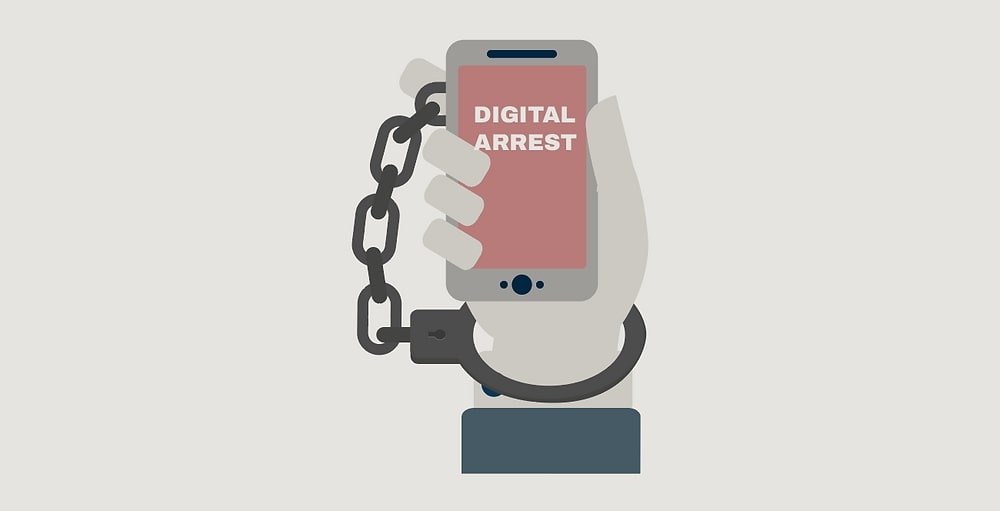
Police said the syndicate used high-pressure social engineering combined with technical tricks to trap victims. These included fake “digital arrest” calls, where fraudsters posed as law enforcement officers to intimidate targets, SIM swap fraud to hijack mobile numbers, and malicious APK files sent via links or messages.
Victims were either threatened with fabricated legal cases or lured with promises of quick profits. Once fear or trust was established, scammers extracted banking details or persuaded targets to transfer money directly.
Cyber teams also found widespread use of QR codes and suspicious payment links to gain unauthorised access to accounts.
Unemployed youths recruited as ‘mule’ account holders
Investigators revealed that unemployed youths and people from rural areas were exploited as account mules. Agents recruited them with small cash incentives—sometimes as little as ₹5,000—to open or rent bank accounts later used for illegal transactions.
“When cases surface, these account holders are usually the first to be questioned, while the real operators remain several layers removed,” an official said, adding that organised recruiters often manage dozens of such accounts simultaneously.
“Most of these people are unaware of the legal consequences. Their accounts become part of a much larger laundering network,” he added.
Cyber expert Prof Triveni Singh warns of rising threat
Renowned cyber crime expert and former IPS officer Prof Triveni Singh described the case as among the most organised digital fraud operations seen in India.
“Cyber criminals today are weaponising human fear and greed as much as technology. ‘Digital arrest’ tactics are particularly dangerous. Unless citizens stay alert and immediately report incidents on 1930, it will be difficult to dismantle such syndicates,” Singh said.
Nearly three lakh accounts frozen across 17 states
MP State Cyber Cell SP Pranay Nagvanshi said investigations are being conducted through a structured five-stage process involving complaint verification, coordination with banks, freezing of suspicious accounts, technical analysis of fund flows, and de-freezing after due verification.
So far, close to three lakh accounts linked to the racket have been frozen across 17 states to prevent further diversion of funds.
Officials have urged victims to promptly contact the national cyber helpline 1930 or file online complaints to improve chances of recovery.
Cyber authorities warned that nearly four percent of people contacted by scammers end up losing money, underscoring the urgent need for public awareness. Experts advise citizens to disconnect fear-inducing or profit-promising calls, avoid clicking unknown links or downloading unsolicited apps, and keep banking alerts active.
The latest crackdown highlights both the scale of organised digital fraud in India and the mounting challenge for agencies trying to track crimes that move seamlessly across state—and sometimes international—borders.
About the author – Rehan Khan is a law student and legal journalist with a keen interest in cybercrime, digital fraud, and emerging technology laws. He writes on the intersection of law, cybersecurity, and online safety, focusing on developments that impact individuals and institutions in India.
