
Follow us on Google News

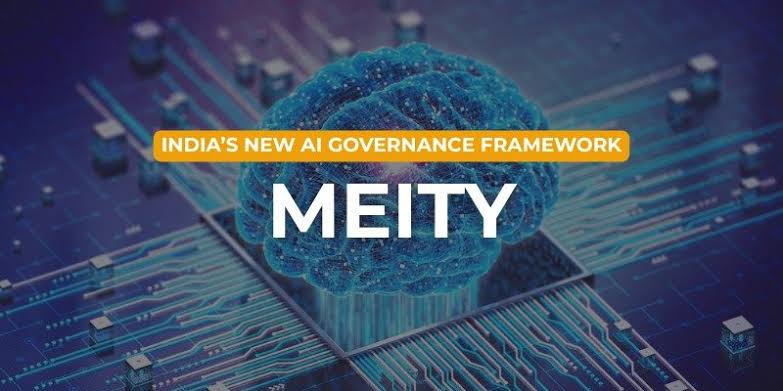
India’s IT ministry has proposed an AI training framework requiring model verification before deployment to ensure safety standards.
The draft Data Empowerment and Protection Architecture (DEPA) for AI Training, released for consultation on October 29, proposes a system covering data access, model training and validation. While the framework emphasises privacy, security and accountability, legal experts have raised concerns that its verification requirements could eventually resemble a licensing system.
What Does the Draft Framework Propose?
The Ministry of Electronics and Information Technology (MeitY) has proposed that AI models trained under the framework must be verified as “fit for use” before deployment. The assessment would examine compliance with standards relating to fairness, bias mitigation, data security and algorithmic accountability. A competent government authority would participate in the due diligence process.
The proposal also envisages a multistakeholder governance body involving government representatives, AI developers, data providers, technology companies, domain experts and civil society. Only models meeting the prescribed standards would receive clearance for pilot deployment and subsequent scaling.
https://the420.in/fcrf-certified-chief-ai-officer-second-cohort-november-2026/
How Would AI Training Work?
Under the proposed architecture, institutions holding valuable datasets, including hospitals, banks and public agencies, would function as Training Data Providers. Startups, researchers and enterprises seeking access to such data would participate as Training Data Consumers. Both groups would register through a Data Exchange Platform designed to facilitate access to available datasets.
Model training would take place within a controlled Secure Data Environment. After training, models would undergo validation and bias detection before receiving approval for deployment. Participation would remain voluntary, and institutions would not be required to share proprietary datasets with external developers.
Could Verification Become a Licensing Requirement?
Legal experts have questioned whether the proposed verification process could gradually develop into a formal approval system. Salman Waris, founder and managing partner of TechLegis, described the framework as a potential preliminary licensing arrangement that could become stricter through future regulations.
However, Sharad Sharma, co-founder of iSPIRT Foundation and a member of the framework’s steering committee, rejected the licensing interpretation. He said the proposal establishes a self-regulatory, multistakeholder governance mechanism rather than a system granting or withholding statutory permission to develop AI models.
The concerns recall a 2024 government advisory involving AI model approvals that was subsequently withdrawn following industry criticism.
Why Is the Government Considering Stricter Oversight?
The proposal comes amid growing concerns about AI-enabled cybersecurity threats, including deepfakes and automated vulnerability exploitation. IBM’s 2026 Cost of a Data Breach report cited an average global breach cost of $4.99 million, rising to $6 million in incidents involving attacker-deployed AI.
CERT-In also reported that autonomous AI agents had breached Indian enterprise systems and accessed confidential business documents and personal information. A senior government official acknowledged that discussions around AI regulation had advanced since March 2024 and indicated that consultations would continue.
The framework’s eventual impact will depend on how verification requirements are defined and whether future regulations preserve the distinction between safety certification and mandatory government approval.