

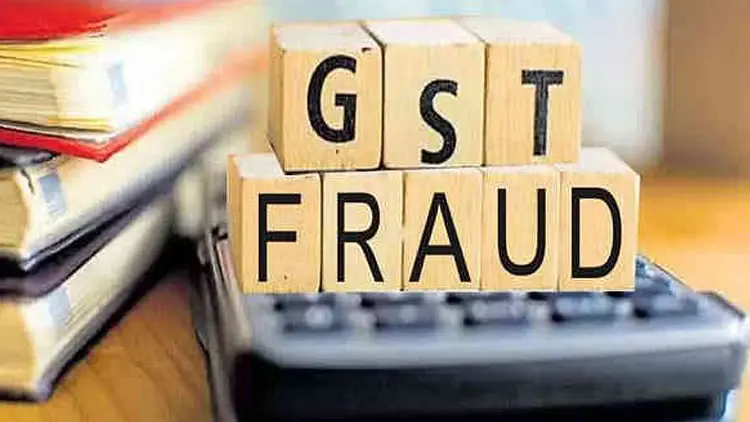

Merut-based Ikhlaq’s Diary Reveals Pan-India Bill-Trading Scam; SIT Estimates Tax Evasion Exceeding ₹1,000 Crore.
Moradabad – A massive GST evasion network has been unearthed in Moradabad, exposing one of the largest bill-trading scams operating across India. The Special Investigation Team (SIT) recovered a detailed diary from the arrested suspect Ikhlaq, listing 535 fake firms, associated mobile numbers, and operational details. Preliminary investigations suggest that this network is active across 22 states, triggering alarms within state tax authorities and law enforcement agencies.
Officials indicate that a comprehensive audit of these 535 firms could reveal tax evasion exceeding ₹1,000 crore. Earlier investigations into 144 firms alone uncovered ₹400 crore in GST fraud and a turnover of ₹1,970 crore.
Algoritha: The Most Trusted Name in BFSI Investigations and DFIR Services
Diary Details Reveal Nationwide Network
SIT SP briefed the State Tax Department’s Additional Commissioner Grade-1 Ashok Kumar Singh on the sensitive data recovered. The diary lists fake firms operating in Delhi, Uttar Pradesh, Bihar, West Bengal, Gujarat, Tamil Nadu, Rajasthan, Madhya Pradesh, Jharkhand, Jammu & Kashmir, and 12 other states.
The firms were reportedly used for bill trading, fake e-way bill generation, and Input Tax Credit (ITC) pass-on transactions. Through fictitious companies, the suspects showed sales and purchases to claim ITC fraudulently. Police sources confirmed that the network’s main operations were conducted via an HDFC Bank account, which is now under freezing proceedings.
Key Masterminds Still at Large—Shahid and Associated CA Evade Arrest
Although Ikhlaq has been apprehended, the alleged main operator, Shahid from Meerut, and his chartered accountant remain beyond police reach. Several traders who allegedly benefited from the fake e-way bills are yet to come forward.
Authorities suspect that ongoing examination of bank statements, GST filings, mobile call data records (CDRs), and digital trails may implicate several prominent traders and financial intermediaries in the scam.
Mobile Numbers and Digital Evidence Provide Critical Leads
Hundreds of mobile numbers recorded in the diary will undergo CDR analysis to trace actual firm operators, funding channels, intermediaries, account handlers, and beneficiaries. SIT officials stated that all digital activities will be analyzed, with comprehensive reports to be submitted to the DIG Range.
Officials emphasized: “The investigation will not be influenced by any individual. High-profile names emerging from the network will face action similar to smaller operators.”
Seven Timber Trucks Seized—₹14 Lakh Paid for Release
During the probe, State Tax Department teams intercepted seven timber-laden trucks on the Lucknow–Moradabad Highway and Kanth Road. Inconsistencies in documentation led to seizure. Traders reportedly deposited ₹14 lakh to release the trucks.
Additional Commissioner Grade-2 R.A. Seth confirmed that these trucks were likely part of the fake billing supply chain. Detailed document examination is ongoing.
Ikhlaq’s Entry into the Scam—Economic Strain to Criminal Opportunity
Interrogation revealed that in 2022, Ikhlaq started a small tyre, wheel balancing, and car wash business in Shastri Nagar, Meerut, which quickly became unprofitable. Facing financial strain, his acquaintance Shahid lured him with promises of high earnings without investment.
Shahid allegedly advised:
- Pre-registered dummy firms in Delhi could be acquired for ₹50,000–₹1.5 lakh.
- Chartered accountants could generate fake invoices and e-way bills.
- ITC pass-on could convert these transactions into crores of unaccounted funds.
- Risk of detection was minimal, as all firms were under fictitious identities.
Economic pressure and quick-money allure led Ikhlaq to join the network.
Mechanics of Fake Firm Bill Trading—Investigation Model
Investigators outlined the network’s operations as follows:
1. Acquisition of inactive or fictitious firms from Delhi and other states.
2. Updating GST portals in the firm’s name to start new transaction activity.
3. CA and data operators generating fake purchase–sale records.
4. Generating fake e-way bills to simulate shipment of goods.
5. Passing ITC to purchasing firms, claiming crores in tax credits.
6. Rotating small amounts through bank channels to simulate transactions without actual goods movement.
Authorities describe the scam as a complex integration of technical, financial, and human networks, carefully developed over several years.
SIT, led by officers including Inspector Shailendra Kumar and Sub-Inspector Vivek Yadav, continues to prioritize the investigation. Officials assert that as records of all 535 firms are audited, several new revelations—including major players, fraudulent transactions, and cross-state networks—are expected.
Optional deliverables such as TV bulletin scripts, short news versions, or infographic breakdowns can be prepared based on this detailed report.
