

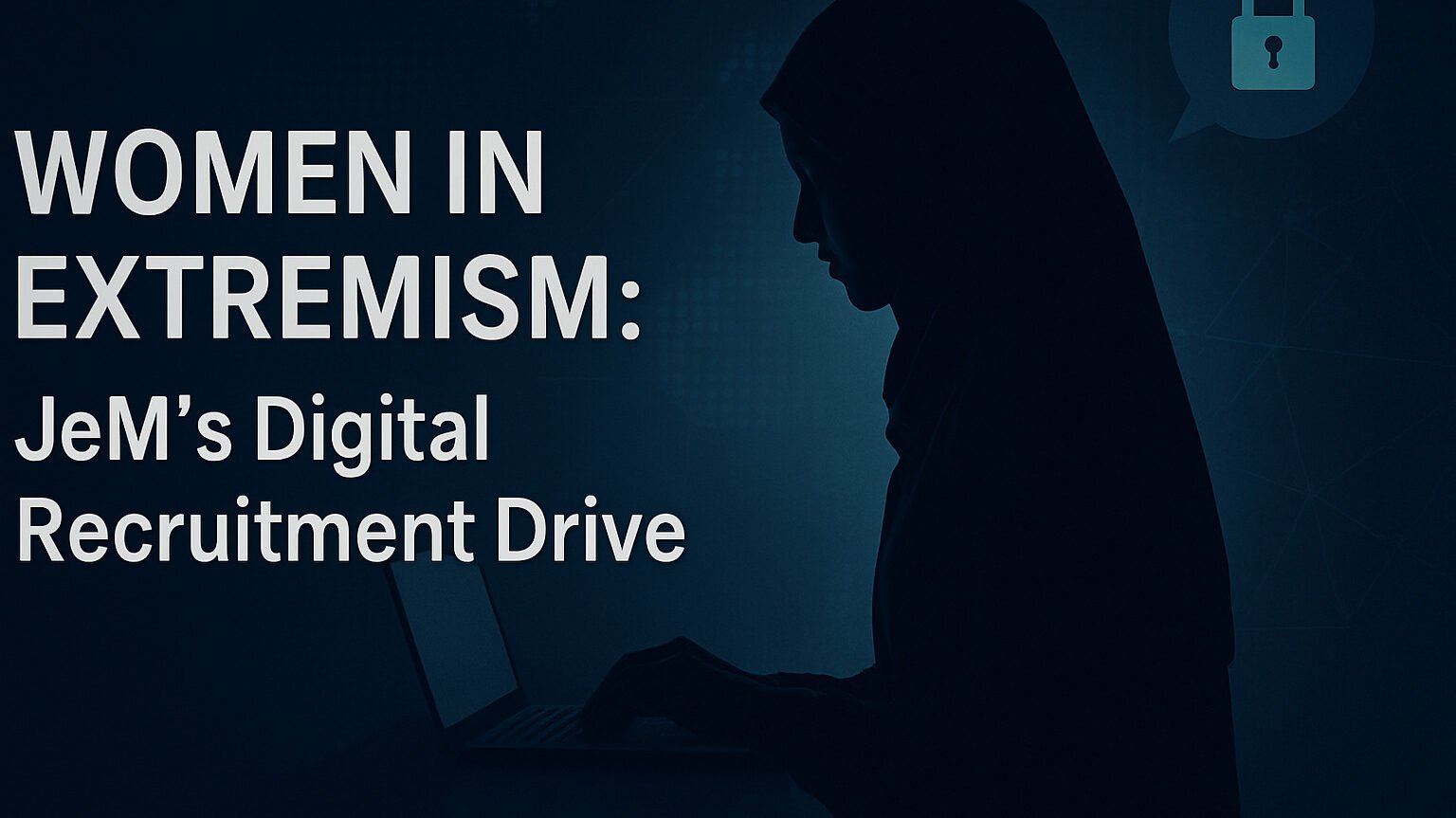

Masood Azhar’s sister Saadia spearheads Jaish-e-Mohammed’s new female wing ‘Jamaat-ul-Mominat’; Recruits receiving digital indoctrination and fidayeen lessons via social platforms
New Delhi: In a worrying development for regional security, Pakistan-based terror outfit Jaish-e-Mohammed (JeM) has launched a female terror wing named ‘Jamaat-ul-Mominat’, enrolling over 5,000 women in just two months. The initiative, intelligence officials say, marks a strategic shift in Jaish’s operational doctrine — expanding its cadre base to include women for logistical and suicide missions.
The new recruitment drive is reportedly being led by Saadia Azhar, the sister of Jaish chief Masood Azhar, from the group’s headquarters in Bahawalpur. Saadia is the widow of Yusuf Azhar, who was killed in India’s Operation Sindoor following the 2019 Pahalgam terror attack, when Indian forces targeted Jaish training camps inside Pakistan.
Online radicalisation and digital fidayeen training
According to intelligence inputs, Jaish began its latest recruitment campaign on October 8, 2025, under the supervision of its central command base Markaz Usman-o-Ali in Bahawalpur. Women from Multan, Sialkot, Karachi, Kotli, and Muzaffarabad have been inducted into the Jamaat.
The recruits are being trained online through encrypted social platforms. Each participant reportedly pays PKR 500 per 40-minute session, which includes indoctrination on “religious sacrifice,” “purity through jihad,” and “martyrdom obligations.”
Officials said the goal is to develop female fidayeen brigades modeled after ISIS and Hamas — capable of carrying out suicide bombings and supporting propaganda operations in Pakistan-occupied Kashmir and beyond.
‘Daura-e-Tazkiya’: Women’s induction course mirrors male training
JeM’s male recruits undergo a 15-day military course called ‘Daura-e-Tarbiyat’ (Training Tour). For women, the group has introduced a corresponding religious and operational module titled ‘Daura-e-Tazkiya’ (Course of Purification).
Sources revealed that Afira, wife of Umar Farooq — the mastermind of the 2019 Pulwama attack — has emerged as the second key leader of the women’s division. Farooq was killed in an encounter with Indian security forces soon after the Pulwama strike.
Strict code of conduct for female cadres
JeM has imposed rigid behavioural guidelines for recruits. These include:
- A ban on communicating with non-mahram men (men outside their family).
- Permission to interact only with husbands or close male relatives.
- A complete restriction on social media photos, videos, or posts.
Security analysts note that the rules are designed to maintain ideological control and prevent exposure of the women’s network online. Many recruits are reportedly drawn from religious seminaries (madrasas) across Pakistan, where they are taught to view “female jihad” as a sacred duty.
Women being trained as low-profile operatives
Indian and Western intelligence agencies believe the formation of Jamaat-ul-Mominat is a tactical shift following the heavy losses JeM suffered in Indian operations post-Pahalgam and Balakot.
Women, being less likely to attract security scrutiny, are now being trained for logistical support, reconnaissance, propaganda dissemination, and eventually operational assistance in terror missions.
Traditionally, Deobandi-inspired outfits like Jaish had excluded women from armed jihad. However, recent intelligence intercepts suggest that Masood Azhar and his brother Talha Al-Saif have now sanctioned women’s participation in combat and covert operations, portraying it as a “new dimension of jihad.”
Growing alarm among intelligence agencies
Counter-terror officials across India and Western agencies have expressed growing concern. The structured online recruitment of women, under religious cover, represents a new front in extremist mobilisation in South Asia.
A senior Indian intelligence officer said,
“Digital indoctrination of women into jihad is a significant shift. It poses new operational challenges for counter-terror networks, as women can move across checkpoints with minimal suspicion.”
Funding and online network under investigation
The Jamaat-ul-Mominat wing is said to be operating primarily through Telegram, Signal, and Clubhouse — platforms known for their encrypted communication. Investigators suspect the group’s digital operations are funded through cryptocurrency wallets and hawala channels, possibly aided by radical NGOs active in Pakistan and the Middle East.
The recruitment and training modules, security experts warn, reflect an ISIS-style hybrid radicalisation model, blending online theology with operational tactics — a development that could have far-reaching implications for regional counter-terrorism efforts.
