

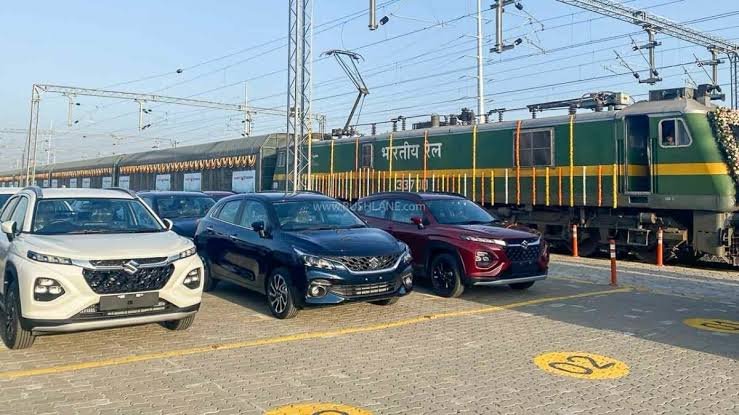

New Delhi: India’s largest carmaker Maruti Suzuki India Limited has set a new benchmark in sustainable logistics, dispatching over 5.85 lakh vehicles by rail in 2025, marking its highest-ever annual rail movement of passenger vehicles. The figure represents an 18% increase over 2024 and underlines the company’s accelerating shift towards greener, more efficient transport modes.
The milestone reinforces Maruti Suzuki’s position as a front-runner in adopting rail-based logistics at scale, a move that has helped lower carbon emissions, ease highway congestion and reduce dependence on fossil fuels. Over the past decade, the company’s rail dispatch share has grown sharply—from 5.1% in 2016 to nearly 26% in 2025—reflecting a strategic overhaul of its outbound supply chain.
Rail Takes Centre Stage in Vehicle Dispatch
Company data show that the absolute number of vehicles moved by rail has risen more than seven-fold, from around 77,000 units in 2016 to over 5.85 lakh units last year. This transition has delivered tangible environmental gains. Maruti Suzuki estimates that rail-based dispatches in 2025 alone helped cut carbon dioxide emissions by nearly 87,904 metric tonnes and saved about 68.7 million litres of fuel, contributing to lower oil imports and reduced road traffic.
Certified Cyber Crime Investigator Course Launched by Centre for Police Technology
Industry executives say the push towards rail is part of a broader rethinking of automotive logistics as manufacturers balance scale, cost efficiency and sustainability. Rail transport enables bulk movement over long distances with significantly lower emissions per vehicle compared with road freight, making it central to green supply-chain strategies.
Infrastructure Milestones and Operational Reach
Maruti Suzuki’s managing director and chief executive officer said 2025 was a landmark year for the company’s rail journey, marked by two major milestones. The first was the inauguration of India’s largest in-plant railway siding at the Manesar facility, which has streamlined vehicle loading directly from the factory. The second was the dispatch of vehicles to the Kashmir Valley via the Chenab river rail bridge, the world’s highest railway arch bridge—an achievement not previously accomplished by any automaker.
The company has laid out an even more ambitious roadmap. Its medium-term target is to raise the share of rail-based vehicle dispatches to 35% by 2030–31, aligning with India’s broader climate commitments, including the national net-zero emissions goal for 2070. Executives say expanding rail usage will remain a key lever in reducing lifecycle emissions from manufacturing to delivery.
Environmental Gains and Fuel Savings
Maruti Suzuki’s green logistics efforts extend beyond rail adoption. The automaker has embraced a “Circular Mobility” approach, focusing on lowering carbon footprint across the vehicle lifecycle—from design and production to logistics and end-of-life recycling. This includes energy-efficient manufacturing, optimised supply routes and greater use of sustainable materials.
The company’s early-mover advantage in rail logistics dates back more than a decade. In 2013, Maruti Suzuki became the first automaker in India to obtain an Automobile Freight Train Operator (AFTO) licence. Since 2014–15, it has transported over 2.8 million vehicles by rail from 22 dispatch hubs to more than 600 cities across the country.
Currently, Maruti Suzuki operates 45 specialised flexi-deck rail rakes, each capable of carrying around 260 vehicles. In 2025, nearly 53% of the company’s rail dispatches originated directly from in-plant sidings at its Gujarat and Manesar factories, highlighting the efficiency gains from integrated rail infrastructure.
The Road Ahead: Scaling Green Logistics
Analysts note that such logistics efficiencies are becoming increasingly critical as the auto industry grapples with rising volumes, tighter emission norms and pressure to decarbonise operations. Rail-based dispatch not only lowers emissions but also reduces delivery lead times and logistics costs over long distances.
As competition intensifies and sustainability becomes a boardroom priority, Maruti Suzuki’s rail-led logistics model is being closely watched by peers. With volumes rising and infrastructure expanding, the company’s 2025 milestone signals that green logistics is moving from pilot initiatives to core operational strategy in India’s auto sector.
