

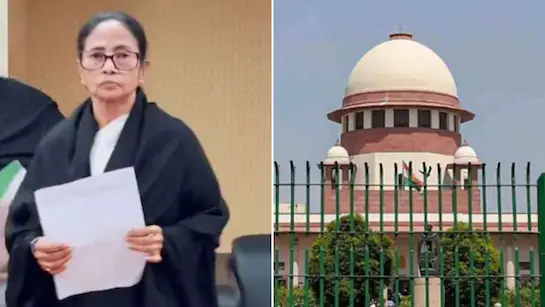
West Bengal Chief Minister Mamata Banerjee on 4 February 2026 appeared in person before the Supreme Court of India and delivered sharp criticism of the Election Commission of India (ECI) in the ongoing Special Intensive Revision (SIR) case, alleging that the poll panel was acting informally and targeting West Bengal on the eve of the upcoming Assembly elections.
In an unprecedented move, Mamata — who is trained in law and argued her own petition — accused the Election Commission of effectively functioning as a “WhatsApp Commission,” asserting that crucial instructions and administrative decisions related to the SIR exercise had been communicated informally to officials via messaging apps rather than through legally valid channels.
The Supreme Court has taken formal cognisance of the matter and issued notices to the ECI and the Chief Electoral Officers involved in the West Bengal roll revision dispute, with the next hearing set for 9 February 2026.
Certified Cyber Crime Investigator Course Launched by Centre for Police Technology
Core Allegations Against ECI in Supreme Court
While addressing a three-judge bench led by Chief Justice of India Surya Kant, Banerjee articulated several complaints about how the SIR process was being conducted in West Bengal, including:
- The SIR exercise was being used primarily to delete names from electoral rolls, rather than to include and verify genuine voters — raising fears of disenfranchisement.
- Instructions affecting the process were allegedly passed through WhatsApp and informal communication channels, bypassing formal notification procedures typically required for an exercise of constitutional significance. This was the basis for her calling the poll panel a “WhatsApp Commission.”
- She questioned the timing and urgency of the exercise, noting that a revision that might have taken two years was being rushed through in about three months, during critical periods such as harvest and festival seasons.
- Banerjee also asked why the process was being applied only in West Bengal at this scale and not in states such as Assam, insisting this showed differential treatment ahead of elections.
According to Banerjee, the high-intensity pace of the SIR was imposing undue hardship, with voters facing deletions for reasons as mundane as surname changes after marriage or relocation for work, often labelled “logical discrepancies.”
She told the apex court she had written multiple letters to the Election Commission seeking clarification and rectification, but received no substantive response, leaving her with no option but to approach the judiciary directly.
Political and Legal Ramifications
Mamata’s remarks come amid intensifying political tensions over the SIR, which aims to revise voter lists in West Bengal ahead of elections. The exercise has been criticised by the Trinamool Congress (TMC) as arbitrary and rushed, and her direct appeal in the Supreme Court represents a legal challenge to the Election Commission’s methodology and timing.
The Chief Minister’s accusations added a political dimension to the legal dispute, drawing criticism from opposition parties. The Bharatiya Janata Party (BJP) characterised her appearance before the court as a political speech rather than a legal argument, calling it a “flop drama” and questioning the appropriateness of her remarks in the Supreme Court setting.
Meanwhile, the Supreme Court has underlined the need for balance and fairness, urging the Election Commission to be “careful and sensitive” in handling issues like name discrepancies that could unjustly affect voter rights.
What the “WhatsApp Commission” Comment Reflects
Mamata’s description of the ECI as a “WhatsApp Commission” highlights a broader concern she raised: that informal communication methods were being used to issue sensitive directives to electoral officials and booth-level observers. Critics — including the TMC — argue this undercuts the legal sanctity and procedural safeguards expected in electoral roll revisions, especially when dealing with millions of electors.
She maintained that the challenge was constitutional rather than political per se — framed as a bid to prevent wrongful disenfranchisement of voters rather than a conventional political protest.
About the author – Rehan Khan is a law student and legal journalist with a keen interest in cybercrime, digital fraud, and emerging technology laws. He writes on the intersection of law, cybersecurity, and online safety, focusing on developments that impact individuals and institutions in India.
