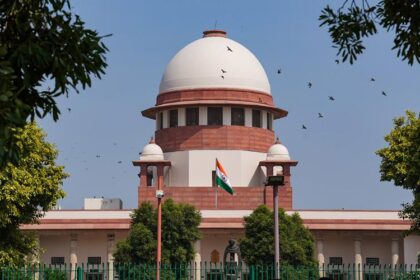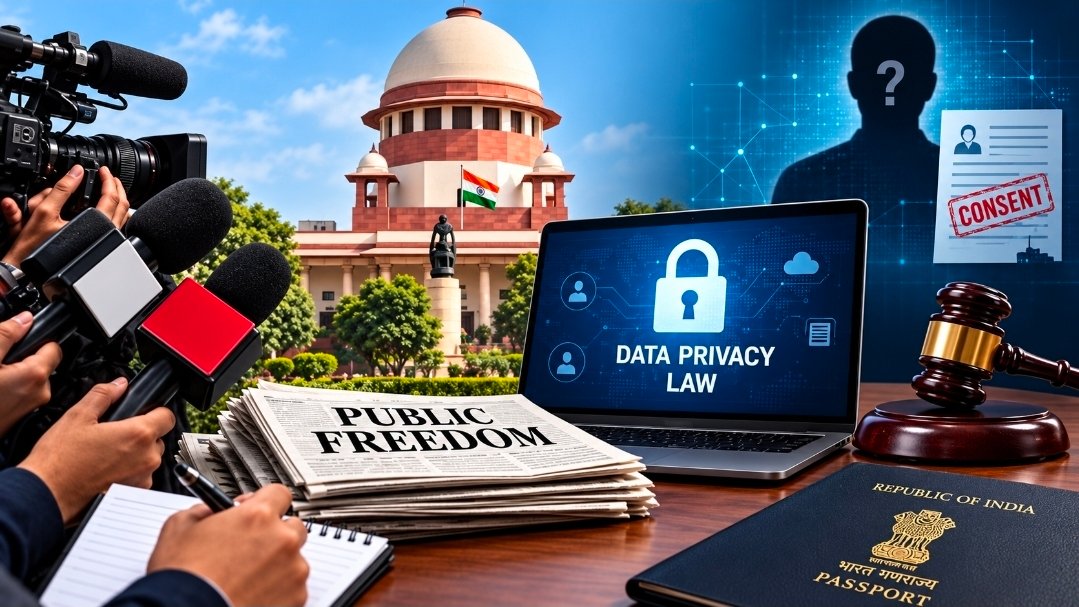

Union Minister Ashwini Vaishnaw says India’s data privacy law will not restrict press freedom amid a Supreme Court case.
Why Are News Publishers Challenging the Privacy Law?
A group of 21 news publishers has approached the Supreme Court challenging provisions of the Digital Personal Data Protection (DPDP) Act, raising concerns that the legislation could interfere with investigative journalism and the protection of confidential sources.
The petition includes publishers associated with businessmen Mukesh Ambani and Gautam Adani. The publishers have sought the removal of most provisions of the legislation, which are scheduled to come into effect from May 2027.
Their central concern is that the law could allow authorities to identify journalists’ sources, restrict access to information and interfere with reporting on matters of public interest. The publishers argue that these provisions threaten constitutionally protected press freedom.
https://the420.in/fcrf-certified-chief-ai-officer-second-cohort-november-2026/
What Has the Government Said?
Union IT Minister Ashwini Vaishnaw, speaking on October 28, maintained that the legislation would not undermine journalistic independence. He said freedom of the press was guaranteed by the Constitution and that the government had no intention of restricting it.
Vaishnaw also welcomed discussions with editors and media professionals to address concerns surrounding the legislation. He maintained that the law was intended to protect personal information without weakening the rights of journalists.
A government source indicated that authorities were open to considering amendments that would expressly safeguard press freedom. The source suggested that any confusion regarding the legislation could be addressed through parliamentary changes.
How Could the Law Affect Investigative Journalism?
The publishers’ 698-page petition raises concerns about consent requirements and government powers to obtain information. Journalists fear that seeking consent from individuals under investigation could allow those individuals to destroy evidence or intimidate witnesses before allegations are examined.
The petition also argues that authorities could demand information capable of exposing confidential journalistic sources. Such powers, according to the publishers, could discourage whistleblowers from sharing information and weaken investigative reporting.
Another concern involves provisions allowing individuals to withdraw consent and request deletion of personal data. Publishers argue that the absence of adequate public-interest safeguards could force news organisations to remove or redact factually accurate reports.
The Digital News Publishers Association has additionally warned that non-compliance could attract financial penalties and restrictions on access to information in the interests of the general public.
What Are the Wider Implications for Press Freedom?
The legal challenge has brought renewed attention to the relationship between personal data protection and freedom of expression. While privacy legislation seeks to protect individuals against misuse of personal information, publishers argue that its implementation must also accommodate legitimate journalistic investigations.
The petition describes certain provisions as potentially amounting to prior censorship, particularly where reporting depends on information obtained without the consent of individuals being investigated.
The dispute also arises amid wider concerns about press freedom in India, including the treatment of journalists covering public protests and disagreements over international press freedom assessments.
The Supreme Court challenge places the balance between privacy rights and journalistic freedom at the centre of the legal debate. Its outcome could influence how personal data protections apply to investigative reporting, confidential sources and publication of information in the public interest.