

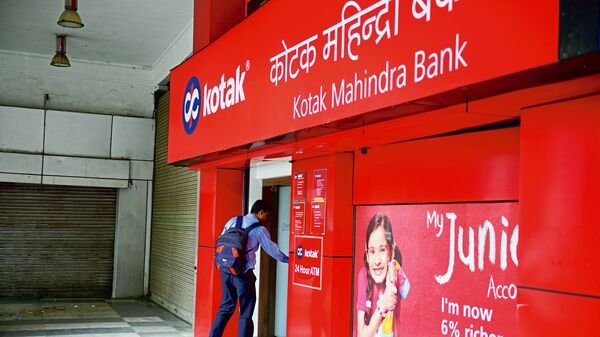
Chandigarh. The Enforcement Directorate (ED) has made serious allegations in the ongoing investigation into the Kotak Mahindra Bank-linked scam, stating that a senior bank executive allegedly used proceeds of crime to purchase high-end luxury vehicles and immovable properties, which were later sold off before the fraud surfaced.
According to submissions made before a special PMLA court in Panchkula, Pushpinder Singh, then Deputy Vice-President and branch manager, allegedly received around ₹33 crore through co-accused individuals between 2020 and 2023. These funds were later used to acquire luxury assets, including a BMW 7 Series, Mahindra Thar, Scorpio-N, and a motorcycle, along with investments in real estate properties.
The ED has further alleged that all these assets were disposed of prior to March 2026, when the alleged financial irregularities came to light, indicating an attempt to liquidate and distance proceeds from the crime trail.
Forged Documents and Layered Public Fund Transfers
The case originates from an FIR registered by the State Vigilance and Anti-Corruption Bureau in March 2026, following which the ED initiated proceedings under the Prevention of Money Laundering Act (PMLA). Investigators claim that municipal corporation accounts in Panchkula were opened and operated using forged documentation, enabling large-scale diversion of public funds.
As per the agency, approximately ₹88.17 crore was transferred to co-accused Rajat Dahra, ₹31.58 crore to Swati Tomar, ₹2.36 crore to Kapil Kumar, and ₹1.41 crore to Vinod Kumar through multiple layered transactions designed to obscure the original source of funds. The ED alleges that these transfers were part of a structured network involving accommodation entries and controlled bank accounts.
Statements recorded during investigation suggest that several individuals involved were allegedly induced into opening bank accounts under false pretences. Some accused reportedly handed over signed cheques, ATM cards, and SIM cards to intermediaries, enabling unauthorized control over financial transactions.
Digital Coordination and Deletion of Evidence
Investigators have also claimed that Rajat Dahra acted as a key intermediary in routing funds and creating a parallel system of transactions. According to his statement, multiple accounts were opened at the direction of the main accused, and funds were circulated through a chain of beneficiaries before being redirected.
The ED further told the court that WhatsApp instructions were allegedly used to coordinate fund transfers, and that digital communication played a key role in executing the alleged scheme. Authorities also stated that some mobile devices linked to the accused were allegedly destroyed in March 2026 to erase evidence.
Another layer of the investigation focuses on how municipal corporation accounts, maintained under two specific account numbers, were allegedly manipulated to facilitate fund diversion. Officials claim that internal communication channels between the bank and civic authorities were controlled or influenced by the accused banker.
Registration Begins for FutureCrime Summit 2026, India’s Largest Cybercrime Conference
Judicial Remand and Compliance Failures
The agency has also stated that preliminary findings indicate direct involvement of bank officials in facilitating unauthorized account operations and enabling fraudulent transactions. This has raised concerns about institutional oversight and compliance failures within banking systems handling government-linked accounts.
During court proceedings, the defence argued that procedural safeguards under PMLA were not properly followed and sought immediate release of the accused. However, the court remanded Pushpinder Singh to ED custody till June 9 for further interrogation, particularly to trace the ultimate beneficiaries and quantify total proceeds of crime.
Financial crime experts note that such cases typically involve multi-layered laundering structures, making it difficult to trace end-use of funds without extensive forensic analysis. Authorities are currently examining digital records, banking trails, and asset ownership documents to reconstruct the flow of money.
The ED has indicated that further arrests and asset attachments may follow as the investigation expands. Officials maintain that the case represents a significant instance of alleged abuse of banking authority and misuse of public funds through sophisticated financial manipulation.
The investigation remains ongoing at the federal level.
