

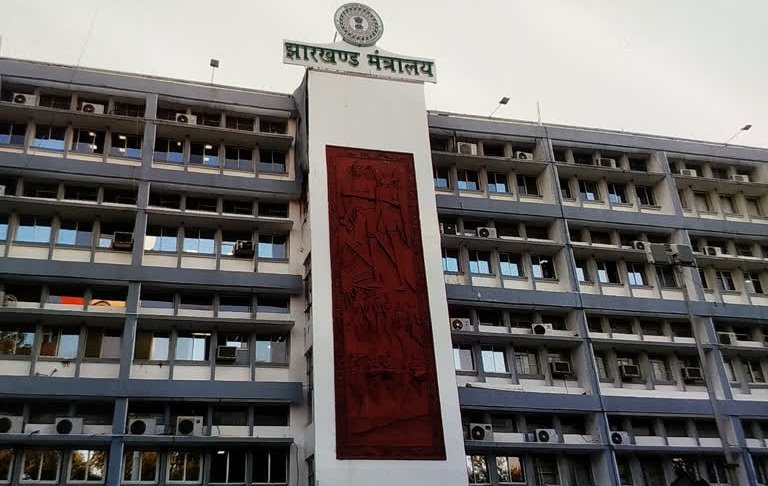

The volume of unresolved government accounts in Jharkhand has surged to ₹18,060 crore between 2021-22 and 2025-26, nearly doubling the backlog recorded over the preceding two decades and exposing persistent lapses in administrative accountability. The accumulated sum spans audit objections, recoverable dues, unadjusted advances, and suspected instances of financial embezzlement across multiple state departments. In response to the growing accumulation of unresolved financial cases, Finance Minister Radhakrishna Kishore has convened a high-level review meeting of departmental secretaries on October 22 to examine the pendency, demand explanations for procedural delays, and enforce corrective measures to protect public funds.
Audit Objections Form Bulk of Mounting Financial Dues
Official figures indicate that audit objections constitute the largest component of the ₹18,060 crore total, accounting for ₹7,666 crore across government ministries. A further ₹5,215 crore has been identified as recoverable dues, while an amount of ₹3,930 crore remains pending for formal deposit into the state exchequer. Unadjusted advances given to officials or departments stand at ₹1,162 crore, alongside ₹78.06 crore linked to embezzlement cases and ₹9.14 crore listed under direct financial misappropriation.
State financial authorities have noted that while the staggering figure does not equate entirely to actual cash losses or outright fraud, it reflects prolonged administrative delays in submitting expenditure vouchers, payment receipts, and reconciliation records. Inability to clear pending audit queries over multiple financial cycles hampers accounting transparency and raises serious questions about the routine monitoring of department spending.
Earlier Targets and Inter-Departmental Committees Fail to Stem Surge
The current situation represents a sharp escalation from earlier figures, which recorded an outstanding backlog of ₹9,737 crore for cases spanning the period from 2001 to 2022-23. In an effort to address the issue, then Finance Minister Dr Rameshwar Oraon convened a review meeting on October 5, 2023, directing departments to slash the pending amount by 50 percent by March 2024. That initiative included a proposal to establish a specialized coordination committee led by the chief secretary, modeled on Bihar’s institutional mechanism, to systematically settle departmental objections.
That cleanup effort made little visible headway, as the pending figures instead rose sharply from ₹9,737 crore to the present ₹18,060 crore. Under the older 22-year records, audit objections had accounted for ₹8,330 crore, while recoverable funds stood at ₹688 crore, unadjusted advances at ₹476 crore, financial misappropriation at ₹180 crore, and embezzlement at ₹63.57 crore. The subsequent doubling of the backlog underlines systemic failures across successive administrations to implement settlement directives or hold accounting officers accountable.
Key Departments Face Intense Scrutiny Ahead of High-Level Review
Ahead of the October 22 meeting, several key branches of government face detailed inquiries regarding their unresolved balances. Previous internal reviews highlighted significant discrepancies within the departments of Revenue, Registration and Land Reforms, Health, Road Construction, and Agriculture. Additional scrutiny is directed at School Education, Higher Education, Rural Development, Urban Development, Water Resources, Mines, and Transport.
Finance Minister Kishore has stressed that every single rupee of public money must be accounted for without exception, describing the shortfall in compliance as a matter of deep institutional concern. He stated that the government would pursue necessary recovery actions against non-compliant entities, noting that failure to meet earlier reduction goals pointed directly to inadequate execution by administrative heads. The upcoming review will serve as a crucial juncture to determine departmental responsibilities, verify physical documentation, and establish timeframes for clearing long-standing entries from the state’s financial ledgers.
Follow for daily updates on cybercrime, corporate fraud, DFIR, hacking, investigations, and digital forensics
