
Follow us on Google News

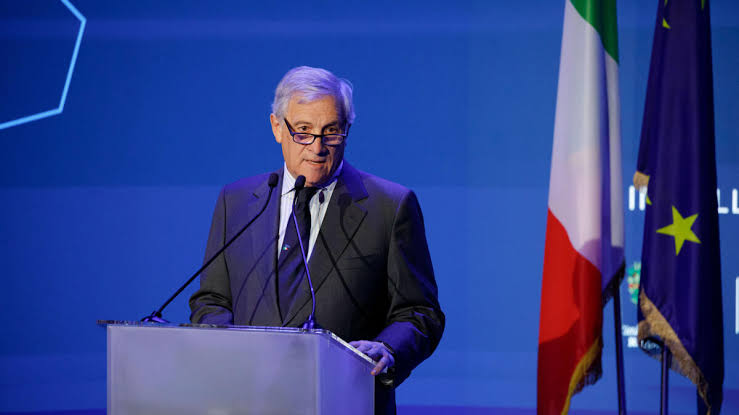
Italian Foreign Minister Antonio Tajani has revealed that his personal information has been circulated on the dark web, exposing him and his family to threats and intimidation. The development has prompted Italy to seek international discussions on growing cybersecurity threats.
Tajani linked the suspected targeting to Italy’s continued support for Ukraine, while Prime Minister Giorgia Meloni blamed pro-Russian hackers. However, the identities of those responsible have not been independently established.
Italy’s Foreign Ministry confirmed on Saturday, 7 November, that cybersecurity officials had detected the circulation of the minister’s personal data. Tajani has requested that cyber threats be discussed at the upcoming G7 foreign ministers’ meeting in Paris on 9–10 November.
FCRF’s Chief AI Officer Certification Returns on November 14 to Prepare Future AI Leaders
How The Alleged Attack Targeted Italy’s Foreign Minister
According to the Italian Foreign Ministry, cybersecurity authorities discovered Tajani’s personal information circulating within a section of the dark web accessible through the Tor network.
Tajani said the activity had continued for several days. He also alleged that those involved were seeking additional information about him and his family, creating the possibility of further threats.
The foreign minister connected the suspected targeting to Italy’s political position on Russia’s war in Ukraine. He maintained that supporting Ukraine’s independence and sovereignty had made him a target.
Meloni publicly expressed solidarity with Tajani and raised concerns about the circulation and possible sale of confidential information involving senior government officials.
Reuters reported seeing screenshots that placed Tajani among 18 individuals described as hostile to the Russian Federation. The list reportedly included cybersecurity professionals, although the people responsible for compiling it have not been conclusively identified.
The exact information exposed in Tajani’s case has not been disclosed publicly. Investigators have also not established whether the data originated from a compromised account, an institutional breach or information collected through other means.
These distinctions matter because publishing personal information online does not necessarily establish that the victim’s computer or official government systems were hacked.
What Is The Dark Web And Why Is Leaked Information Dangerous?
The dark web is a part of the internet that generally requires specialised software to access. Unlike ordinary websites, many dark-web services are designed to conceal the identities or locations of their operators.
One commonly used technology is Tor, which routes internet connections through several systems to make tracking more difficult.
Tor also has legitimate uses, including protecting privacy and helping people communicate under censorship. However, criminals can misuse hidden services to distribute stolen information, advertise illegal goods or threaten individuals.
When personal information appears on such platforms, it can create risks beyond the initial disclosure.
For example, criminals may combine leaked contact details with publicly available information to impersonate someone, send convincing fraudulent messages or target family members.
Such activity may also be used for intimidation, particularly when the individual holds a sensitive public position.
In Tajani’s case, the nature and extent of the exposed information remain unclear. Authorities have not confirmed that the disclosure resulted in identity theft, financial fraud or unauthorised access to diplomatic communications.
Italy Pushes Cybersecurity Threats Onto G7 Agenda
The disclosure comes amid wider concerns about cyberattacks and disruptive threats affecting European countries.
Earlier in February 2026, Italian officials reported cyberattacks against websites associated with the Milan-Cortina Winter Olympics and diplomatic services. Tajani attributed those incidents to pro-Russian hackers, although the technical circumstances differed from the latest personal data leak.
In recent days, European authorities have also confronted hoax bomb threats and cyber incidents affecting commercial facilities. Such developments have renewed concerns about the use of digital disruption alongside political pressure.
These activities are sometimes described as hybrid threats. The term refers to attempts to destabilise a country through a combination of methods, such as cyberattacks, disinformation, intimidation and disruption of essential services.
Italy has already taken steps to strengthen its diplomatic cybersecurity arrangements. Its Foreign Ministry established a dedicated cyber directorate on 1 January 2026 to improve protection against digital intrusions.
Following the latest disclosure, Tajani requested that the current G7 presidency include hybrid threats in discussions scheduled for Paris on 9 and 10 November.
The foreign minister also expressed solidarity with Rome prosecutor Francesco Lo Voi, postal police director Ivano Gabrielli and mayor Paolo Tassan-Zanin, who have reportedly faced similar threats.
The request reflects Italy’s concern that cyber intimidation against senior officials could become a broader international security issue.
The immediate investigation must still establish who obtained Tajani’s information, how it was acquired and whether the incident is connected to other recent cyber operations.
What this means for you
Personal information exposed online can be misused for impersonation, harassment or targeted fraud. Protect important accounts with strong, unique passwords and two-factor authentication, and avoid sharing unnecessary personal details publicly.