
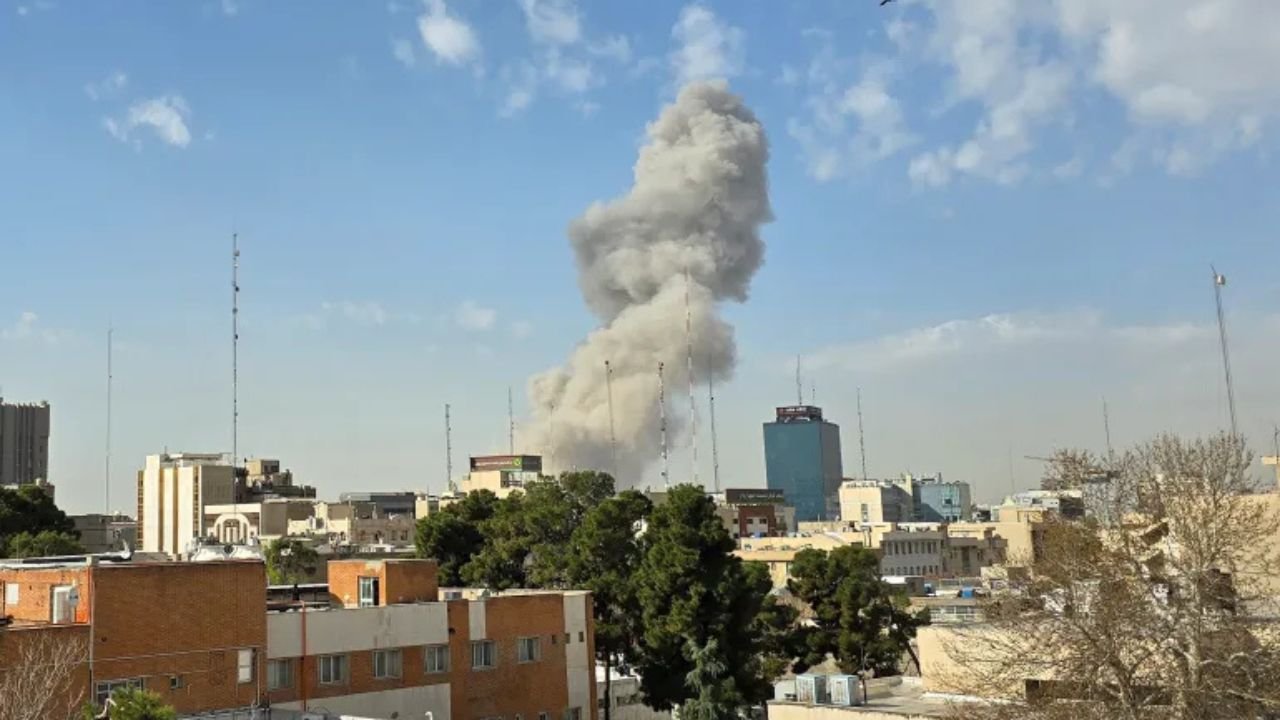

New Delhi | The situation in the Middle East has become extremely serious after the attacks by Israel and the United States on Iran’s capital Tehran and surrounding areas. Following the strikes, Iran launched a counterattack, with reports of missile strikes across several Gulf countries. Loud explosions were heard in regions including Abu Dhabi, Doha, Bahrain and Kuwait, prompting local authorities and security agencies to go on high alert. The international community has expressed concern over the situation and urged restraint.
After the joint military strike on Tehran, Iran warned that it would respond strongly to any aggressive action. Iran’s military and political leadership stated that any attack on the country’s sovereignty would not be tolerated. The head of Iran’s National Security Committee of Parliament said in a statement that Israel and the United States had been warned earlier but ignored the caution, which has further escalated the war-like situation in the region. However, there is still no clear information regarding the actual impact of the attacks.
FCRF Launches Flagship Certified Fraud Investigator (CFI) Program
According to an Al Jazeera report, the main targets in Tehran reportedly included Iran’s Defense Ministry, Intelligence Ministry, Atomic Energy Organization and the Parchin military complex. After the attacks, Iran-backed groups also became active. Hezbollah in Lebanon and Houthi rebels in Yemen were also reported to have fired missiles toward Israel, raising fears that the conflict could expand further.
In Abu Dhabi, the capital of the United Arab Emirates, one person was reported killed during a missile attack. Security agencies have launched search operations in nearby areas and advised citizens to stay in safe locations. Bahrain has also strengthened security around strategic installations. Some reports claimed that there was an attempt to target the U.S. Navy’s Fifth Fleet headquarters in Bahrain, though there has been no official confirmation.
Global airlines have temporarily suspended flights to the Middle East citing security concerns. Air India also announced the suspension of all flights to Middle Eastern destinations. The airline management said that the safety of passengers and crew remains the top priority. Several international airlines have also changed their routes or suspended operations.
Following the attacks by Israel and the United States, emergency meetings have begun among regional countries. The British Foreign Office advised its citizens to stay indoors, avoid unnecessary travel and follow local administrative instructions. Several countries have also issued safety advisories to their citizens through their embassies.
Experts believe that if tensions are not brought under control soon, the conflict could escalate into a wider regional war. The energy market may also be affected, as the Middle East is a major hub of global oil supply. The international community is trying to encourage both sides to engage in diplomatic dialogue.
The Middle East situation remains highly fragile, and the world is closely monitoring military activities in the region. Security agencies are continuously tracking developments. The direction of this conflict in the coming days may influence both global politics and the world economy.
