
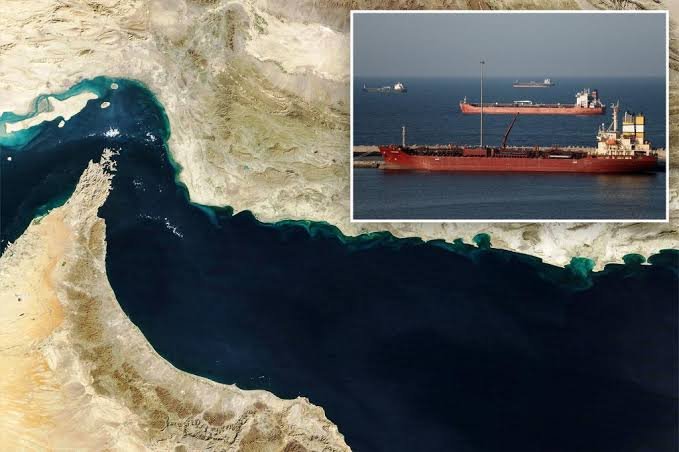
Iran has proposed a plan to impose a toll of one dollar per barrel on oil tankers transiting through the Strait of Hormuz, with a requirement that payments be made in digital currencies such as bitcoin. The move comes as Tehran seeks to tighten its control over one of the most critical maritime chokepoints in the world amid a fragile ceasefire currently in place with the United States. According to reports citing Hamid Hosseini, a spokesperson for an Iranian exporters union, the measure is intended to monitor and regulate all vessels passing through the strait to ensure the transit route is not being used for the transfer of weapons.
Under the proposed system, tankers would be required to submit their cargo details via email to Iranian authorities. Once the information is reviewed, a toll will be calculated at a rate of one dollar for every barrel of oil on board. Officials have noted that vessels will be given only a narrow window of time to complete the cryptocurrency payment before being allowed to proceed. While the plan suggests that ships will eventually be permitted through, the process is expected to cause significant delays. Iranian representatives have stated that they are not in a rush to move the traffic, emphasizing that a thorough assessment of each vessel’s cargo is their priority during this period.
Navigational warnings and maritime congestion
The situation in the Gulf has become increasingly complicated following radio broadcasts issued to vessels in the area. Tankers have received warnings that any ship attempting to transit the Strait of Hormuz without prior approval could face direct military action. The broadcasts cautioned that vessels attempting unauthorized passage will be destroyed. This escalation has prompted Iran to push for shipping traffic to move along routes closer to its own coastline, a shift that industry experts say significantly increases the risk for vessels linked to Western nations or Gulf countries.
Due to the high level of tension and the lack of clear transit rules, many shipping companies have decided to hold their vessels back until the situation stabilizes. Current data indicates that approximately 400 ships are waiting in the Gulf in a state of limbo, creating a massive maritime bottleneck that executives have likened to a car park. Millions of barrels of oil remain stuck on these vessels as operators wait for clearer signals regarding when and how they can safely move their cargo. Large shipping firms, including Maersk, have indicated that they are working to assess the security environment but are not yet prepared to resume normal operations in the region.
Diplomatic friction over transit fees
The proposal to charge fees has emerged as a major point of contention in ongoing negotiations aimed at extending the ceasefire. United States President Donald Trump has made it clear that any lasting truce would depend on Iran ensuring the complete, immediate, and safe opening of the strait for international shipping. In response, the Supreme National Security Council in Iran has proposed a separate framework that would place secure passage under its direct supervision. The future of the waterway is now one of the most difficult issues to resolve as both sides seek to maintain their respective strategic advantages.
While Iran moves forward with its plans, neighboring Oman has offered a firm rebuttal to the idea of transit tolls. Although reports surfaced that Iran and Oman were exploring a joint plan to charge fees during the two week ceasefire, Omani officials have since distanced themselves from the proposal. The government in Oman stated that existing international agreements do not allow for the collection of tolls on vessels using the key waterway. This disagreement highlights the lack of regional consensus regarding Iran’s attempt to monetize and regulate the passage of global oil supplies through the strait.
Leverage in a fragile ceasefire
Tehran appears determined to maintain its leverage over shipping routes even as direct conflict remains paused. The insistence on cryptocurrency payments for the one dollar per barrel toll suggests a strategy designed to bypass traditional financial systems while asserting sovereign control over the passage. Industry executives remain on edge as they wait for the results of the negotiations between Tehran and Washington. For now, the millions of barrels of oil waiting in the Gulf serve as a reminder of the fragility of the current truce and the immense economic power tied to the Strait of Hormuz.
The reported two week ceasefire window is being used by Iranian authorities to establish this new monitoring regime. By requiring cargo details and assessing fees before granting passage, Iran is effectively positioning itself as the primary regulator of the strait. With the threat of military action against unauthorized vessels remaining active, the global shipping industry continues to face a period of deep uncertainty. The outcome of this toll proposal will likely determine the level of stability for global energy markets in the coming months as the ceasefire remains under constant pressure from local and international actors.
