

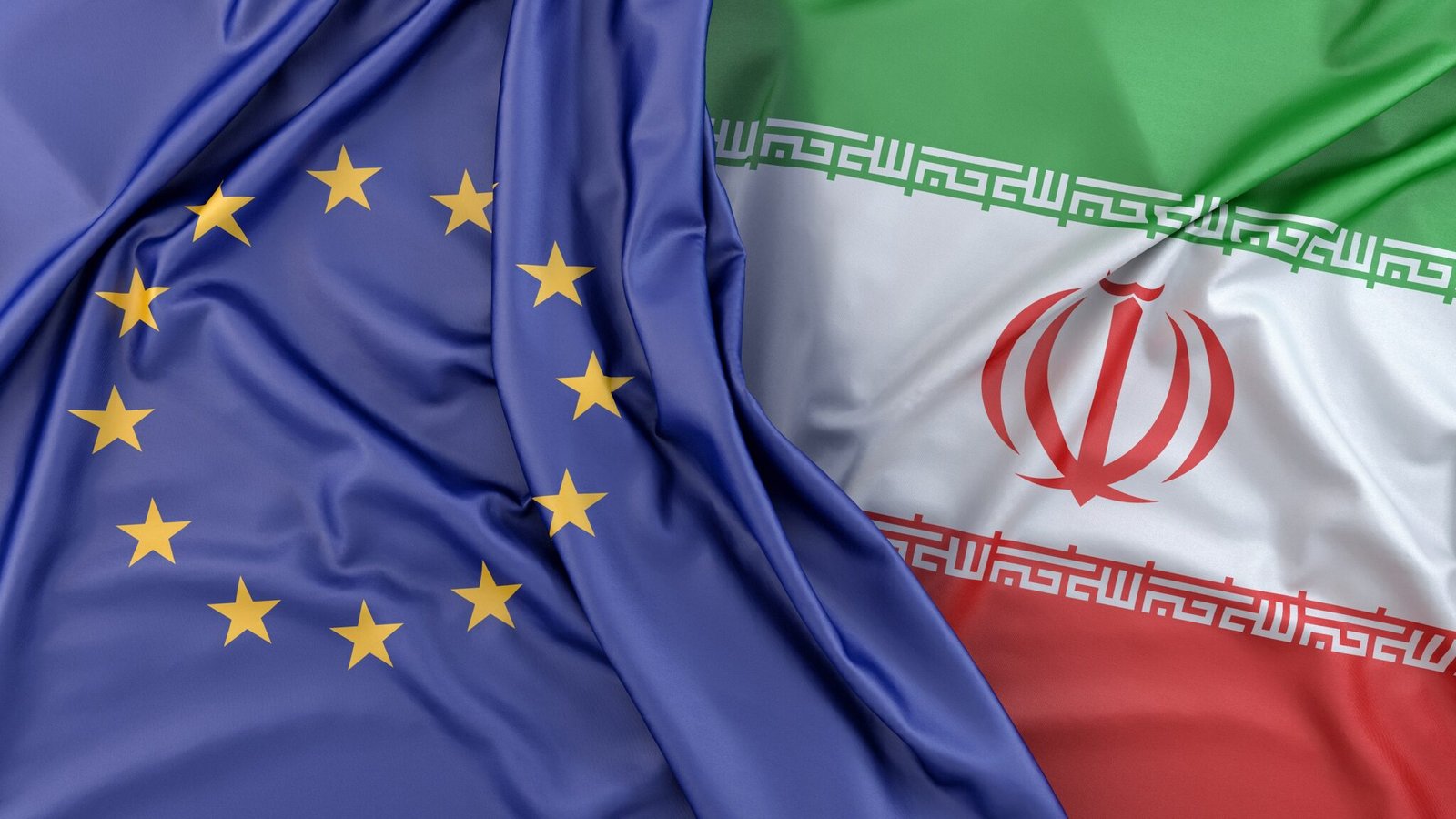

Dubai: Iran has sharply escalated its standoff with Europe, declaring the armed forces of European Union member states as “terrorist groups” in retaliation for the EU’s decision to blacklist the Islamic Revolutionary Guard Corps. The move marks a significant hardening of Tehran’s posture and raises the risk of further diplomatic and security fallout across the Middle East.
Addressing lawmakers, the Speaker of Iran’s parliament said that under domestic legislation enacted to counter foreign designations of the IRGC, the armies of EU countries that supported the listing would now be treated as terrorist entities. He added that the parliamentary national security commission would examine steps to expel European military attaches and coordinate follow-up action with the foreign ministry.
Certified Cyber Crime Investigator Course Launched by Centre for Police Technology
The declaration comes days after the European Union formally designated the IRGC as a terrorist organisation, a symbolic but politically charged shift in Europe’s approach to Iran’s leadership. The EU decision followed a sweeping and violent crackdown on protests that has drawn international condemnation and heightened scrutiny of Iran’s security apparatus.
Inside the Iranian parliament, lawmakers staged a show of solidarity with the Guards, wearing IRGC uniforms and chanting slogans against the United States and Europe after the address. In a subsequent statement, the IRGC said the EU’s move would complicate prospects for “constructive interaction and cooperation” and would instead entrench confrontational approaches on both sides.
Formed in the aftermath of Iran’s 1979 Islamic Revolution to safeguard the clerical system, the IRGC has evolved into one of the country’s most powerful institutions. Beyond its military role, it wields extensive influence across key sectors of the economy and plays a decisive role in Iran’s regional strategy. Western governments have long accused the force of backing militant groups and destabilising activities across the Middle East—charges Tehran rejects.
The confrontation with Europe is unfolding against a tense regional backdrop. The United States has been reinforcing its naval presence in the Middle East amid warnings to Tehran over its nuclear programme and the handling of domestic unrest. Iranian leaders have repeatedly cautioned that any military action against the country could trigger a wider regional conflict.
While Tehran has previously taken retaliatory steps against individual countries—such as designating specific foreign naval forces as terrorist entities—the broad targeting of EU armies underscores a widening rift with Europe. Analysts note that the move is largely political and symbolic, but it could complicate military-to-military contacts, intelligence cooperation, and diplomatic engagement at a time when channels are already strained.
European officials have so far refrained from responding in kind, emphasising that the IRGC listing reflects concerns over human rights abuses and regional security, not hostility toward the Iranian people. However, the possibility of expulsions of military attaches or restrictions on diplomatic missions could further narrow space for dialogue.
For Iran, the hardline response also serves a domestic purpose—projecting defiance abroad while reinforcing unity at home around a powerful security institution. For Europe, the episode highlights the limits of leverage and the risks inherent in escalating measures against a system that has shown willingness to retaliate rhetorically and diplomatically.
About the author — Suvedita Nath is a science student with a growing interest in cybercrime and digital safety. She writes on online activity, cyber threats, and technology-driven risks. Her work focuses on clarity, accuracy, and public awareness.
