
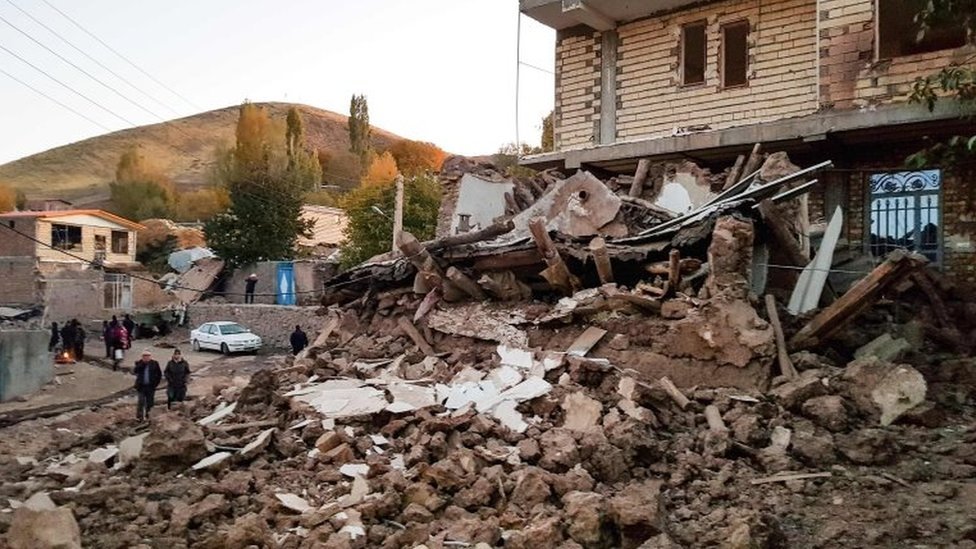

Tehran: A 5.5-magnitude earthquake that struck southern Iran early Thursday triggered concern across the region, but international monitoring agencies and seismologists have confirmed that the event was a natural geological phenomenon with no link to any suspected nuclear test. According to the German Research Centre for Geosciences (GFZ), the quake was recorded at 7:13 am, with its epicentre located about 35 km southwest of Mohr city in Fars province.
The earthquake occurred at a depth of around 10 kilometres, which allowed the tremors to be clearly felt in nearby areas. Mohr, a town with an estimated population of 35,000, was the closest settlement to the epicentre, while mild tremors were also reported from other parts of Fars province.
Certified Cyber Crime Investigator Course Launched by Centre for Police Technology
No reports of casualties or major damage
Local authorities said there were no immediate reports of casualties or significant structural damage. Emergency services were placed on alert, and assessment teams were deployed to survey buildings and infrastructure in the affected areas. Monitoring for possible aftershocks is ongoing, although the situation has been described as stable.
Rumours fuelled by regional tensions
Amid ongoing geopolitical tensions and scrutiny of Iran’s nuclear programme, speculation surfaced on social media suggesting the tremor could have been caused by an underground nuclear test. However, seismic experts and global monitoring networks dismissed these claims, stating that the waveform patterns matched natural tectonic movement, not an انفexplosive event.
Scientists noted that nuclear tests and earthquakes produce distinctly different seismic signatures, which are easily detected by international verification systems. Available data showed no indicators of an artificial blast.
Iran lies in a high seismic zone
Iran is among the world’s most earthquake-prone countries, located at the convergence of several major tectonic plates. Moderate to strong earthquakes are relatively common in the region, and experts described the latest tremor as part of the country’s normal seismic activity.
Precautionary measures and inspections
Authorities have begun structural inspections in the affected districts and advised residents to remain cautious, stay in open spaces if aftershocks occur, and rely only on official updates. Disaster response units remain on standby as a precaution.
Heightened sensitivity amid geopolitical climate
Analysts said that in a climate of heightened military and diplomatic tension, even routine natural events can trigger misinformation and public anxiety. Rapid circulation of unverified claims on social media contributed to the confusion following the quake.
Based on current scientific assessments, the incident is classified as a moderate natural earthquake. International and local agencies continue to monitor the region, while experts have urged the public to avoid speculation and depend on verified information from authoritative sources.
