

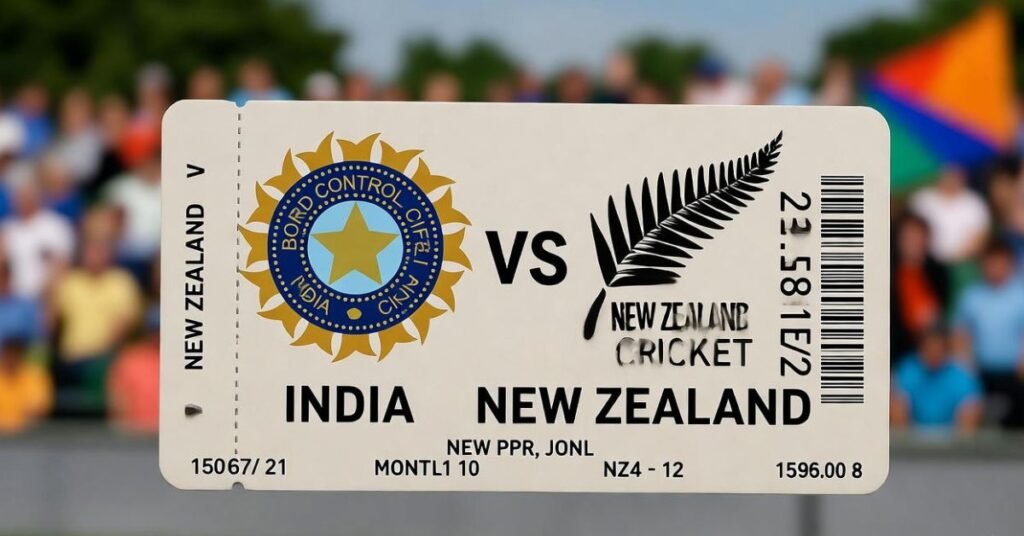

BHOPAL: As tickets for a high-profile international cricket match vanished within minutes, a parallel marketplace quietly emerged on social media. Police in Indore now say that scarcity, confusion and a crashed booking platform created fertile ground for a coordinated online fraud that left fans angry, wallets lighter and authorities pointing fingers.
A Rush for Seats, and an Opening for Fraud
India and New Zealand are scheduled to play the third One Day International on January 18 at Holkar Stadium in Indore, a venue with an approximate seating capacity of 30,000. But when online ticket sales opened at 5 a.m. on January 3, demand quickly overwhelmed the system. The official platform crashed under heavy traffic, leaving millions of users waiting for hours, many unable even to reach the payment page.
Within minutes, cheaper tickets for popular stands sold out, followed soon after by premium categories. By the time availability was exhausted, nearly 90 percent of cricket fans attempting to book were left empty-handed, according to estimates cited by local officials. Frustration spilled onto social media, where posts lamented not only the speed of the sell-out but also the apparent lack of transparency around how many tickets were actually released to the general public.
Certified Cyber Crime Investigator Course Launched by Centre for Police Technology
Officials later said that a substantial portion of seats had been set aside for members of the Madhya Pradesh Cricket Association, affiliated clubs, sponsors, and administrative and player quotas, including allocations linked to the Board of Control for Cricket in India.
How the Scam Worked on Social Media
According to the Indore Crime Branch, scammers exploited the booking chaos by advertising tickets on platforms such as Instagram. Investigators say complaints followed a familiar pattern: victims were shown photographs or screenshots of tickets, asked to scan UPI QR codes, and then blocked immediately after payment.
Police described two main methods. In one, fraudsters took advance money and sent fake or digitally altered tickets. In the other, victims were directed to links or APK files under the guise of ticket booking, allowing scammers to steal personal data and drain bank accounts.
Across cases, investigators identified a consistent script: promises of unusually large quantities of tickets—50 or even 100, despite official limits of four per buyer—demands for 50 percent advance payment, refusal to meet face-to-face, and the rapid deletion of chat histories and images once doubts were raised.
Inside the Reporter’s Sting
To understand the mechanics of the fraud, a reporter posed as a customer seeking tickets. Over several days, conversations were held with more than five individuals advertising easy access to seats.
In one instance, an Instagram account named “eventmanager12” shared a phone number registered on Truecaller as Kavindra Singh Rana. After providing a rate list, the seller requested personal details—name, email address, mobile number and full address—and insisted on a 50 percent advance. The promise: a QR-code ticket sent by email, with a hard copy delivered within 48 hours.
In another case, a man identifying himself as Karan Kumar Garg attempted to establish credibility by sharing screenshots of tickets and even an image of his Aadhaar card, listing an address in Chandigarh. When the reporter suggested meeting in Indore to complete the deal, Garg refused. Within minutes, the shared images were deleted from the chat.
A third interaction escalated quickly when the reporter mentioned interest in buying 50 tickets. The seller immediately sent a QR code for advance payment, claiming he could supply any number of seats. When hesitation followed, all images were again erased—an action police say is a clear red flag.
Arrests, Advisories and a Vacuum of Accountability
Following multiple complaints, police arrested two individuals accused of running online ticket fraud operations. Additional Deputy Commissioner of Police Rajesh Dandotiya said the accused routinely blocked victims after receiving payments and used fake digital evidence to gain trust.
The Indore Crime Branch has since issued a public advisory urging citizens not to purchase tickets through unofficial channels. Yet questions about oversight remain. When asked how tickets reached the black market, Rohit Pandit, the Chief Administrative Officer of the MPCA, said the association could not be held responsible and suggested that individuals might be reselling tickets after purchase. On what action MPCA had taken against black marketing, he responded that the matter lay with the police. Asked directly who bore responsibility for fraud carried out in the name of tickets, he said the association had “no role.”
