

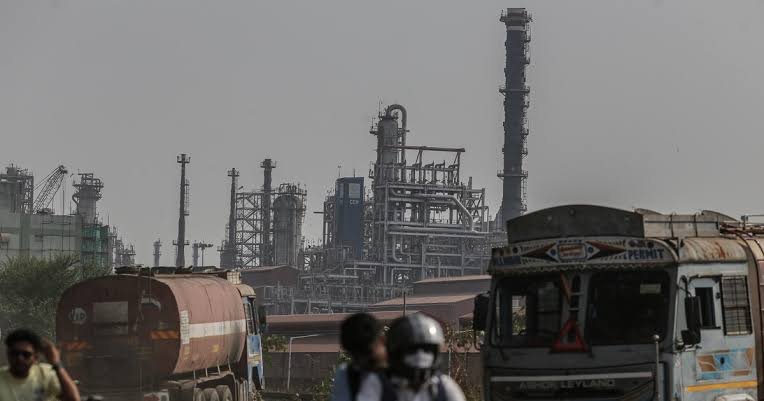

Indian refiners including Indian Oil, Bharat Petroleum and Reliance Industries have started declining offers for Russian crude supplies slated for March and April deliveries, part of a broader shift that could strengthen prospects of a trade agreement with the United States, industry sources said.
Traders familiar with discussions said the refiners — traditionally among the largest buyers of discounted Russian oil — have opted not to accept new cargo offers from Russia for the immediate future. Scheduled shipments already booked for March are expected to be delivered, but most refiners have stayed away from fresh purchases for later in the year.
The apparent realignment comes as New Delhi and Washington have outlined plans for a bilateral trade arrangement that would lower tariffs and deepen economic cooperation, with both sides aiming to conclude the deal by March. U.S. President Donald Trump has already lifted punitive tariffs on Indian goods that were imposed over India’s continued Russian crude imports, saying New Delhi had committed to curbing such purchases.
Strategic shift or commercial choice?
India became one of the world’s largest buyers of discounted Russian crude following Moscow’s invasion of Ukraine in 2022, taking advantage of steep price differentials. But the dynamics of India’s crude sourcing have evolved as global geopolitical pressures and trade negotiations have intensified. Observers say the current moderation in purchases reflects both commercial calculations and strategic signalling amid sensitive U.S.–India talks.
Certified Cyber Crime Investigator Course Launched by Centre for Police Technology
Refineries and diversification
Industry players highlight that Indian refiners have been diversifying crude sources even prior to the current shift, buying more oil from the Middle East, Africa and South America. Reliable alternative supplies help reduce dependence on any single exporter, especially amid changing pricing and sanction risks. A refinery executive, speaking on condition of anonymity, noted that global supply patterns often shift on freight costs, quality preferences, and refining margins, apart from political considerations.
Balancing energy security and diplomacy
While New Delhi has signalled willingness to adjust its procurement patterns to advance broader trade ties, officials stress that India’s energy security — securing reliable and affordable fuel for a population of nearly 1.4 billion — remains a priority. Analysts say any long-term pivot away from Russian crude would depend on balancing cost competitiveness, refinery configurations and overall energy requirements.
U.S. perspective
The United States, for its part, had previously imposed tariffs on Indian exports in response to robust Russian oil imports. But recent shifts in policy, including tariff removals, have underlined Washington’s intent to geographically broaden India’s energy ties and reward moves seen as aligning with U.S. geopolitical interests.
What lies ahead
Market sources say refiners are likely to continue assessing offers from global crude suppliers based on commercial pricing and strategic considerations. Though immediate new Russian purchases may be limited, contractual obligations and longer-term planning will shape India’s crude mix in the coming quarters. The ongoing negotiations with the United States — including final steps toward a trade pact — will remain a key backdrop to these decisions.
As India edges toward greater energy sourcing diversity, stakeholders across industry and government will closely watch how geopolitical imperatives intertwine with commercial realities in the global oil market.
