

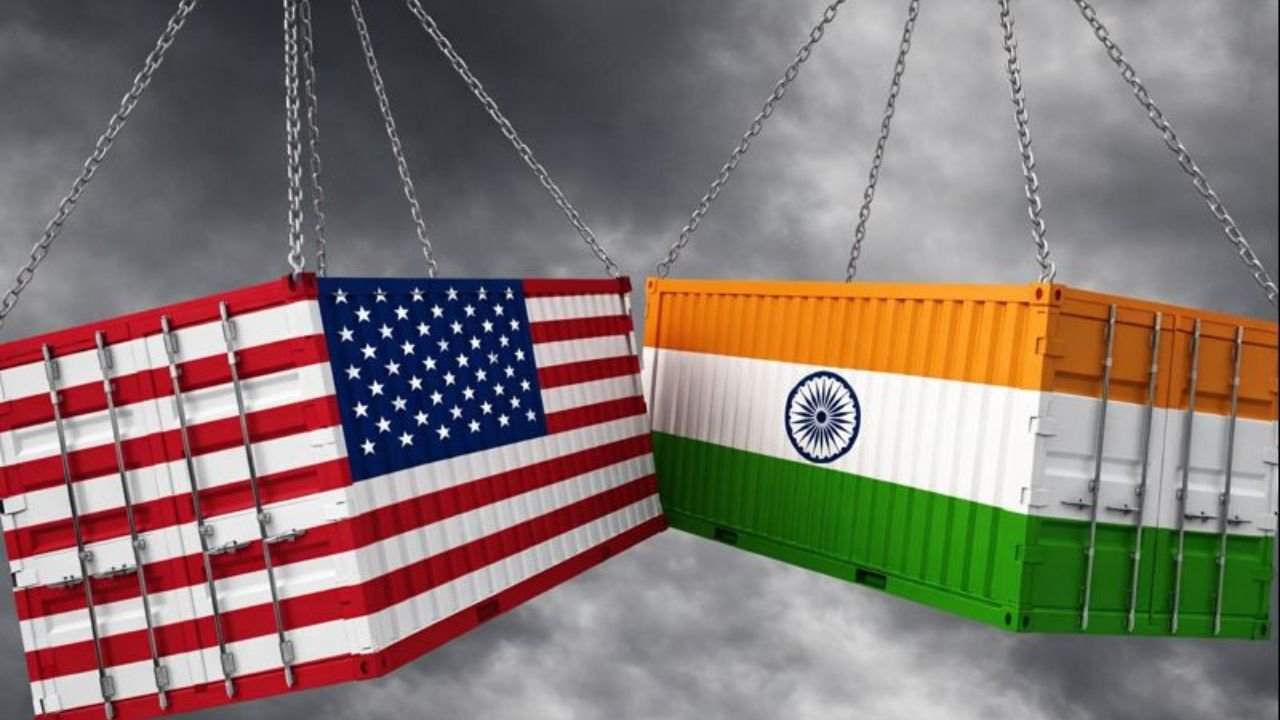

New Delhi | The dramatic rollback of US tariffs on Indian goods—from a punitive 50% to 18%—marks the culmination of nearly a year of tense negotiations between India and the United States, shaped as much by economics as by politics and geopolitics.
The breakthrough came on February 2, when US President Donald Trump announced that the steep tariffs imposed on Indian exports would be cut with immediate effect, signalling that the two sides had finally converged on a trade understanding. The announcement followed months of uncertainty during which India faced some of the highest US tariffs among major trading partners.
Certified Cyber Crime Investigator Course Launched by Centre for Police Technology
Talks begin after US election
Discussions on a bilateral trade deal gathered momentum soon after the November 2024 US presidential election, which made it clear that Trump’s second term would again prioritise aggressive trade bargaining under the “America First” doctrine. Anticipating a tough negotiating environment, India quickly constituted a trade delegation to open channels with the incoming administration.
Prime Minister Narendra Modi was among the early world leaders to meet Trump in Washington in mid-February, signalling New Delhi’s intent to keep trade frictions from escalating. India also indicated willingness to expand purchases of US energy and defence equipment, hoping to narrow the trade deficit that had long irked Washington.
Tariff pressure builds
Despite early engagement, tensions mounted. Trump repeatedly labelled India a “tariff king,” alleging that New Delhi imposed excessively high duties—sometimes between 100% and 150%—on American goods while enjoying relatively open access to the US market.
In response, India attempted to ease friction through its 2025 Union Budget, cutting import duties on nearly two dozen products. These included a reduction in tariffs on large-capacity motorcycles and a sharp cut in duties on bourbon whisky—moves that triggered domestic criticism but were aimed at placating US concerns.
The concessions, however, failed to fully satisfy Washington. Disagreements persisted over India’s tariffs and regulatory barriers on agricultural products such as edible oils, apples, dairy items and fishery imports. The standoff culminated on April 2, when the Trump administration imposed a 26% reciprocal tariff on Indian goods as part of what it branded a “Liberation Day” tariff package.
From relief to rupture
Even at that stage, India fared better than several export-driven economies. The US slapped 54% tariffs on China, 46% on Vietnam, 37% on Bangladesh and 36% on Thailand, while India remained relatively competitive by comparison.
Washington then announced a 90-day pause on the new tariffs, offering countries a window to strike bilateral deals. While the US signed agreements with partners including the European Union and Japan during this period, India refrained from rushing negotiations.
Relations deteriorated sharply in April–May, against the backdrop of heightened India–Pakistan tensions following a terror attack in Pahalgam and India’s subsequent military operation. Trump publicly claimed that tariff pressure had helped avert a wider conflict—an assertion New Delhi firmly rejected, stressing that decisions were taken independently and at Pakistan’s request.
Tariffs peak at 50%
The diplomatic chill spilled back into trade. As the 90-day tariff pause expired, Trump announced a 25% tariff on India, coupled with a threat to impose an additional 25% penalty over India’s continued purchase of Russian oil. By August, total US tariffs on Indian goods had risen to 50%, the highest applied to any major US trading partner.
India responded by adjusting domestic economic policies and pushing consumption-led growth to cushion the impact. Behind the scenes, negotiators continued talks, seeking a face-saving exit from an increasingly damaging standoff.
The breakthrough
After nearly a year of back-and-forth, the February 2 announcement confirmed that Washington would scale tariffs back to 18%, effectively resetting the trade relationship. While full details of the agreement are yet to be disclosed, the rollback is being seen as a strategic win for India at a time when global supply chains are being reconfigured.
The episode underscores how trade, diplomacy and geopolitics have become tightly intertwined. For now, the tariff truce has eased pressure on Indian exporters—but its durability will depend on how faithfully both sides implement the understandings reached after one of the most turbulent chapters in recent India–US trade relations.
About the author — Suvedita Nath is a science student with a growing interest in cybercrime and digital safety. She writes on online activity, cyber threats, and technology-driven risks. Her work focuses on clarity, accuracy, and public awareness.
