

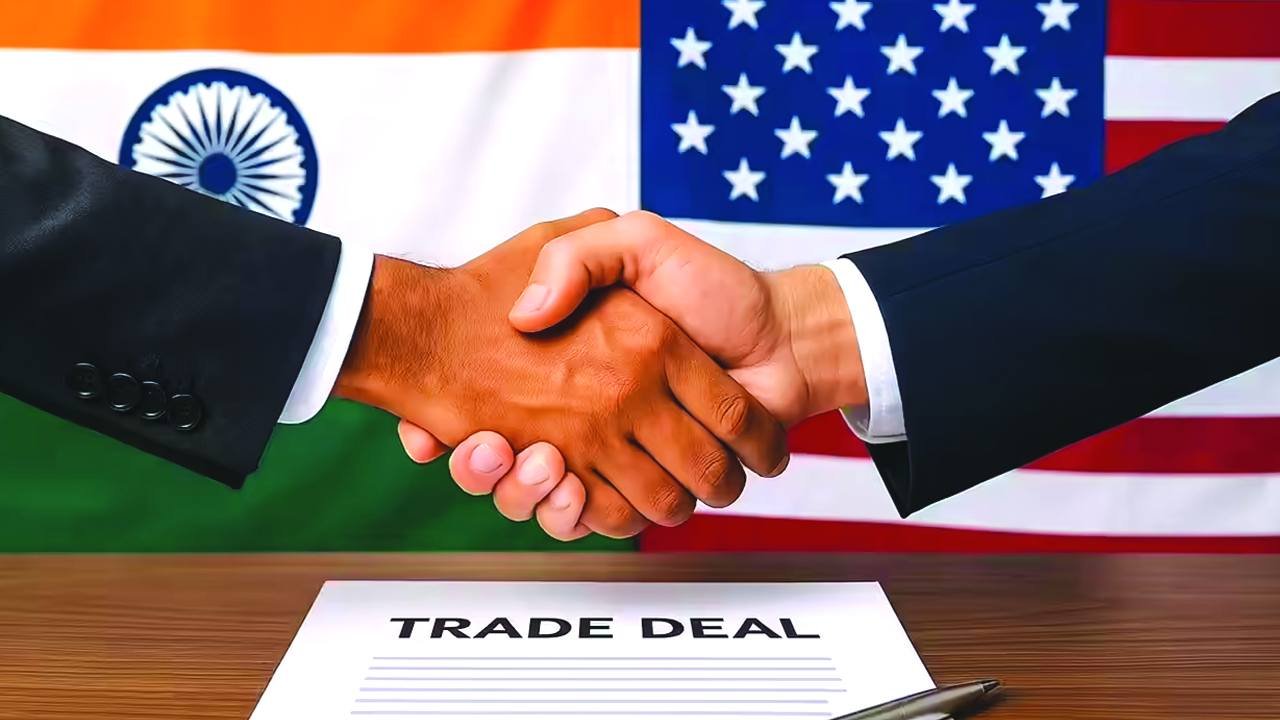

New Delhi: India and the United States are likely to sign an interim trade agreement in March, with implementation expected from April, as both sides move to finalise the legal framework of the pact in a fresh round of negotiations beginning February 23 in the US.
Officials familiar with the process said the three-day meeting will focus on sealing the legal text, tariff concessions, market access provisions and compliance mechanisms. The two countries had earlier issued a joint statement indicating that the broad contours of the interim agreement had already been agreed upon.
The government believes the deal will provide momentum to bilateral trade and help diversify supply chains at a time of shifting global trade dynamics. Sectors such as manufacturing, technology, pharmaceuticals, agricultural products and services are expected to see increased engagement once the agreement comes into force.
Alongside the US pact, India’s free trade agreements with the United Kingdom and Oman are also expected to be implemented from April, while a separate agreement with New Zealand could take effect by September. These deals are being positioned as key elements of India’s strategy to expand export markets and deepen integration with major economies.
Certified Cyber Crime Investigator Course Launched by Centre for Police Technology
Bridge Pact Towards Comprehensive Trade Deal
Trade experts said the India–US interim arrangement would function as a “bridge agreement” towards a comprehensive free trade pact, allowing both sides to operationalise limited tariff and market access commitments in less sensitive sectors while continuing negotiations on more contentious issues.
The proposed visit of the US Secretary of State to India in the coming months is also being viewed as a sign of deepening strategic and economic ties. Cooperation under multilateral platforms such as the Quad, as well as partnerships in critical minerals, semiconductors and advanced technology supply chains, is expected to complement the trade engagement.
Part of a Broader Trade Expansion Strategy
Analysts noted that the interim deal could improve access for Indian exporters to the US market, particularly in areas where non-tariff barriers have been a persistent challenge. At the same time, American companies may find new opportunities for investment and supply chain expansion in India.
However, sensitive areas such as agriculture, dairy and data localisation are likely to be addressed in subsequent rounds of negotiations aimed at a broader, comprehensive agreement. The interim pact is expected to focus on relatively less contentious sectors to ensure early gains.
Strategic and Economic Convergence
Economists said the move would strengthen India’s strategic position amid global trade tensions and ongoing supply chain realignments. In recent years, India has signed trade agreements with countries including Australia and the UAE to widen export avenues, and the proposed interim deal with the US is seen as the next step in that trajectory.
The government has emphasised that trade agreements must strike a balance between protecting domestic industry and enhancing export competitiveness. If signed in March and implemented from April, the agreement could begin influencing trade flows from the start of the new financial year, potentially supporting export growth and investment inflows.
