

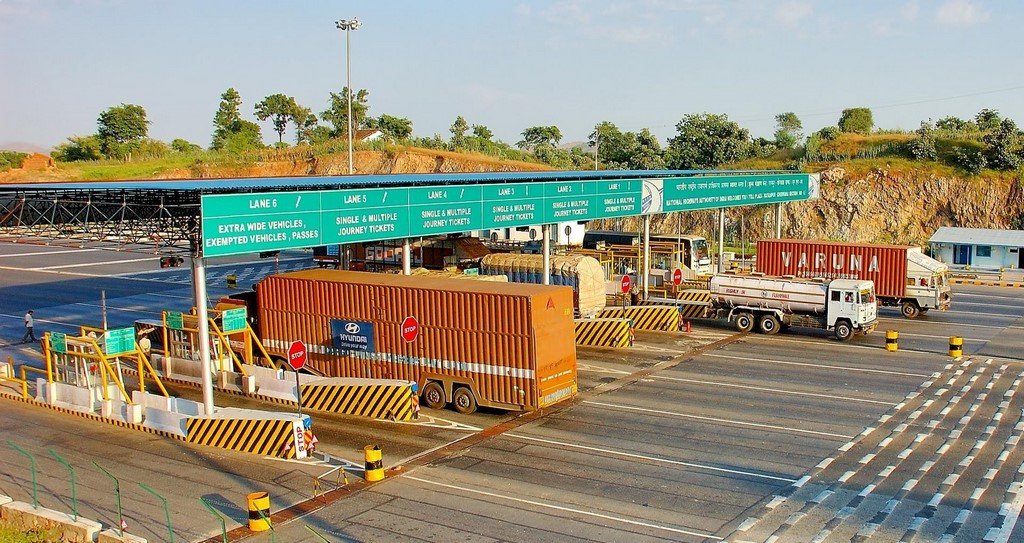

New Delhi: In a move to tighten toll collection and improve compliance on national highways, the Centre has notified significant changes to vehicle-related regulations. Under the revised provisions, vehicles with outstanding toll dues will no longer be eligible for key statutory services, including the issuance of a No Objection Certificate (NOC), renewal of fitness certificates, and, in certain cases, national permits. Officials said the measures are intended to curb toll evasion and strengthen the electronic toll collection framework.
The changes have been notified through the Central Motor Vehicles (Second Amendment) Rules, 2026, introducing amendments to the Central Motor Vehicles Rules, 1989. The revised framework links toll payment compliance directly to essential vehicle services, with policymakers indicating that the move is expected to improve adherence, enhance revenue collection, and reduce congestion caused by toll disputes and enforcement delays on highways.
Certified Cyber Crime Investigator Course Launched by Centre for Police Technology
Services impacted by toll arrears
Under the new rules, the following services will be affected if toll dues remain unpaid:
No Objection Certificate (NOC): Vehicles will not be issued an NOC for ownership transfer or inter-state movement unless all pending toll dues are cleared.
Fitness Certificate: Renewal of the mandatory fitness certificate—required to certify vehicle safety and roadworthiness—will be denied until the “unpaid user fee” is fully settled.
National Permit: For commercial vehicles, obtaining or retaining a national permit will be contingent on there being no outstanding toll liabilities.
Officials clarified that the term “unpaid user fee” refers to toll charges that have been recorded by the electronic toll collection system but have not been paid under the provisions of the National Highways Act, 1956.
Preparing for barrier-free tolling
The government’s decision is also being viewed as part of preparations for the proposed Multi-Lane Free Flow (MLFF) tolling system. Under MLFF, physical toll plazas and barriers will be eliminated, allowing vehicles to pass through highways without stopping while toll charges are deducted automatically.
Authorities said stricter compliance norms are essential for the success of such barrier-free systems, ensuring that vehicle owners are unable to bypass toll payments in an automated environment. The integration of toll records with vehicle documentation is expected to play a key role in enabling seamless implementation of the new system.
Changes to Form 28
To simplify procedures and enhance transparency, amendments have also been made to Form 28, which is used for issuing NOCs. Vehicle owners will now be required to formally declare that there are no outstanding toll dues against their vehicles at the time of application.
In addition, certain sections of Form 28 will be issued electronically through online portals, reducing paperwork and speeding up processing for applicants. Officials said the digitisation of forms is aimed at improving convenience for the public while ensuring accurate verification of toll compliance.
Emphasis on compliance and awareness
According to officials, the objective of the revised provisions is not punitive action but improved compliance. Vehicle owners have been advised to regularly check the status of their FASTag and other digital toll accounts and to clear any pending dues in a timely manner.
Authorities noted that timely payment will help avoid delays in obtaining essential vehicle documents and will also contribute to smoother traffic movement on highways.
The government said that in an era of expanding digital payments and automated transport systems, the new measures represent an important step towards modernising toll management. The Ministry of Road Transport and Highways stated that stricter enforcement is expected to curb toll evasion, improve revenue realisation, and ensure more efficient traffic operations across the national highway network.
