
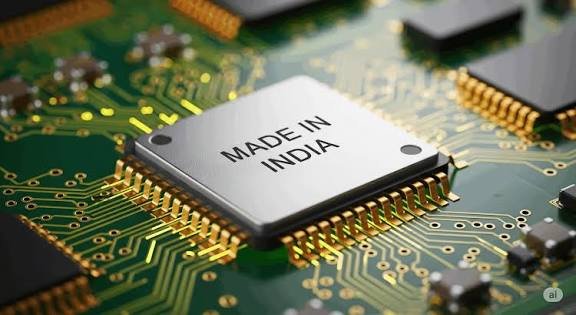

New Delhi: India has taken a decisive step toward reshaping its position in the global semiconductor landscape, signaling a strategic shift from import dependence to domestic manufacturing and design leadership. With the Union Budget 2026–27 allocating ₹1,000 crore to India Semiconductor Mission 2.0 (ISM 2.0), the government has underlined its intent to turn the country into a major global hub for chip design, manufacturing and supply chains over the coming decade.
A Budget Signal to the Global Chip Industry
The strengthened mission aims to build a comprehensive semiconductor ecosystem within India, covering equipment manufacturing, materials development, chip design and intellectual property creation. Officials say the renewed push is designed to reduce reliance on foreign suppliers while positioning India as a reliable alternative in an increasingly fragmented global supply chain environment.
Under ISM 2.0, the government plans to support the indigenous development of semiconductor manufacturing tools, machinery and critical materials, areas traditionally dominated by a handful of global players. Alongside this, a strong emphasis is being placed on fully Indian-designed chips and locally owned intellectual property, seen as crucial to long-term technological sovereignty.
Certified Cyber Crime Investigator Course Launched by Centre for Police Technology
From Import Reliance to Domestic Capability
Policy documents indicate that India has set an ambitious goal: by 2029, 70–75% of the country’s domestic semiconductor requirements are to be met through chips designed and manufactured within India. The target comes at a time when semiconductors are widely regarded as the backbone of the modern economy, powering everything from smartphones and electric vehicles to artificial intelligence systems and defence platforms.
India’s semiconductor market is already on a sharp growth trajectory. Industry estimates place the market size at around $38 billion in 2023, rising to $45–50 billion in 2024–25. By 2030, the market is projected to expand to $100–110 billion, driven by rising electronics consumption, digitalisation, electric mobility and data-intensive technologies such as AI and cloud computing.
Building the Ecosystem, Not Just Factories
The government’s strategy under ISM 2.0 extends beyond manufacturing capacity. A key focus area is industry-led research and development, aimed at bridging the gap between academic innovation and commercial deployment. Special attention is also being given to workforce development, with plans to roll out targeted training programmes in chip design, wafer fabrication, advanced packaging and semiconductor testing.
Officials believe that nurturing a skilled talent pool is essential if India is to compete with established semiconductor powerhouses. Training initiatives are expected to involve collaboration between industry, academic institutions and specialised research centres to create a steady pipeline of high-end technical expertise.
Market Growth and Workforce Readiness
Experts say the implications of a successful semiconductor push could be far-reaching. Strengthening domestic chip capabilities is expected to deliver direct benefits to automobiles, consumer electronics, artificial intelligence, defence, telecom and renewable energy sectors. In addition to boosting industrial resilience, large-scale investments could generate high-quality employment and open up new export opportunities.
The government also sees India’s broader strengths—its deep IT talent base, expanding domestic market and improving ease of doing business—as key advantages in attracting both foreign and domestic investment into the semiconductor ecosystem. Industry executives expect global companies to increasingly view India as a long-term manufacturing and design partner rather than just a consumer market.
Strategic Payoffs and Execution Challenges
However, analysts caution that semiconductors remain one of the most capital-intensive and technologically complex industries in the world. Success will depend on sustained policy support, timely execution of projects and strategic global partnerships. Supply chain integration, access to advanced technology and consistent funding will be critical to meeting the mission’s ambitious timelines.
Government officials maintain that ISM 2.0 has been structured with these challenges in mind and is backed by a long-term roadmap rather than short-term incentives. The emphasis, they say, is on building a resilient, end-to-end ecosystem that can evolve with global technological shifts.
Overall, the semiconductor push outlined in Budget 2026–27 marks a significant inflection point. India is no longer positioning itself merely as a consumer of chips, but as a serious contender in design, manufacturing and innovation. If executed as planned, the strategy could fundamentally reshape India’s technological and economic landscape in the years ahead.
