

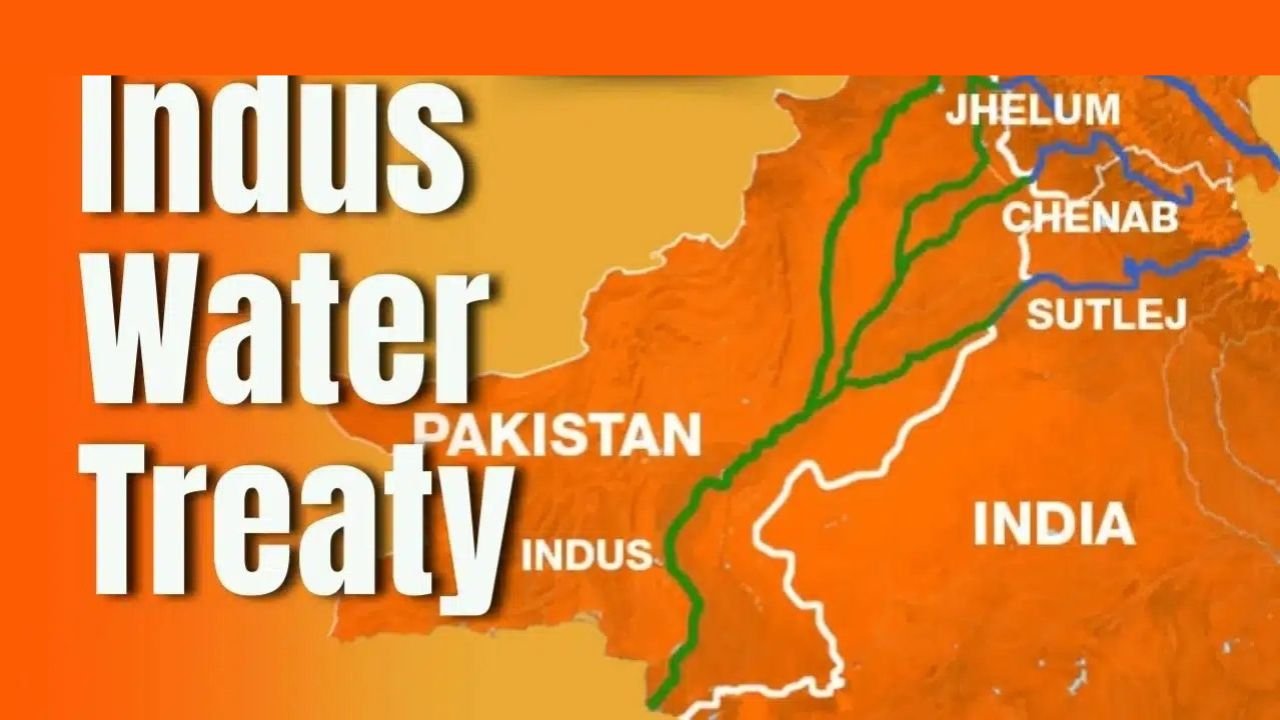

New Delhi: India has taken a firm stand against Pakistan’s renewed push on international platforms over the Indus Waters Treaty, rejecting an order issued by an international arbitration forum and refusing to participate in the proceedings. New Delhi has stated unequivocally that the Court of Arbitration which issued the directive lacks legal validity and jurisdiction, and that no binding obligation can be imposed when the treaty itself stands temporarily suspended due to terrorism-related concerns.
The arbitration forum had directed India to submit operational records, logbooks and technical data relating to its hydropower projects—particularly the Baglihar Hydroelectric Project and the Kishanganga Hydroelectric Project—for use in further hearings. The order also set a deadline of February 9, 2026, asking India either to comply or to formally explain any non-compliance. India has dismissed the directive as unconstitutional and unlawful, making it clear that it will not engage with the process at any stage.
Certified Cyber Crime Investigator Course Launched by Centre for Police Technology
Process termed illegal
Government sources said India does not recognise the arbitration body as being lawfully constituted, nor does it accept that the forum has any authority under the Indus Waters Treaty framework. According to New Delhi, when the validity of the treaty itself is temporarily in abeyance, no derivative process can claim enforceable powers. India has also underlined that the legitimacy of any international mechanism flows from its lawful creation and agreed jurisdiction, not from unilateral assertions or external pressure.
Terrorism as the decisive factor
India had announced the temporary suspension of the Indus Waters Treaty on April 23, 2025, citing sustained cross-border terrorist activity emanating from Pakistan. Officials argue that such actions strike at the core principles of trust, cooperation and peaceful coexistence on which the treaty was founded. From India’s perspective, no long-term international agreement can function in isolation from the security environment between the parties involved.
Beyond a technical water dispute
Analysts say the confrontation has moved well beyond questions of water-sharing formulas or engineering design. The issue has become emblematic of deeper strains in India–Pakistan relations, encompassing security anxieties, diplomatic friction and a severe trust deficit. While Pakistan continues to frame the matter as a violation of international law and treaty obligations, India maintains that agreements cannot be enforced mechanically when terrorism continues to dominate the bilateral landscape.
India’s unequivocal message
India has reiterated that its hydropower projects have been developed strictly within the provisions of the treaty and do not permanently obstruct river flows. Despite this, Pakistan has repeatedly sought to escalate the issue at international forums, a move New Delhi views as an attempt to exert political pressure rather than resolve substantive concerns. India’s response has been categorical: there is no question of appearing before an authority it considers illegitimate and devoid of jurisdiction.
Global response under watch
Pakistan has raised the matter with the international community, urging India to adhere to treaty obligations. New Delhi, however, has signalled to global partners that terrorism and treaty compliance cannot run in parallel. India’s position is that durable agreements are possible only in an atmosphere of peace and mutual trust, not under persistent security threats.
Taken together, the latest standoff over the Indus Waters Treaty highlights how water-sharing has emerged as a central issue in the diplomatic and security discourse between India and Pakistan. India has made it clear that it will not yield to pressure tactics or unlawful international orders, insisting that any meaningful resolution must rest on the restoration of peace and a terrorism-free environment.
About the author — Suvedita Nath is a science student with a growing interest in cybercrime and digital safety. She writes on online activity, cyber threats, and technology-driven risks. Her work focuses on clarity, accuracy, and public awareness.
