

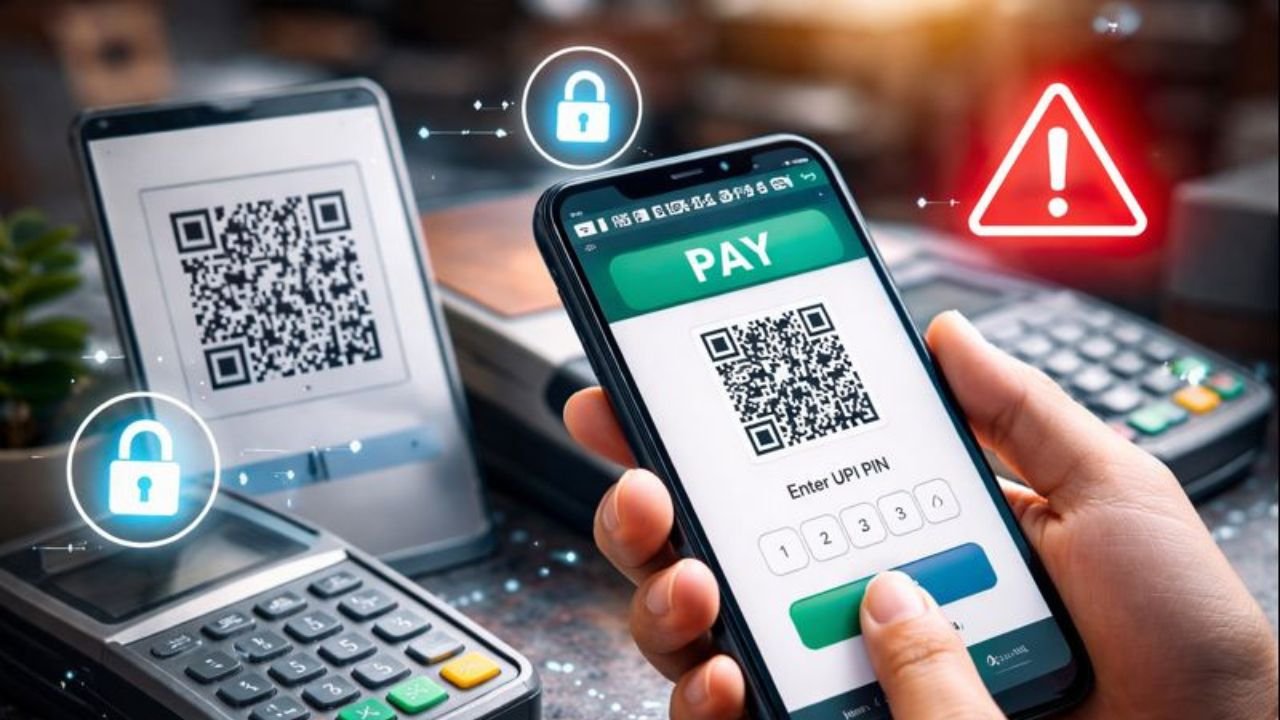

New Delhi | 4 January 2026 | In 2026, India’s digital economy has reached a point where convenience and vulnerability are advancing side by side. The smartphone has evolved far beyond a communication tool; it is now a full-fledged mobile bank. From roadside tea stalls and grocery shops to hospitals, multiplexes, and government offices, UPI, mobile wallets, and online banking platforms have pushed cash to the margins of daily life.
However, this rapid transition to cashless transactions has also opened the door to a parallel rise in cyber fraud, turning digital payment security into one of the most pressing challenges of the year.
Government agencies and cybercrime units note that as transaction volumes surge, cases of phishing, fake customer-care calls, QR code scams, refund frauds, and so-called ‘digital arrest’ rackets have risen sharply. Investigators say the gap between technological growth and consumer awareness is widening—making ordinary users the weakest link in the digital payment chain.
Convenience Becomes a Criminal Advantage
UPI’s biggest strength—speed—has become its greatest vulnerability. Transactions that once required physical presence, paperwork, and verification now take just a few seconds. Cybercriminals have adapted quickly to this reality.
Impersonating bank officials or customer-care executives, fraudsters create urgency through threats of account suspension, fake refunds, or legal action. A hurried click on a malicious link or a casually shared OTP is often enough to drain an account within minutes.
According to the Future Crime Research Foundation (FCRF), most digital payment frauds in India today rely less on breaking systems and more on breaking human judgement. The organisation’s analysis highlights that social engineering—manipulating fear, greed, and urgency—has overtaken technical hacking as the primary weapon of cybercrime.
Human Error: The Biggest Security Gap
Former IPS officer and nationally recognised cybercrime expert Triveni Singh stresses that digital payment security cannot be outsourced entirely to banks or apps.
“Cybercriminals today are not one step ahead in technology, but two steps ahead in understanding human psychology,” Singh says. “They don’t need to hack servers if they can convince users to hand over access themselves.”
He cautions that sharing OTP details, UPI PINs, or enabling screen sharing is effectively equivalent to giving away the keys to one’s home. Once access is granted, recovery becomes difficult, time-consuming, and emotionally draining for victims.
Why the Threat Has Intensified in 2026
Experts identify several reasons behind the heightened risk this year:
- Rapid adoption of digital payments in rural and semi-urban India, often without adequate cyber literacy
- A surge in first-time digital users, unfamiliar with fraud patterns
- Fake apps and phishing websites that closely mimic legitimate platforms
- Increasing use of AI-driven fraud tools, enabling criminals to automate and personalise scams
The FCRF warns that unless user behaviour, digital discipline, and awareness improve significantly, the scale and sophistication of digital fraud will continue to expand.
Security Is No Longer Optional
Experts agree that retreating from digital payments is neither realistic nor desirable. The solution lies in informed usage. Users are advised to verify callers independently, avoid clicking on unsolicited links, never share OTPs or PINs, and treat every digital transaction with the same seriousness as handling physical cash.
India’s digital future depends on maintaining a fragile balance—
where convenience keeps moving forward, but security always stays one step ahead.
About the author — Suvedita Nath is a science student with a growing interest in cybercrime and digital safety. She writes on online activity, cyber threats, and technology-driven risks. Her work focuses on clarity, accuracy, and public awareness.
