

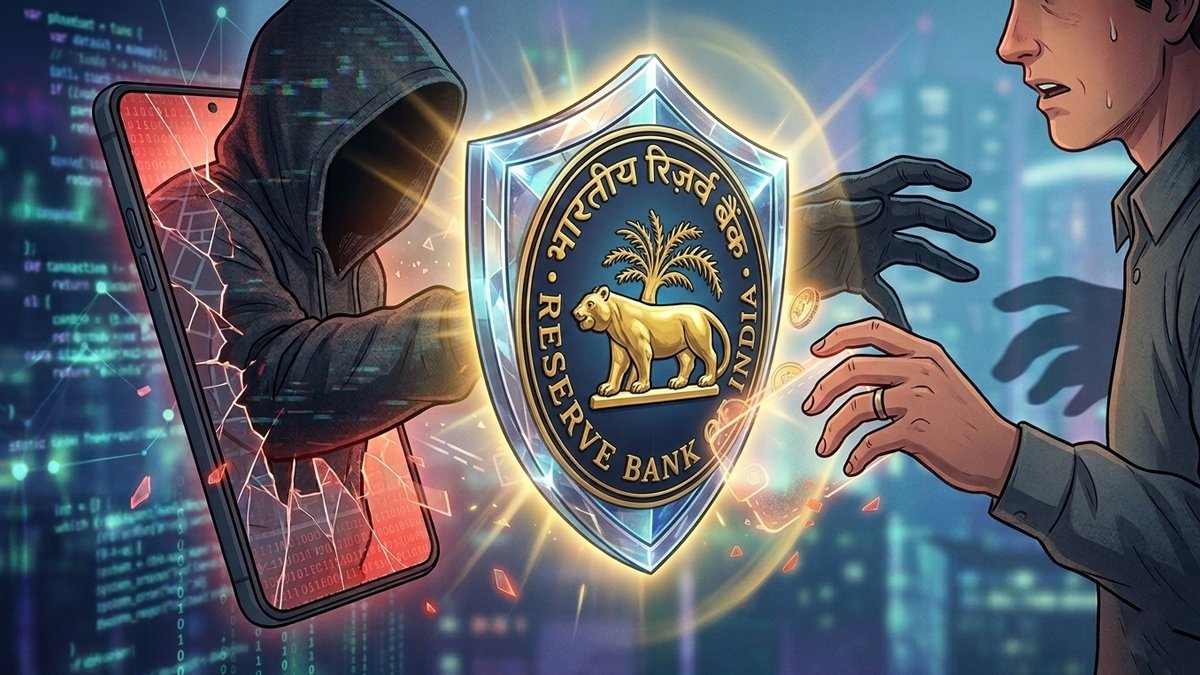
In a significant push to counter the rising threat of digital payment fraud, the Government of India has unveiled a multi-layered strategy combining artificial intelligence (AI)-driven monitoring systems, stricter regulatory norms by the Reserve Bank of India (RBI), and enhanced consumer protection measures.
The announcement was made in Parliament by Minister of State for Finance Pankaj Chaudhary, who highlighted the growing scale and sophistication of cyber-enabled financial frauds amid rapid digitalisation of banking services.
AI-Powered Fraud Detection Takes Centre Stage
At the core of the government’s strategy is the deployment of advanced AI and data analytics tools to detect and prevent fraud in real time. A key institutional development in this regard is the creation of the Indian Digital Payment Intelligence Corporation (IDPIC), a dedicated entity designed to monitor fraud patterns across the banking ecosystem.
The platform leverages technologies such as machine learning and big data analytics to identify suspicious transactions, map fraud networks, and enable coordinated responses among financial institutions.
In parallel, the RBI has introduced “MuleHunter.AI,” an AI-based solution aimed at identifying mule accounts—bank accounts used by fraudsters to transfer illicit funds. The system is already operational across 26 banks and is expected to be scaled further nationwide.
FCRF Launches Premier CISO Certification Amid Rising Demand for Cybersecurity Leadership
Stricter RBI Norms And Consumer Protection Measures
To complement technological interventions, the RBI has updated its regulatory framework on unauthorised electronic banking transactions. The revised norms are designed to provide faster relief to victims and strengthen accountability within the banking system.
One of the key features includes provisions for compensation in small-value fraudulent transactions, ensuring quicker redressal and enhanced consumer protection.
Additionally, the central bank has been moving towards a more robust authentication framework, including risk-based verification systems and mandatory multi-factor authentication to reduce the risk of unauthorised transactions.
Real-Time Monitoring And Industry-Wide Coordination
Banks across India have been directed to adopt real-time transaction monitoring systems capable of detecting unusual patterns, behavioural anomalies, and interconnected fraud activities at an early stage.
The move reflects a broader shift from reactive fraud resolution to proactive fraud prevention, with institutions expected to deploy AI tools capable of flagging suspicious activities before financial losses occur.
Rising Fraud Landscape Drives Urgency
The government’s intervention comes amid a sharp increase in digital payment fraud cases, driven by the exponential growth of UPI, mobile banking, and online financial services. Fraudsters are increasingly using social engineering techniques, phishing attacks, and mule accounts to siphon funds quickly and anonymously.
Experts note that as transaction volumes rise, so do vulnerabilities, making it imperative for both regulators and banks to invest in intelligent, scalable fraud detection systems.
While the new measures aim to enhance security, they also raise questions about potential friction in digital transactions. Additional authentication layers and risk-based checks could impact user experience, particularly in India’s fast-paced instant payment ecosystem.
However, policymakers maintain that the long-term benefits of fraud prevention, consumer trust, and systemic stability outweigh short-term inconveniences.
Towards A Safer Digital Payments Ecosystem
The combined push of AI-driven infrastructure, stricter RBI oversight, and institutional coordination marks a decisive step towards securing India’s digital financial ecosystem. As fraud tactics evolve, the focus is clearly shifting toward intelligent, real-time defence mechanisms rather than post-facto remedies.
About the author – Rehan Khan is a law student and legal journalist with a keen interest in cybercrime, digital fraud, and emerging technology laws. He writes on the intersection of law, cybersecurity, and online safety, focusing on developments that impact individuals and institutions in India.
