

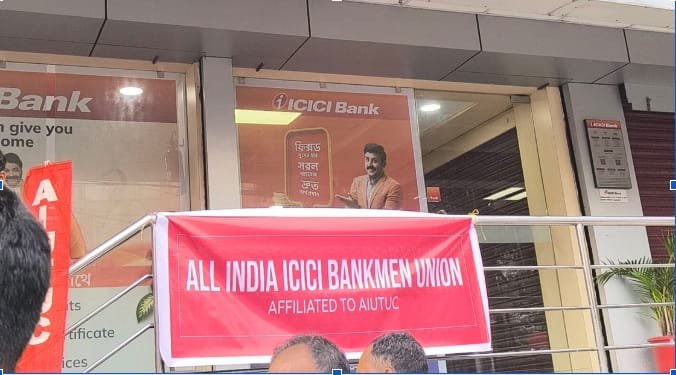
Employees and representatives associated with the All India Bank Employees’ Association (AIBEA) and All India Bank of Maharashtra Union (AIBMU) held a protest outside ICICI Bank’s Siliguri branch in West Bengal, raising concerns over alleged retrenchment, labour practices, employee treatment and human resource policies.
The demonstration was held on October 3, 2026, and included union members, former employees and affected workers, according to the information available in the report.
Why Did Bank Employees Protest?
The protest centred on allegations concerning employee retrenchment and what the demonstrators described as unfair labour and human resource practices.
The protesters raised slogans and displayed banners outside the bank branch, seeking attention to issues affecting employees. Their concerns covered job security, workplace treatment and the processes followed in employment-related decisions.
The demonstration was presented as part of a wider effort by employee representatives to seek greater protection for workers in the banking sector.
FCRF Launches CP-FRM to Build India’s Next Generation of Fraud Risk Professionals
What Concerns Were Raised?
The protesters highlighted a range of employment-related issues, including alleged arbitrary retrenchment, pressure on employees, inadequate grievance mechanisms and concerns about transparency in human resource decisions.
They also raised questions over employee dignity, workplace practices and the need for fair procedures when decisions affecting employment are taken.
The report said concerns were also raised about workload, working conditions and the treatment of employees. Protesters sought stronger mechanisms through which workers could raise grievances and receive appropriate consideration.
What Did the Unions Demand?
The protesters sought greater transparency and fairness in human resource policies and employment decisions. They called for proper procedures to be followed when dealing with workers and for employees to have access to effective grievance redressal mechanisms.
They also sought protection against what they described as arbitrary employment actions and demanded greater accountability in decisions affecting workers.
Among the broader issues raised were job security, fair treatment, respect for employee rights and greater consultation when employment-related decisions have a direct impact on staff.
What Wider Employee Issues Were Highlighted?
The demonstration also drew attention to concerns extending beyond individual employment disputes. These included the need for reasonable working conditions, protection against excessive pressure and greater recognition of employee welfare.
The protesters argued that employees should have access to transparent internal processes when raising concerns and that workplace disputes should be addressed through fair and accountable mechanisms.
They also stressed the importance of maintaining dignity at work and ensuring that employees are not left without an effective avenue for resolving grievances.
What Was Said About Retrenchment?
Retrenchment emerged as one of the central concerns during the demonstration. The protesters questioned employment practices they considered unfair and sought safeguards against arbitrary termination or removal of employees.
The report also referred to concerns surrounding due process in employment decisions. Protesters sought greater clarity over the procedures used when staff members face actions affecting their jobs.
The demonstration reflected broader demands for job protection and transparent processes, particularly when decisions can have serious financial and professional consequences for employees.
What Protections Did Employees Seek?
The protesters called for stronger grievance mechanisms, greater transparency in human resource practices and safeguards for workers affected by employment decisions.
They also sought fair procedures, improved consultation and respect for employee rights. Their demands reflected concerns that employees should be given appropriate avenues to challenge or seek review of decisions affecting their employment.
The protest also highlighted the role of collective representation in bringing workplace grievances to public attention and seeking dialogue over employment conditions.
What Happens After the Protest?
The demonstration placed the protesters’ concerns over employment practices, retrenchment and HR policies in the public domain. The issues raised centred on demands for transparency, accountability, job security and fair treatment of employees.
The protesters called for their grievances to be addressed and for employment practices to follow fair procedures. The report indicates that the demonstration was aimed at drawing attention to these concerns and pressing for changes in the way employee-related issues are handled.
The Siliguri protest highlights how disputes over retrenchment, grievance redressal and HR practices can develop into wider questions about workplace transparency and employee protection. Clear procedures, accessible grievance mechanisms and fair treatment remain central to resolving such disputes before they escalate.
Follow for daily updates on cybercrime, corporate fraud, DFIR, hacking, investigations, and digital forensics
