

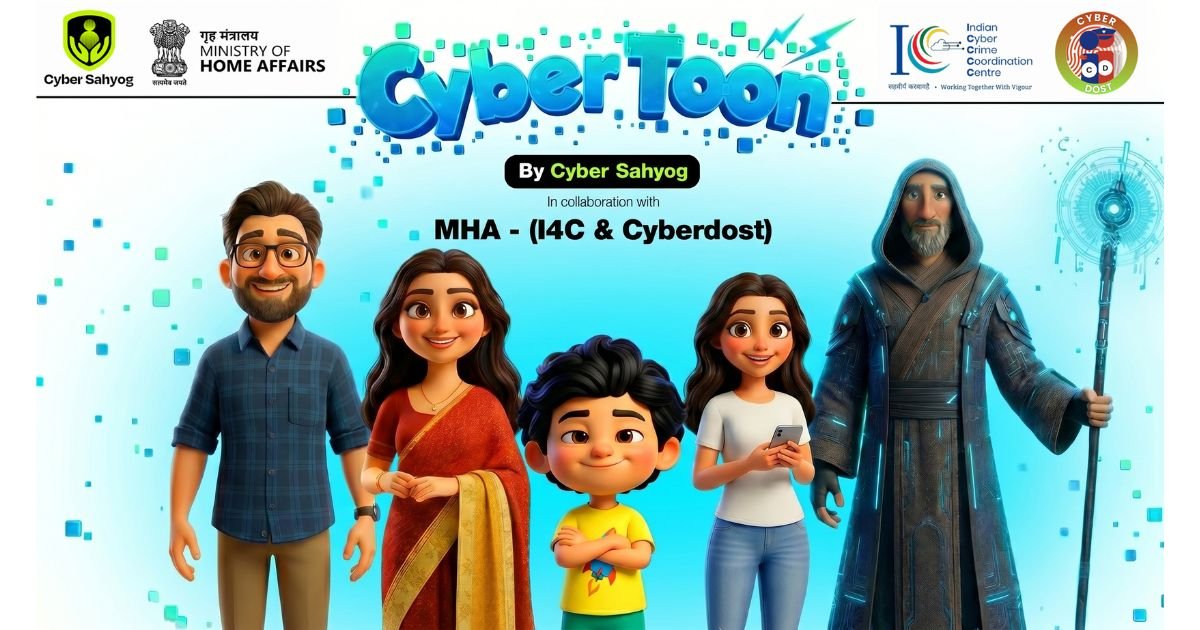

New Delhi: The Indian Cyber Crime Coordination Centre (I4C), under the Ministry of Home Affairs, has launched CyberToon, a 3D animated cyber safety short-video series in collaboration with Cyber Sahyog to make cyber awareness simple, engaging and relatable for children, teenagers and young internet users.
The initiative is part of I4C’s wider effort to build a cyber-aware society and take digital safety education to citizens through formats that are easy to understand and remember. With children and young users spending more time on smartphones, gaming platforms, social media, messaging apps and digital payment systems, the need for early cyber awareness has become more urgent than ever.
Registration Begins for FutureCrime Summit 2026, India’s Largest Cybercrime Conference
CyberToon uses animation-led storytelling to explain online risks without technical jargon. The series consists of 12 short episodes, each based on real-world cybercrime scenarios. Through relatable characters, simple language and visually engaging situations, the videos explain how cybercriminals trap victims and how users can protect themselves.
The episodes cover several fast-growing cybercrime trends, including deepfake scams, cryptocurrency frauds, sextortion, fake job scams, QR code frauds, dating and romance scams, social media account compromise, OTP and phishing scams, online gaming frauds, impersonation scams, investment frauds, and digital arrest-related manipulation.
By using a 3D animated format, I4C aims to make cyber safety more accessible for young audiences, schools, parents, teachers and community awareness programmes. The campaign is designed to help students and young digital users identify warning signs, understand suspicious behaviour, avoid risky online actions and report incidents through official channels.
Cyber Sahyog has developed the CyberToon series as part of the collaboration. The initiative has been conceptualised and led by cybersecurity professional Yogesh Prasad Gairola, who has been actively working in public cyber awareness and digital safety education.
CyberToon Episode 2 – Deepfake Dhamaka. In Collaboration with @Cyberdost
AI ab kisi ki bhi awaaz aur chehra copy kar sakta hai. Kya aap fake aur real mein fark kar sakte hain?
Apne ghar walon ko zaroor share karein. #CyberAwareness pic.twitter.com/SupcrBizML
— Cyber Sahyog (@thecybersahyog) April 8, 2026
The launch comes at a time when cyber frauds are becoming more sophisticated and are increasingly targeting users across age groups. Fraudsters today use emotional pressure, fake identities, impersonation, social media manipulation, malicious links, fraudulent investment offers, fake jobs and threats of “digital arrest” to mislead victims.
For young users, the risks are even sharper. Many children and teenagers are active online but may not fully recognise signs of grooming, phishing, sextortion, gaming scams, fake profiles or financial fraud. CyberToon seeks to address this gap by turning complex cybercrime concepts into short, memorable lessons.
I4C has been running several cyber awareness and capacity-building initiatives across the country. Its official awareness efforts include the CyberDost platform, the National Cybercrime Reporting Portal, the 1930 helpline for financial cyber frauds, training support for law enforcement agencies and outreach programmes for students, educators, senior citizens, industry partners and community groups.
Through CyberToon, I4C is strengthening its public outreach by using creative educational content to reach younger audiences. The approach reflects a shift from traditional advisories to storytelling-based awareness, where citizens are not just warned about cybercrime but are shown how scams actually happen in everyday digital life.
The larger message of the campaign is simple: cyber safety must begin early. Young users need to learn not to share OTPs, passwords, private images, personal details or financial information with strangers. They must also be encouraged to verify suspicious links, avoid unknown downloads, report fake accounts and speak to trusted adults when they face online pressure or threats.
The CyberToon series will be promoted through digital and social media platforms, making it accessible to a wider audience. It is expected to support schools, awareness sessions, community programmes and online campaigns aimed at improving digital safety behaviour.
With CyberToon, I4C is attempting to make cyber awareness more visual, practical and youth-friendly. The initiative reinforces the need for citizens, especially young internet users, to stay alert, think before they click and use official reporting channels when they encounter cybercrime.
Citizens can report cybercrime through the National Cybercrime Reporting Portal or call 1930 in cases of financial cyber fraud.
Follow for daily updates on cybercrime, corporate fraud, DFIR, hacking, investigations, and digital forensics
