
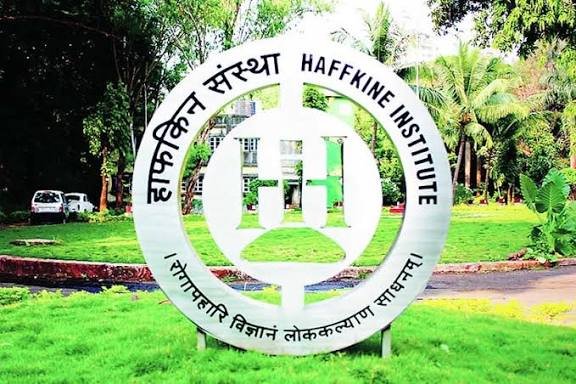

MUMBAI: An internal appointment at Maharashtra’s government-run vaccine manufacturer has ignited a political and public dispute, as allegations of corruption, administrative maneuvering and unanswered inquiries surface around a senior official’s elevation.
A Promotion Under Scrutiny
In late February, the chairman and managing director of Haffkine Bio Pharma Corporation Limited, Sunil Mahindrakar, issued an order granting additional charge as general manager (production) to a deputy manager, Navnath Garje. The move, framed as an administrative necessity, quickly drew criticism from a social activist who questioned both the timing and the choice.
Vijay Kumbhar, a Mumbai-based activist, publicly objected to the appointment, arguing that Garje had previously faced allegations of corruption. In posts on the social media platform X, Kumbhar shared copies of official letters that, he said, showed that Garje and two other officials had once been accused of embezzlement and irregularities in purchase and sale transactions linked to the company.
According to one of the letters, both a departmental inquiry committee and the state’s Anti-Corruption Bureau had found the officials guilty. Yet, the letter said, no action had ultimately been taken against them. The minister who authored the correspondence called for “immediate action” and a report within 15 days.
The allegations have cast a shadow over what might otherwise have been viewed as a routine administrative reshuffle at a state-run enterprise responsible for vaccine and pharmaceutical production.
FCRF Launches Flagship Certified Fraud Investigator (CFI) Program
Letters, Allegations and Official Silence
Kumbhar’s objections center on documentary evidence he has circulated publicly. Among the materials is a letter dated November 7, 2025, from Narhari Jhirwal, then the food and drug administration minister, to Dheeraj Kumar, the medical education secretary overseeing Haffkine’s operations. A copy was sent to Deputy Chief Minister Ajit Pawar, who died in a plane crash on January 28.
In that letter, the minister referenced allegations of corruption involving Garje and two other officials. Though inquiries had reportedly found them guilty, the letter stated that no disciplinary action had followed. The minister urged prompt steps and a formal report to the government.
Kumbhar also shared a separate letter dated November 2, 2025, from Anna Bansode, deputy speaker of the legislative assembly, to the state’s chief secretary, Rajesh Aggarwal. Bansode wrote that he had convened a meeting on September 11, 2025, regarding allegations at Haffkine Bio Pharma and that investigations by the Anti-Corruption Bureau were underway against Garje and another official.
Aggarwal did not respond to calls and messages seeking comment, according to the report. Mahindrakar, when asked about allegations that he himself was embroiled in corruption and had purchased personal gym equipment and computers using Haffkine funds, declined to comment. The accumulation of correspondence has raised questions not only about Garje’s record but also about the broader oversight of the institution.
The Company’s Defense
Mahindrakar has defended the decision to entrust Garje with additional responsibilities. In the order dated February 20, he noted that another official had declined the position for medical reasons. Garje, he wrote, held a master’s degree in biochemistry and had more than 26 years of experience at Haffkine Bio Pharma.
In the appointment order, Mahindrakar emphasized Garje’s “extensive knowledge” in the production and quality assurance departments and cited a proven track record in polio and antisera production at the company’s Pimpri unit. His technical expertise, the order said, would benefit ongoing and upcoming projects.
Speaking to HT, Mahindrakar said Garje had not been held guilty in any case, even though several allegations had surfaced since 2014. He added that staffing constraints had necessitated the move. “There are very few people who work,” he said, explaining that a report had been sent to the government while assigning Garje additional charge.
Garje, for his part, denied wrongdoing. He said the allegations had been leveled by a former security officer, Chandrakant Hinge, whom he had terminated in 2014. According to Garje, the former employee had pressured the administration out of rivalry.
“Now, our MD Mahindrakar has sent a report to the administration,” he said.
A Broader Institutional Debate
The dispute has unfolded against a backdrop of heightened scrutiny of public institutions. In a post on X, Kumbhar contrasted the legacy of Dr. Waldemar Haffkine — after whom the company is named — with what he described as corruption, suppression and administrative arrogance within the present-day institution.
“If ministerial authority can be mocked this easily, what hope does an ordinary citizen have?” he wrote, characterizing the situation not merely as corruption but as “institutional capture.”
Haffkine Bio Pharma Corporation Limited, a government-run pharmaceutical company with a long history in vaccine production, occupies a prominent place in Maharashtra’s public health infrastructure. Appointments to its senior ranks carry administrative and symbolic weight, particularly when they intersect with prior allegations and political oversight.
For now, the competing narratives — of procedural necessity and professional qualification on one side, and of unaddressed findings and administrative impunity on the other — remain unresolved. The documents circulated publicly have sharpened the debate, but formal conclusions from the government have yet to emerge.
