
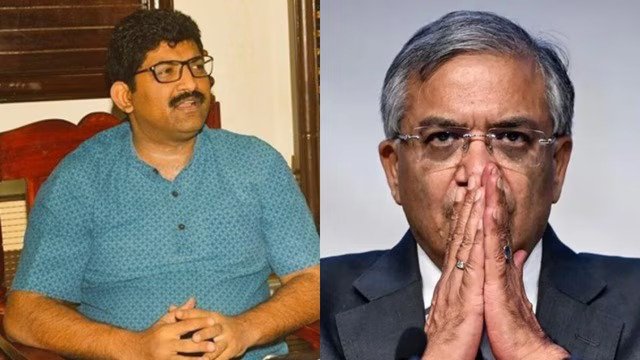

KOLKATA — In the days before the West Bengal Assembly election, a high-level election review meeting in Kolkata turned sharply contentious, according to accounts carried in the source material. The dispute centered on Anurag Yadav, a senior IAS officer from Uttar Pradesh who had been appointed by the Election Commission of India as a general observer for the Koch Bihar Dakshin Assembly constituency in Cooch Behar district.
The meeting, described as a virtual session convened by the full bench of the Election Commission, reportedly grew heated when Yadav openly objected to remarks made by Chief Election Commissioner Gyanesh Kumar. According to the reports, the exchange escalated after Kumar told the officer to return home. Yadav is then said to have replied that he could not be spoken to in that manner, adding that he, too, had spent 25 years in service.
That response, as presented in the reports, altered the atmosphere of the meeting. What had been an official review of election preparedness began to be seen as a confrontation between an observer in the field and the country’s top election official.
Removal After the Exchange
The immediate fallout was administrative. The source material states that Yadav was removed from his post as general observer soon after the exchange. One account says the Election Commission ordered his removal with immediate effect, while another notes that he was taken off observer duty after objecting strongly to the CEC’s comments.
The reasons for the removal, however, were described differently in the reports. On one hand, the timing linked it directly to the argument. On the other, Election Commission sources were quoted as saying that Yadav was not removed because of the confrontation itself, but because of professional inadequacy in carrying out his responsibilities.
That distinction is significant. It shifts the matter from one of conduct and hierarchy to one of competence. Yet the sequence described in the reports makes clear that the disagreement with the CEC and the removal that followed are inseparable parts of the public narrative now surrounding the incident.
Questions Over Preparedness in the Constituency
The reports say the confrontation was preceded by basic questions directed at Yadav about his assigned constituency. During the meeting, he was reportedly asked about the number of polling booths in his area, but failed to provide a satisfactory answer. That, according to the source material, triggered criticism from Gyanesh Kumar.
One senior election official, as quoted in the reports, observed that an observer functions as the “eyes and ears” of the Election Commission. If an officer, after spending several days on the ground, is unable to verify even basic information such as the number of polling stations, the official said, it raises serious questions about the credibility of the process.
The reports also note that the meeting reviewed sensitive polling stations in Cooch Behar, and that discussions touched on whether prohibitory measures might be needed in vulnerable areas. West Bengal Chief Electoral Officer Manoj Agrawal was cited as suggesting additional safeguards, including the appointment of nodal officers in each district to ensure minimum assured facilities at every polling station.
In that sense, the episode was not only about personal friction. It unfolded within a discussion on preparedness, administrative precision and the credibility of election oversight in a politically sensitive constituency.
An Officer With Senior Standing in Uttar Pradesh
Part of the attention the episode has drawn comes from Yadav’s own position in government. The source material identifies him as a senior IAS officer serving at the rank of principal secretary in the Uttar Pradesh government. One report says he had recently been given charge of the Social Welfare and Sainik Kalyan departments in the state. Another notes that he had earlier served in the IT department.
That seniority appears to have shaped the exchange itself. In the reports, Yadav’s objection to the CEC’s tone was framed not simply as an emotional reaction, but as an assertion of institutional standing and experience. His response invoked his long tenure in public service, suggesting that what unfolded in the meeting was also a clash of authority within India’s administrative establishment.
After the confrontation, the reports say, a brief silence descended over the meeting before discussion resumed on other issues. The observer was then removed from duty, and the Election Commission moved on.
What remains is a revealing moment from inside an institution that is usually seen only through its formal orders and public announcements. In the source material, the episode appears less as a routine personnel change than as a glimpse of the strain, impatience and internal accountability that accompany election management at the highest level.
