
Follow us on Google News

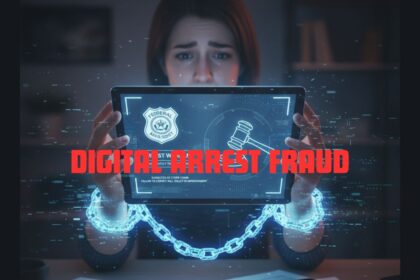
In Madhya Pradesh’s Gwalior, a 75-year-old retired sub-registrar became the latest victim of the vicious “digital arrest” cyber scam, enduring 31 days of psychological terror as fraudsters posing as CBI and IPS officers bled his mutual funds dry for ₹1.12 crore. Bihari Lal Gupta from Old Khedapati Colony fell into the trap starting November 16, 2025, transferring chunks from his and his wife’s investments via RTGS to shady accounts after threats of money laundering charges linked to a fake hawala bust. The con unraveled when a viral awareness video mirroring his ordeal hit his phone, prompting a dash to SSP Dharamveer Singh’s office—now the crime branch hunts the gang behind Gwalior’s biggest such heist of 2026.
Final Call: FCRF Opens Last Registration Window for GRC and DPO Certifications
Fake TRAI Call Kicks Off the Nightmare
It all ignited with a chilling call to Gupta’s landline, where a fraudster masquerading as a TRAI official warned his Aadhaar and mobile number faced immediate block due to “suspicious activity.” Before he could process, a WhatsApp video call lit up from “IPS Neeraj Thakur” in full police uniform, claiming Gupta’s ICICI account—allegedly sold for ₹2 lakh by arrested hawaladar Sandeep Kumar—starred in a massive money laundering probe. The conman grilled him on family, assets, and balances, dangling a “pre-investigation” lifeline for seniors to dodge physical cuffs, but only if Gupta played ball and filed a formal plea.
Terrified of jail and public shame, Gupta complied, sealing his “digital arrest” fate—isolated at home, forbidden from telling kin, under round-the-clock “surveillance.”
Escalating Threats and Mutual Fund Meltdown
Over the next month, the scammers morphed into a tag-team of CBI hotshots, extracting every financial detail through relentless calls and fake portals. They coerced ₹60 lakh from Gupta’s mutual funds and ₹52 lakh from his wife’s, routing it via RTGS to four scattered accounts in staggered hits—the final blow landing January 3, 2026. Posing as probes deepened, they fed lies of “account freezes,” “asset seizures,” and “family implication” risks, exploiting the retiree’s service-honed trust in authority. Gupta stayed glued to scripted “investigation” screens, watching bogus dashboards “clear” his name step-by-painful-step.
This playbook—uniformed video calls, agency names, and “cooperation” bribes—mirrors 2025’s 10,000+ digital arrest cases nationwide, netting ₹5,000 crore per I4C data.
Viral Video Wake-Up and Swift Police Action
Reality slammed home days later when Gupta scrolled a social media clip exposing identical tactics: fake cops, digital shackles, mutual fund raids. Heart pounding, he raced to Gwalior SSP Dharamveer Singh, spilling the full saga from TRAI bait to final transfer. Crime branch swung into gear, registering an FIR against unnamed accused under IT Act and cheating clauses, tracing call logs, IP trails, and bank flows. “Biggest digital arrest of 2026 so far—teams on the money mule hunt,” SSP confirmed, vowing cyber forensic dives to nab the interstate crew.
MP cyber stats scream urgency: Gwalior alone logged 500+ such scams last year, seniors losing 60% of totals.
Digital Arrest Surge: Tactics, Trends, and Red Flags
Fraudsters thrive on post-retirement isolation, targeting 700cr+ mutual fund pools in MP via spoofed TRAI/CBI guises—up 40% in 2026 per NCRB previews. They blend real case names (hawala busts) with deepfake uniforms, escalating from warnings to “arrest warrants” unreadable on camera. Gupta’s month-long ordeal outstrips typical 48-hour traps, showcasing evolved gangs operating from Cambodia/Meghalaya hubs busted last fall.
Key Scam Signs:
- Unsolicited agency calls demanding secrecy.
- Video “uniforms” pushing fund transfers for “clearance.”
- No real arrests happen over phone—verify via 1930 helpline.
Police drills awareness: Hang up, screenshot, report to cybercrime.gov.in. Refunds? Slim, but frozen accounts claw back 20% nationally.
About the author – Rehan Khan is a law student and legal journalist with a keen interest in cybercrime, digital fraud, and emerging technology laws. He writes on the intersection of law, cybersecurity, and online safety, focusing on developments that impact individuals and institutions in India.