
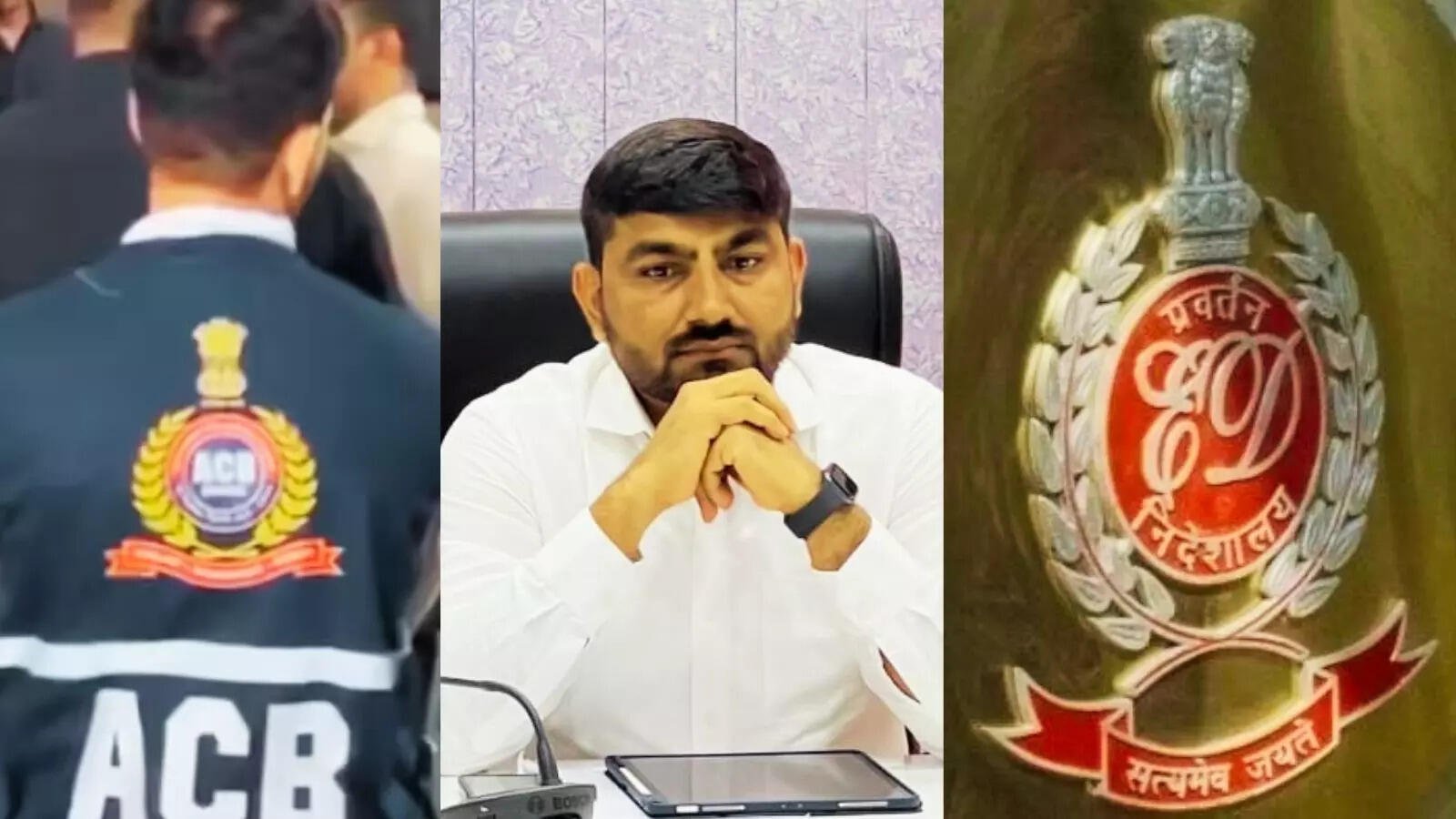

GANDHINAGAR: A months-long inquiry into land-use approvals in Gujarat has widened into a sweeping corruption case, as federal investigators traced an alleged bribery network running through the Surendranagar district administration and linked to large solar power projects worth thousands of crores.
A Probe Rooted in Solar Land Acquisitions
India’s federal financial crime agency, the Enforcement Directorate, has intensified its investigation into what it describes as a ₹1,500-crore non-agricultural (NA) land conversion scam in Surendranagar district, Gujarat. The inquiry centers on land parcels earmarked for solar power projects in areas including Nalsarovar, Malvan (Dhrangadhra), Talsana (Lakhtar) and Patdi, where vast tracts of agricultural land were converted for industrial use.
According to officials familiar with the investigation, ED teams questioned senior district officials for nearly 17 hours on December 24, from early morning until late night. Those examined included the district collector, a deputy mamlatdar, clerical staff, and a High Court lawyer, as investigators sought to reconstruct how approvals for land worth an estimated ₹1,500 crore were processed.
Investigators allege that sensitive government files were routinely taken out of official premises and handled at private residences, bypassing established procedures.
Files, Cash, and a Paper Trail
A central focus of the probe has been the official bungalow of the district collector, which investigators say functioned as a key operational hub. Around 100 land-related files were seized from the premises during searches conducted on December 23. Five individuals, including the then collector Rajendra Mahendra Patel, were questioned at the site.
The investigation soon expanded beyond paperwork. During a search under Section 17 of the Prevention of Money Laundering Act, ED teams recovered ₹67.50 lakh in cash from the residence of Deputy Mamlatdar Chandrasinh Mori. The money, found concealed in a bedroom, was later admitted by Mori—in a statement recorded on December 23—to be bribe proceeds collected from applicants seeking expedited or favorable NA land conversion approvals, either directly or through intermediaries.
A printed sheet recovered during the raids has emerged as crucial evidence. The document listed online application numbers, survey details, land area, the type of conversion sought, and the precise amount allegedly paid by each applicant. It also named brokers and intermediaries, along with their commissions.
Inside the Alleged NA Conversion Network
ED officials say the evidence points to a standardized system of payments. For one set of files covering 2,61,332 square metres of land, the document records bribes totaling ₹26,17,320. Handwritten notes at the bottom of the sheet itemize distributions to multiple individuals, including entries such as “MD – ₹64 lakh,” “Ashok – ₹2.83 lakh,” and smaller amounts to others.
According to investigators, NA conversion files were routed through agents who coordinated closely with officials inside the collector’s office. Applications linked to payments—referred to internally as “speed money”—were fast-tracked, while those submitted without bribes allegedly languished.
Mori, who had authority over change-of-land-use (CLU) and NA approvals, is alleged to have fixed bribe rates based on land area and funneled the proceeds upward. Investigators say he disclosed that bribes were systematically collected at ₹10 per square metre, with documentary evidence indicating that ₹1 crore was received in a single transaction.
Arrests, Transfers, and the Expanding Case
Following the raids, ED officials lodged a complaint with the Anti-Corruption Bureau in Surendranagar, leading to the registration of a case under the Prevention of Corruption Act against four officials: former collector Rajendra Patel, Deputy Mamlatdar Chandrasinh Bhupatsinh Mori, collectorate clerk Mayur Gohil, and the collector’s personal assistant, Jayrajsinh Jhala. Patel was subsequently transferred.
Three ED teams later reached Patel’s residence in Gandhinagar for further questioning. After prolonged interrogation, he was arrested in connection with the case. Investigators are examining his role in approving NA conversion files and the alleged receipt of illegal gratification.
The ED has said it continues to trace money trails and identify beneficiaries linked to what it describes as a large-scale land conversion racket—one that sits at the intersection of renewable energy expansion, real estate, and administrative power
