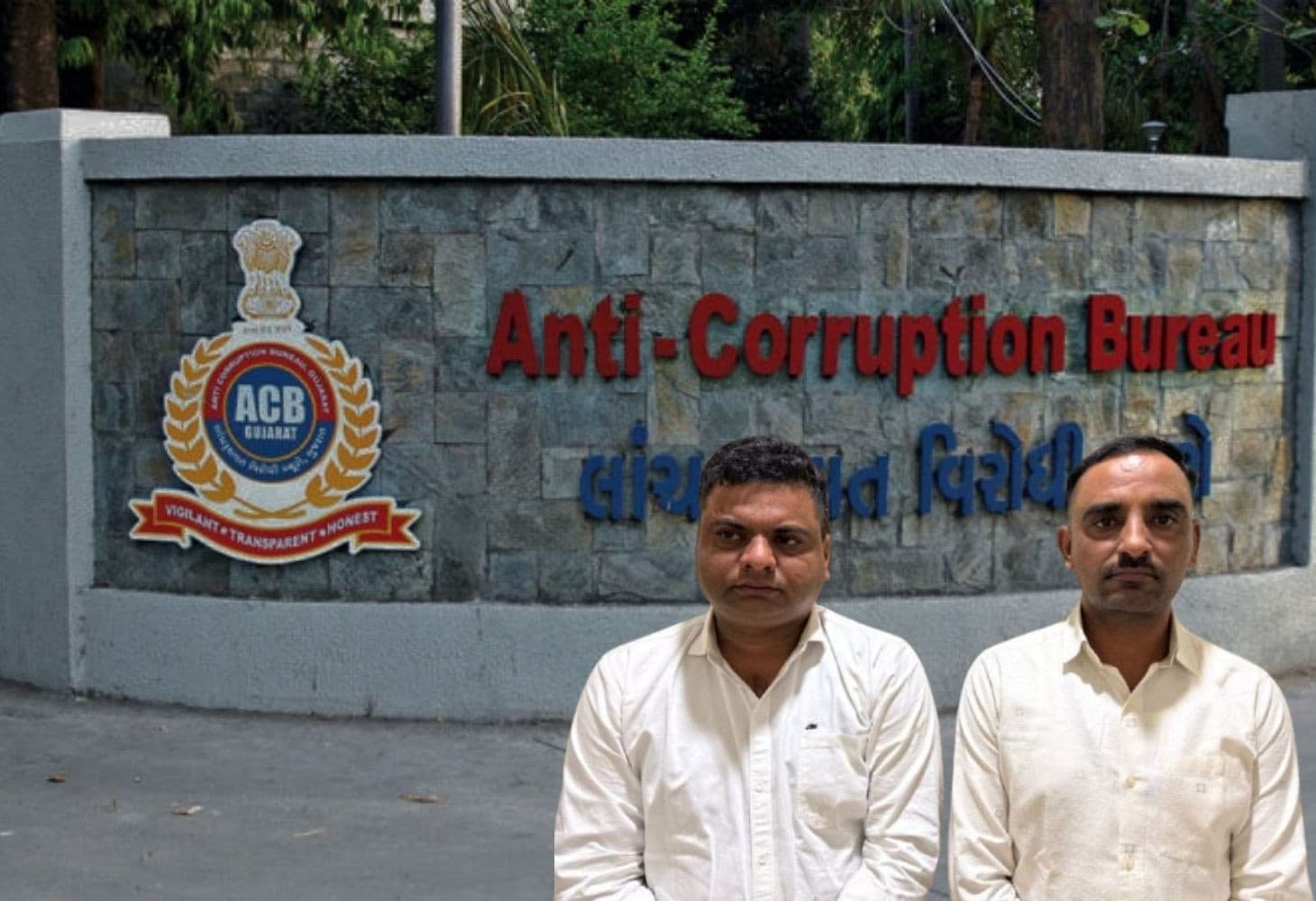
On a stretch of road near Sargasan, on the outskirts of Gujarat’s capital, anti-corruption officers waited as a transaction unfolded according to plan. The Gujarat Anti-Corruption Bureau (ACB) had laid a trap after receiving a complaint from an accused person in an ongoing call-centre investigation. The allegation was stark: a senior inspector and a constable from the CID Crime unit had demanded ₹30 lakh in exchange for not taking legal action.
When the cash was handed over, officials moved in. Constable Vipul Desai was caught red-handed while accepting the money, according to the ACB. His superior, Inspector Petha Patel, was also arrested soon after. The exchange, investigators said, was arranged to take place near Swagat City Mall, at a site linked to the Hari Group in Sargasan.
FCRF Launches Flagship Compliance Certification (GRCP) as India Faces a New Era of Digital Regulation
Allegations Against the Investigators
Both officers were attached to the Gandhinagar-based CID Crime unit, a branch typically tasked with handling sensitive and complex criminal investigations. According to officials familiar with the case, the alleged bribe was sought as a quid pro quo restraint from pursuing legal action against the complainant in the call-centre case.
The ACB has said the arrests followed procedural verification of the complaint and the laying of a formal trap, a standard method used in corruption investigations to establish demand and acceptance of illegal gratification.
Custody, Court, and the Next Legal Steps
The arrested officers are expected to be produced before a court, where the Gujarat ACB plans to seek their remand for further questioning. Investigators are expected to focus on how the alleged demand was communicated, whether intermediaries were involved, and whether similar demands were made in other cases handled by the officers.
Officials have indicated that custodial interrogation may be necessary to trace the broader context of the alleged corruption, including any prior exchanges or attempts at negotiation before the trap was set.
Scrutiny Beyond the Cash Exchange
Beyond the immediate arrest, the case is set to widen. Authorities have said they will examine the property and assets of both the inspector and the constable in connection with the bribery allegations. Such financial scrutiny is often used to determine whether the alleged misconduct was an isolated incident or part of a larger pattern.