

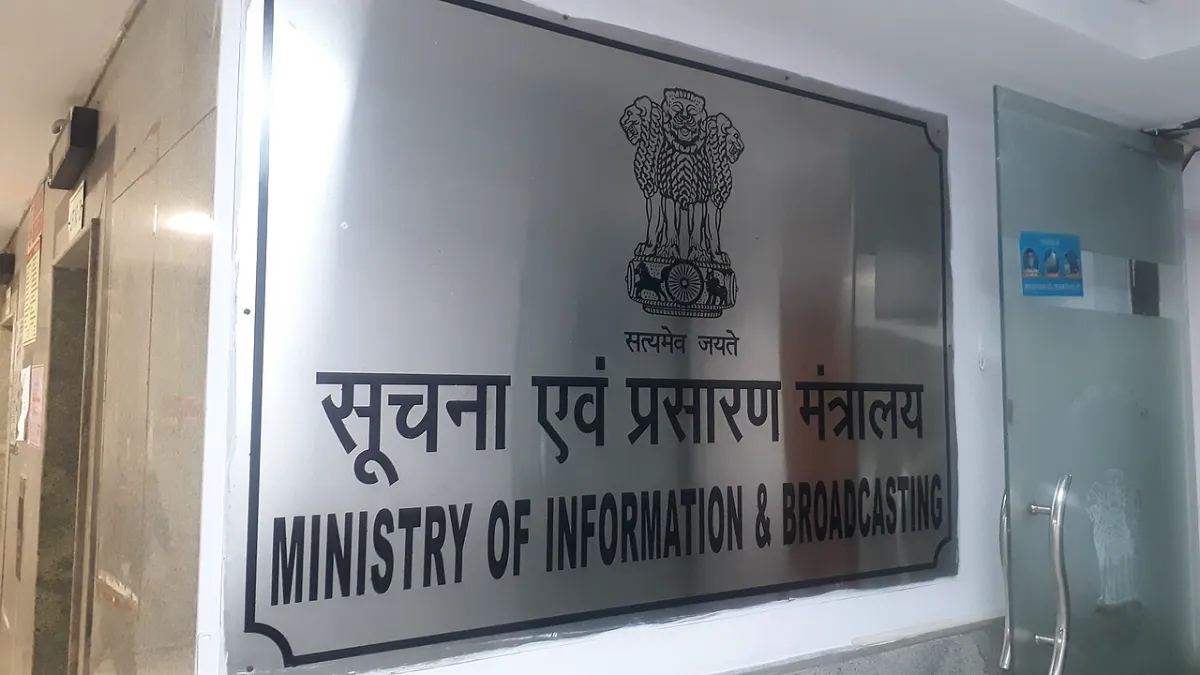

In a major administrative effort to combat online misinformation, the Union Government has issued strict directives to secretaries across all central ministries and departments to establish dedicated Quick Response Teams capable of detecting and countering fake news on social media within two hours of its appearance. The directive, issued by the Ministry of Information and Broadcasting, requires every central department to monitor digital platforms in real time and publish concise, fact-checked rebuttals directly on their official social media channels. This policy shift comes in the wake of widespread public backlash and online friction surrounding the NEET examination paper leak controversy, which underscored how swiftly unverified rumors can escalate and disrupt public trust in government institutions.
In an official communication addressed to Union secretaries, Information and Broadcasting Secretary Chanchal Kumar highlighted the urgent necessity of matching the speed of digital media. Pointing out that online rumors and misleading claims propagate rapidly across social networks, Kumar stressed that government responses must operate with equal swiftness to prevent false narratives from misleading the public. Under the newly established guidelines, Quick Response Teams are to be constituted on an immediate basis, with designated members completing specialized training within one week. This training is designed to sensitize team members to real-time digital tracking methodologies and enforce strict adherence to the mandatory two-hour response timeline. The Information and Broadcasting Ministry has assured full technical and administrative backing to support departments throughout this implementation process.
Strategy for Real-Time Detection and Visual Content Amplification
To maximize the impact of government communications, the directive lays down specific operational guidelines for official counter-messaging. Fact-checked statements issued by Quick Response Teams must remain strictly concise, adhering to a limit of no more than 200 words while maintaining absolute factual accuracy. Recognizing that lengthy bureaucratic press releases rarely succeed on fast-paced digital platforms, the government has mandated that departments tailor their messaging for visual-centric channels like Instagram, YouTube, Facebook, and X. Ministries have been urged to leverage engaging formats, including short videos, digital posters, infographics, and memes, to enhance public engagement and achieve optimal algorithmic amplification across major social networks.
This emphasis on rapid digital engagement forms part of a broader push by the Centre to manage public narratives and proactively address emerging public concerns. Concurrently with the misinformation guidelines, the government issued orders instructing all Union ministries, government officials, and elected representatives to execute an aggressive social media campaign promoting India’s E20 ethanol-blended fuel policy. With consumer complaints and political opposition growing regarding the E20 rollout, the government mandated the creation and widespread distribution of four tailored video assets across social media platforms to address public misgivings and reinforce the official benefits of the policy.
Implications for Institutional Accountability and Information Integrity
Enforcing a two-hour turnaround time for official fact-checks represents a significant departure from traditional bureaucratic communication, which has historically suffered from lengthy approval processes and delayed public responses. By mandating real-time detection and rapid counter-messaging, the Centre aims to prevent digital misinformation from establishing a foothold during sensitive policy debates or administrative crises. However, media analysts and governance experts emphasize that achieving speed without compromising accuracy will require continuous technical upgrades, sophisticated media monitoring tools, and rigorous editorial oversight. As social media platforms continue to function as primary news sources for millions of citizens, the efficacy of these Quick Response Teams will be crucial in ensuring information integrity across the public domain.
Follow for daily updates on cybercrime, corporate fraud, DFIR, hacking, investigations, and digital forensics
