

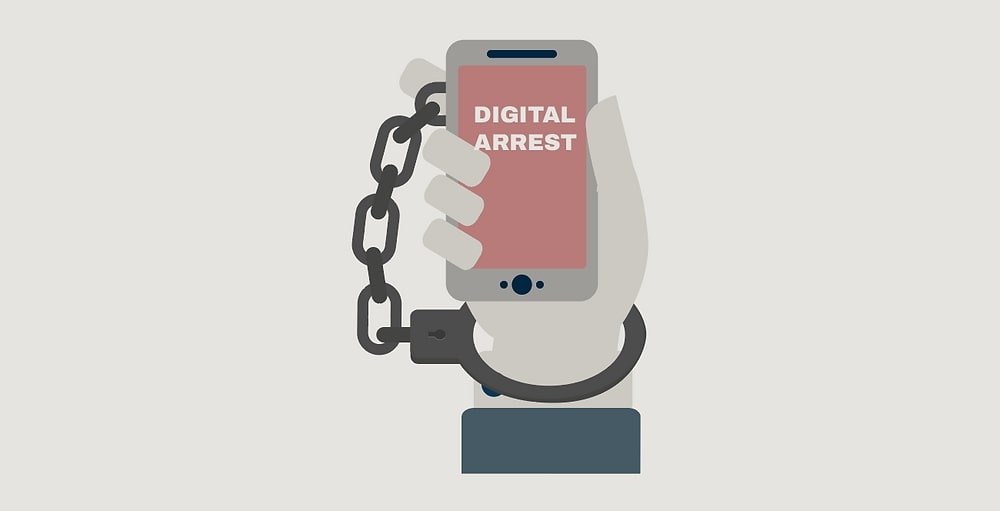
Goa Police have cracked a major inter-state cyber fraud racket involving the increasingly common “digital arrest” scam, arresting two accused who allegedly cheated a North Goa resident of ₹1.42 crore by impersonating senior law enforcement and judicial authorities.
The arrested individuals have been identified as Ashadul Islam (24) and Yasmina Ahmed (32), both residents of Marigaon district in Assam. Investigators say the duo used fear, impersonation and sustained psychological pressure to trap the victim into transferring large sums of money into multiple bank accounts over digital channels.
The case was registered at the Cyber Crime Police Station in Goa following a complaint from a resident of Bicholim, who reported being virtually “placed under arrest” through a series of WhatsApp calls and messages. The fraudsters allegedly claimed to be officials from the Central Bureau of Investigation and the Supreme Court of India, warning the victim of immediate legal consequences unless he complied with their instructions.
Certified Cyber Crime Investigator Course Launched by Centre for Police Technology
How the scam unfolded
According to investigators, the accused contacted the complainant using multiple WhatsApp numbers, informing him that his name was linked to a serious criminal investigation. To reinforce the threat, they claimed that a “digital arrest” had been initiated — a fictitious concept increasingly used by cybercriminals to intimidate victims into silence and compliance.
By maintaining near-continuous contact and creating an atmosphere of urgency and fear, the accused allegedly coerced the victim into transferring ₹1,42,04,868 to several bank accounts controlled by the network. The victim was reportedly instructed not to discuss the matter with family members or approach the police, a tactic commonly used in such scams to isolate targets.
Once the victim realised he had been defrauded, he approached the Goa Police, triggering a detailed technical investigation.
Trail leads to Assam
A forensic analysis of call records, WhatsApp communications and transaction trails enabled the Crime Branch to trace the digital footprint of the fraudsters to Nagaon district in Assam. A special team was dispatched, and the accused were taken into custody after coordination with local authorities.
During background verification, police discovered that both Ashadul Islam and Yasmina Ahmed had previously been arrested in a cyber fraud case registered in Assam under the Bharatiya Nyaya Sanhita. In that earlier case, investigators had seized 358 SIM cards, five mobile phones, one Wi-Fi router, one DVR, and one laptop, indicating a high level of preparation and scale.
Crucially, the same mobile phones seized in Assam were found to have been used in the Goa “digital arrest” fraud as well. The devices and digital evidence from the earlier case are now being formally linked to the Goa investigation.
Wider network suspected
Investigators also found that the mobile numbers used in the Bicholim case were linked to another ‘digital arrest’ complaint in Goa, involving a separate fraud amounting to ₹63.50 lakh. Further technical analysis revealed that the accused were operating multiple SIM cards from the same IMEI numbers, a red flag that suggests systematic device cloning and coordinated operations.
Police believe the arrested duo are not isolated operators but key nodes in a wider inter-state cybercrime network, with connections to multiple fraud complaints across the country. The pattern of repeated impersonation, cloned devices and large-volume SIM usage points to an organised racket rather than a one-off crime.
Investigation ongoing
The accused have been produced before a court, and further investigation is underway to identify additional accomplices, money mule accounts and beneficiaries of the fraud proceeds. Officers are also examining whether the network has links to other reported “digital arrest” cases nationwide.
Goa Police have reiterated that “digital arrest” has no legal basis, warning citizens that no law enforcement agency or court conducts arrests, investigations or demands money through WhatsApp calls, video links or online instructions.
With cyber fraud cases rising sharply, investigators have urged the public to remain vigilant and immediately report suspicious calls claiming to represent police, courts or central agencies.
About the author – Ayesha Aayat is a law student and contributor covering cybercrime, online frauds, and digital safety concerns. Her writing aims to raise awareness about evolving cyber threats and legal responses.
