
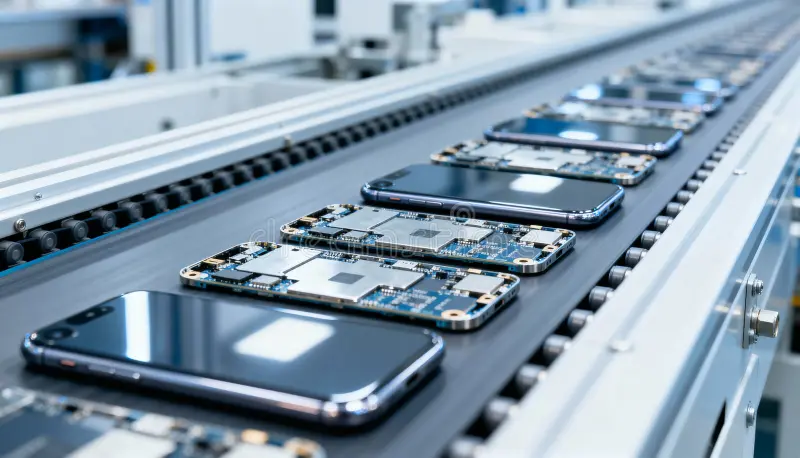

New Delhi: Global smartphone shipments are projected to decline by 12.4% year-on-year in 2026, marking the steepest annual contraction in the industry in more than a decade, according to Counterpoint Research. The downturn is not being driven by weak consumer demand but by a severe shortage in memory component supply, which is expected to continue weighing on the market until late 2027.
After posting modest growth in 2025, supported by improving macroeconomic conditions and strong holiday season sales, the global smartphone market recovery may prove short-lived. Shipments rose 3.8% year-on-year in the fourth quarter of 2025, the strongest festive-quarter performance since 2021. However, the momentum is expected to reverse as supply constraints tighten.
FCRF Launches Flagship Certified Fraud Investigator (CFI) Program
The research report forecasts global smartphone shipments to fall below 1.1 billion units in 2026, a level not seen since 2013 when 4G adoption was still expanding globally. The primary factor behind the decline is the shortage of mobile memory chips, particularly LPDDR4 and LPDDR5 modules.
Industry analysts say memory prices are expected to surge sharply. Prices of mobile LPDDR4 and LPDDR5 components in the second quarter of 2026 could be nearly three times higher than their levels in the third quarter of 2025. The shortage has been driven by semiconductor manufacturers shifting production capacity toward higher-margin AI-focused DRAM and enterprise-grade NAND storage solutions. In addition, investment in new capacity slowed after the post-pandemic market correction.
Experts warn that the impact of the shortage could extend into the second half of 2027, as new manufacturing facilities require several quarters to become fully operational. The lower-end smartphone segment is expected to face the strongest pressure due to tightening LPDDR4 supply.
Original equipment manufacturers (OEMs) have already begun responding to the crisis. Many smartphone brands are reportedly delaying product launches, trimming model portfolios, and making hardware specification trade-offs. Some Android manufacturers raised device prices by 10% to 20% in January 2026 to offset rising component costs.
The market outlook also shows uneven performance across price segments. Premium smartphones are expected to continue growing in single-digit territory, while the entry-level segment priced below $200 (₹18,225) could contract by more than 20%. Market leaders such as Apple and Samsung are likely to remain relatively insulated due to stronger supply chain control, pricing power, and premium brand positioning.
Emerging markets are expected to feel the impact more strongly. Shipments in the Middle East and Africa are projected to fall 19%, while Latin America and the Asia-Pacific region may see declines of around 14%. Manufacturers dependent on low-cost markets face rising component costs and limited pricing flexibility.
Industry consolidation is also expected to accelerate as smaller players struggle with cost pressures. Analysts anticipate higher average selling prices, narrower product portfolios, and longer smartphone replacement cycles, which could stretch beyond four years in many markets.
At the same time, demand for refurbished smartphones is likely to grow in 2026 as consumers seek more affordable alternatives. Second-hand devices priced below $300 (₹27,339) are expected to gain popularity amid rising new-phone prices.
Market observers say the recovery of the global smartphone industry will depend largely on how quickly memory chip manufacturers expand production capacity. Until then, 2026 could represent one of the most disruptive restructuring phases in the smartphone sector over the past decade.
