

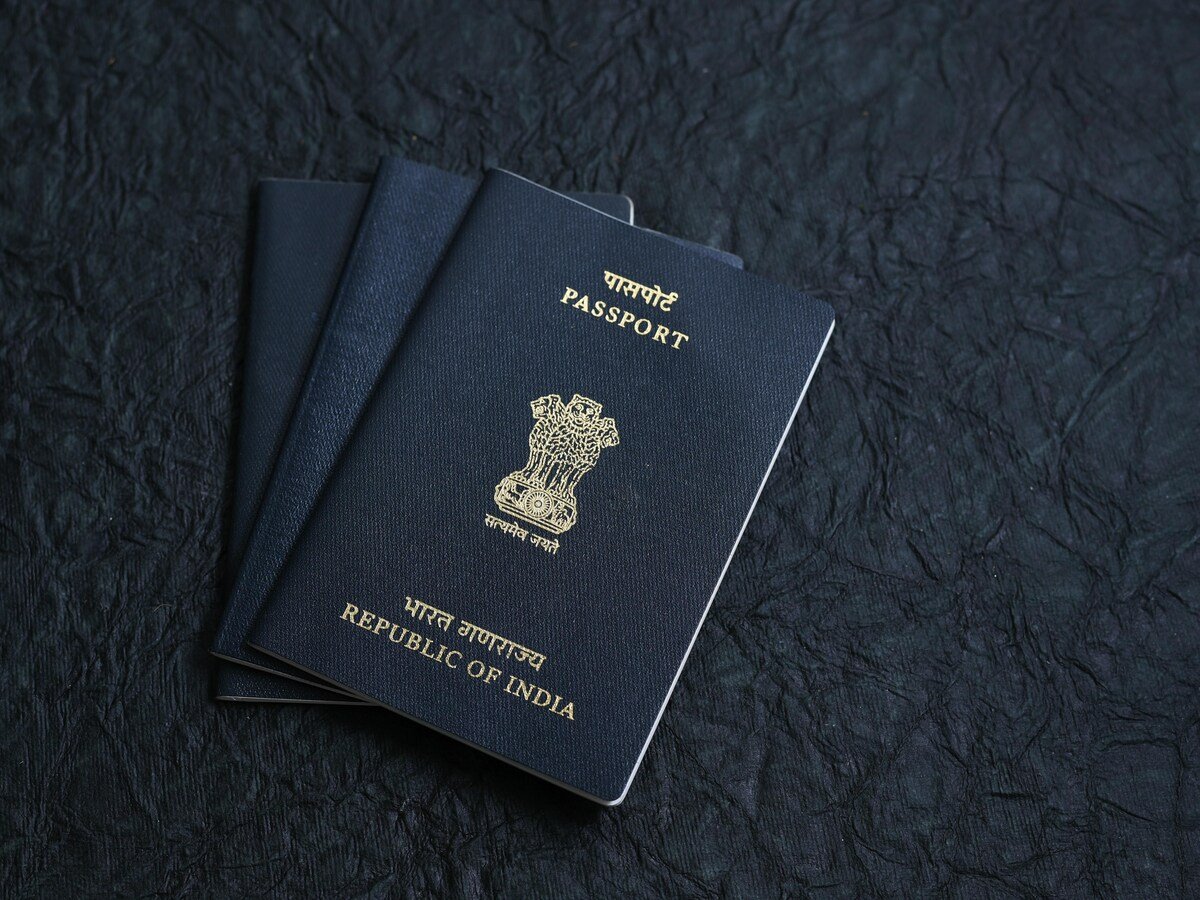
Central and state security agencies have launched an intensive probe into a fake passport racket unearthed in Modinagar, after investigators discovered that 22 passports were issued using forged documents, including those obtained by Afghan refugees posing as Indian residents.
Teams from the Intelligence Bureau, Anti-Terrorism Squad (Noida unit) and Local Intelligence Unit questioned five arrested accused for nearly three hours at Bhojpur police station on Monday, focusing on the purpose for which the passports were procured and possible foreign links.
Police confirmed that among the beneficiaries were an Afghan refugee woman, Savant Kaur, and her son Amandeep Singh, who allegedly obtained Indian passports using fabricated identity and address proofs.
Certified Cyber Crime Investigator Course Launched by Centre for Police Technology
Forged licences not found on Sarathi portal
A major new revelation emerged during scrutiny of documents recovered from the accused. The driving licences used as identity proof for passport applications were found to be completely fake.
Officials of the transport department confirmed that no record of these licences exists on the Sarathi portal, the national driving licence database. The absence of any digital trail confirmed that the licences were forged specifically to support passport applications.
Investigators said these fake licences were later used to generate fraudulent Aadhaar cards, which in turn were used to obtain mobile phone numbers, completing the identity chain required for passport issuance.
Four mobile numbers used for 22 passports
Police said the 22 passport applications were submitted using just four mobile numbers, all obtained through fake Aadhaar credentials.
- One mobile number was used for 13 passport applications
- The second number for six applications
- The third for two applications
- The fourth for one application
All passports were issued against addresses in Tyodi Bisva-7 village, Bhojpur and Saidpur, but subsequent verification revealed that none of the passport holders had any connection to these locations.
Postal staff suspended, police role under scanner
The investigation has also exposed serious lapses within the verification process. A postal employee (dak munshi/constable) responsible for handling passport-related paperwork has been suspended for negligence. Police said the constable switched off his phone and went absconding after his name surfaced in the inquiry.
Departmental proceedings have also been initiated against police personnel involved in address verification for the passport applications. Senior officers said the role of local police officials is being examined for possible collusion.
Five accused sent to jail, manhunt for others
All five arrested accused—Vivek Gandhi, Prakash Subba, Arun Kumar (postal worker), Savant Kaur, and Amandeep Singh—were produced before court on Monday and remanded to judicial custody.
Police said five teams have been formed to trace other suspects involved in the racket, including additional postal staff and middlemen. Authorities are also verifying the backgrounds of the remaining 20 passport holders to assess potential national security risks.
Crime Branch to take over probe
Given the sensitivity of the case, the entire investigation is being transferred to the Crime Branch to ensure impartiality. Ghaziabad Police Commissioner J. Ravinder Goud said fake passport cases pose serious internal security threats and require rigorous scrutiny.
“The matter is highly sensitive. Any lapse or collusion will not be tolerated. If police involvement is established, strict action will follow,” he said.
Foreign links under investigation
Security agencies are probing whether the passports were meant for illegal travel, asylum misuse, or other cross-border activities. Officials said several critical leads have emerged during interrogation, and further questioning may reveal a wider network operating across districts.
Investigators stressed that the use of forged identity chains—fake licences, Aadhaar cards and SIMs—highlights systemic vulnerabilities that are now being reviewed.
The case has raised alarm across enforcement agencies, with officials warning that fake passports are not just a fraud issue but a direct national security concern, particularly when foreign nationals are involved.
About the author – Ayesha Aayat is a law student and contributor covering cybercrime, online frauds, and digital safety concerns. Her writing aims to raise awareness about evolving cyber threats and legal responses.
