

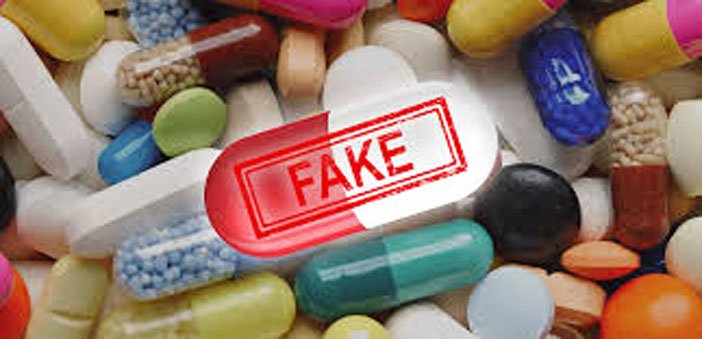
The Muradnagar police have busted a well-organised racket involved in manufacturing and selling counterfeit Liv-52 tablets, a widely used liver medication, arresting five people including the alleged kingpin. Police recovered nearly 50,000 fake tablets, around 1,500 empty white plastic containers, lids, wrappers and other packaging material from the accused. The seized counterfeit drugs are estimated to be worth nearly ₹2.5 lakh in the market.
Certified Cyber Crime Investigator Course Launched by Centre for Police Technology
According to the police, the gang had been active for the past four months and had supplied fake Liv-52 tablets across several districts of western Uttar Pradesh. The racket came to light following sustained surveillance and intelligence inputs regarding the circulation of spurious liver medicines at unusually low prices in the region.
Investigations revealed that the gang had created an elaborate network to ensure the fake medicine closely resembled the original product. The white plastic containers and lids used for packaging were manufactured at a plastic unit in Meerut, while the printed wrappers were sourced from a printing press located near Khairnagar Chaupala in the city. Separate arrangements were made for preparing moulds and dies for the lids to replicate the original design, making the counterfeit product difficult to distinguish for consumers and even some retailers.
The arrested accused have been identified as Mayank Agrawal, a resident of Tibda Road in Modinagar, who is alleged to be the mastermind of the operation; Anoop Garg from Uttam Nagar in Delhi; Tushar Thakur of Subhash Nagar in Nandgram; Akash Thakur of Hindon Vihar in Nandgram; and Nitin Tyagi from Niwari. During questioning, police found that Agrawal had previously worked with pharmaceutical companies, giving him inside knowledge of packaging standards and distribution channels, which he allegedly exploited to set up the fake drug business.
Police officials said the gang sold the counterfeit Liv-52 tablets to medical store operators at prices nearly 20% lower than the prevailing market rate. The lower cost lured several retailers, who allegedly failed to verify the authenticity of the products before selling them to customers. As a result, a large quantity of fake medicine reached the general public, posing serious health risks.
Investigators estimate that the gang supplied more than 50,000 fake tablets to districts including Aligarh, Mathura, Bijnor, Agra, Meerut and parts of Ghaziabad. The scale of distribution has raised concerns among health authorities, as liver-related medications are often consumed over long periods and any adulteration could lead to severe health complications.
Further probing strengthened the Meerut link in the racket. Police found that almost the entire packaging supply chain was based in Meerut, from plastic containers to printed labels. Following the arrests, Ghaziabad police shared details with their Meerut counterparts and dispatched a special team to conduct raids at suspected locations. However, no additional arrests were made during the initial operations.
Police are also examining a possible link between this case and the recent seizure of prohibited medicines worth around ₹55 lakh in Meerut’s TP Nagar area, where drugs were found stored and sold without valid licences. Authorities are analysing whether the same supply network or common intermediaries were involved in both cases.
Health experts warn that counterfeit medicines pose a grave threat to public safety. Fake liver medicines, in particular, may contain substandard or harmful substances that can worsen medical conditions instead of treating them. Police have urged consumers to purchase medicines only from authorised pharmacies and to carefully check packaging details, batch numbers and seals before use.
The Muradnagar police are now investigating the wider supply chain, including the role of distributors and medical store operators who may have knowingly or unknowingly sold the fake drugs. Officials said further arrests are likely as the investigation progresses and more names linked to the racket emerge.
About the author – Ayesha Aayat is a law student and contributor covering cybercrime, online frauds, and digital safety concerns. Her writing aims to raise awareness about evolving cyber threats and legal responses.
