


NEW DELHI — What began as a routine exhibition of emerging technology at the India AI Impact Summit this week escalated into a high-profile dispute over authenticity and representation.
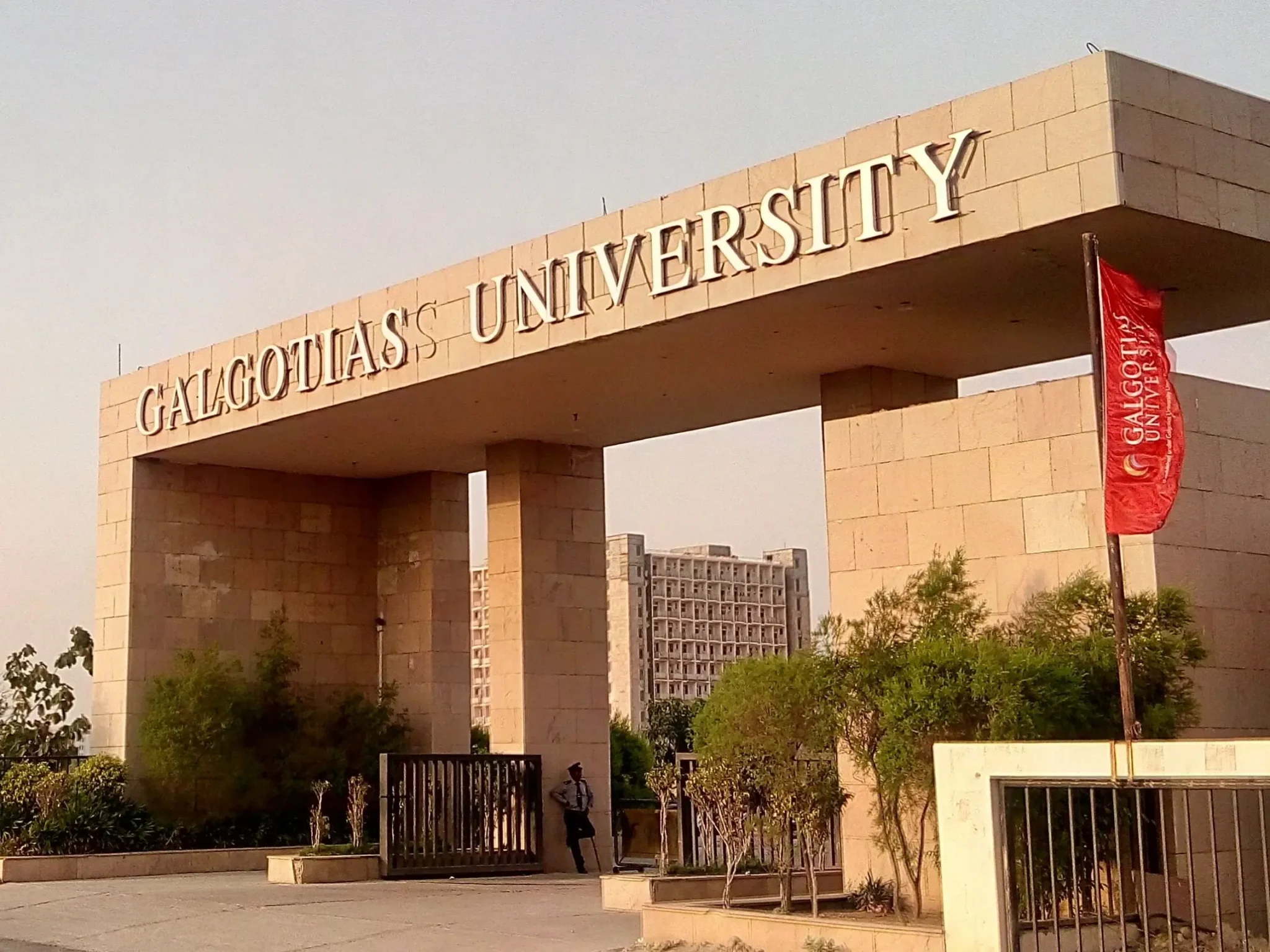
Galgotias University, a Greater Noida-based institution participating in the summit’s expo segment, was asked to vacate its exhibition space following controversy over a robotic dog displayed at its booth, according to government sources cited on Wednesday. The development followed a wave of criticism alleging that the university had presented a Chinese-manufactured robot as an indigenously developed product.
The summit, held at Bharat Mandapam, had brought together policymakers, industry leaders and academic institutions to showcase advances in artificial intelligence. Instead, attention shifted to a quadruped robot named “Orion.”
The Robodog at the Center
Videos circulating online showed the AI-powered robotic dog in motion during media interactions at the summit. Soon after, social media users identified the device as the Unitree Go2 — a commercially available robot manufactured by China-based Unitree Robotics.
Critics alleged that the device had been introduced under a different name and presented in a manner that suggested in-house development. The episode sparked accusations that imported technology had been misrepresented as indigenous innovation, a particularly sensitive issue at a forum positioned as a platform for India’s technological advancement.
Galgotias University issued a clarification stating that the robotic dog had been procured from Unitree and used for academic and research exposure. The university said it had “never claimed” to have built the device and described it as a learning tool intended to provide students with hands-on experience in advanced robotics.
Conflicting Accounts and Official Reaction
While the university maintained that it had not misrepresented the origin of the device, government sources indicated that organizers had asked the institution to vacate the expo venue in light of the controversy. The decision, according to those sources, came amid concerns that the episode was overshadowing the broader objectives of the summit.
The university, however, said it had not received any formal directive from the government ordering it to leave. The divergence in accounts added another layer to an already fast-moving narrative shaped largely by viral video clips and platform-based fact-checks.
An X Community Note attached to one of the widely shared posts challenged the university’s assertion that it had never implied authorship, stating that the robot had been renamed and described in ways that suggested institutional development. The debate unfolded in real time, reflecting how reputational disputes now play out publicly and instantly in digital forums.
Innovation, Optics and National Sensitivities
The controversy comes at a moment when India’s artificial intelligence ambitions are intertwined with broader themes of self-reliance and strategic autonomy. At a summit framed around domestic capability and global leadership, the optics of showcasing a Chinese-manufactured device — particularly if ambiguously presented — carried political and symbolic weight.
Universities and research institutions routinely acquire advanced foreign hardware for academic experimentation. Yet in a geopolitical climate where supply chains and national branding intersect, attribution can take on heightened significance.
The AI Impact Summit continued under intensified scrutiny, even as organizers sought to refocus attention on policy announcements and technological demonstrations.
For Galgotias University, the episode underscores the risks inherent in high-visibility technology showcases. In an era where video clips travel globally within minutes and claims are rapidly dissected online, the margin for ambiguity narrows.
What remains clear is that a robotic dog, intended as a demonstration tool, has become emblematic of a larger debate — not merely about one institution’s booth, but about how innovation is defined, displayed and defended on an international stage.
