

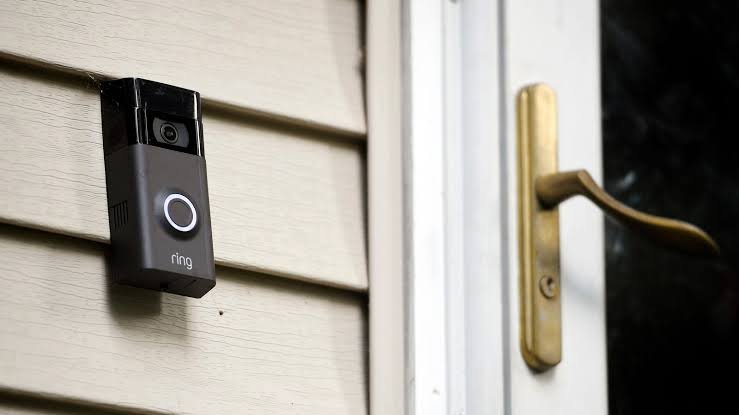

A nonprofit group has offered more than $11,000 to anyone who can modify a popular video doorbell so it no longer depends on Amazon’s servers — a challenge that has drawn donations, scrutiny and a renewed debate over who controls the devices mounted outside America’s front doors.
A Bounty Born of Backlash
Ring, the Amazon-owned maker of video doorbells and home security cameras, has found itself at the center of renewed controversy in recent months. Critics have pointed to the company’s growing footprint in American neighborhoods and its data-sharing practices, describing the system as part of an unprecedented civilian surveillance network.
The criticism intensified following what some described as a dystopian Super Bowl advertisement, which rekindled concerns that the company’s network of cameras — mounted on porches, garages and doorframes across the country — had become deeply embedded in everyday life. In the backlash, frustration has occasionally turned theatrical: some device owners have filmed themselves smashing their cameras rather than attempting to alter or disable them. Now, that frustration has coalesced into a more technical challenge.
The Fulu Foundation, a nonprofit organization focused on digital ownership rights, has announced a public bounty: more than $11,000 to any developer who can produce a software modification that prevents Ring devices from sending data to Amazon’s servers and removes the requirement that they connect to Amazon in order to function. The bounty was first reported by Wired.
Certified Cyber Crime Investigator Course Launched by Centre for Police Technology
The Terms of the Challenge
On its website, the Fulu Foundation describes the effort as a step toward restoring control to device owners. The proposed modification must be achievable using what the group calls “readily available” tools and must work on at least one model of Ring camera released after 2021.
The foundation says it will match up to the first $10,000 in public donations added to the bounty fund. Contributions can be made at any time. Judging by the early response, organizers say, the proposal has struck a nerve.
“Don’t have a [R]ing camera myself,” wrote one donor named David, who contributed $10. “But want to help the cause.”
The foundation’s description of the project frames the issue as one of control. “People who own security cameras bought them to make their homes more secure,” the bounty announcement reads. “But without control of the video those cameras generate, Ring owners might actually be making them less so.”
The winning solution, according to the posted criteria, must allow the device to be directly integrated with a local personal computer or server — either through Wi-Fi or a physical connection — giving the owner full authority over the video doorbell’s operation.
Data, Ownership and the Surveillance Question
At the heart of the challenge is a broader critique of how consumer technology companies manage user data.
Purchasing a Ring camera means agreeing to terms under which Amazon stores recorded footage indefinitely, shares data with law enforcement upon request, and incorporates footage into what critics describe as a neighborhood surveillance network, with individual homes serving as nodes. The Fulu Foundation argues that these arrangements shift practical control away from the individual buyer.
“At the end of the day, control is at the heart of security,” Kevin O’Reilly, a co-founder of the foundation, told Wired. “If we don’t control our data, we don’t control our devices.”
The organization was founded by Louis Rossmann, a technology repair advocate and YouTube personality known for campaigning on right-to-repair issues. Through its website, Fulu offers financial incentives to individuals who can successfully modify consumer devices to remove features the group considers harmful or restrictive.
The Ring bounty is one of three currently active on the foundation’s site. The others target the Xbox Series X and the GE Refrigerator SmartWater Filter.
A Moment of Technical Reckoning
The Ring challenge arrives at a moment when consumer awareness of data practices is rising, and when the distinction between ownership and access has grown increasingly blurred. Devices that appear to function independently often rely on cloud services to operate fully.
For Ring owners, that dependence is embedded in the product’s design. The cameras transmit video to Amazon servers and require connection to Amazon infrastructure to function as intended.
The Fulu Foundation’s bounty does not call for physical destruction or hardware dismantling. Instead, it seeks a software-based modification that would sever the device’s reliance on Amazon’s cloud and return full operational authority to the purchaser.
“It’s been an interesting moment for people to grasp exactly the trade-off that they have had to accept when they installed these security doorbell cameras,” Mr. O’Reilly told Wired. “People who install security cameras are looking for more security, not less.”
Whether a workable modification will emerge remains uncertain. But the bounty itself — modest in dollar terms yet symbolically pointed — has already reframed the debate. Rather than smashing cameras in protest, participants are being asked to reprogram them.
And in that shift from spectacle to code, the question at stake remains the same: who ultimately controls the devices that watch the front door?
