


As artificial intelligence moves deeper into enterprise systems and digital workflows, cybersecurity professionals are confronting a shift that is both technical and strategic. The old model of cyber defense, built around static rules, delayed detection and human-led response, is being tested by adversaries who can now use AI to automate attacks, refine deception and probe vulnerabilities at scale.
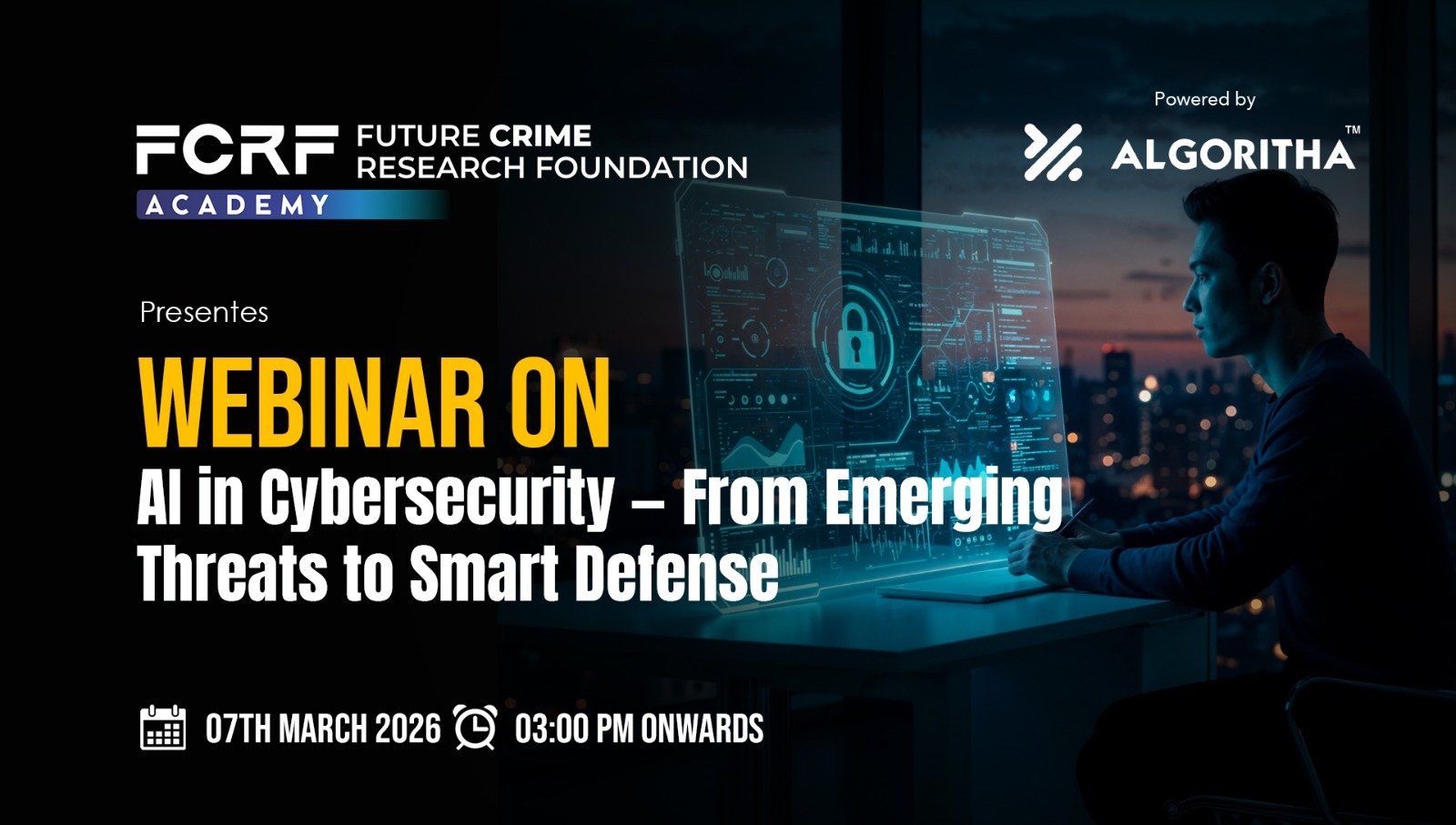
That emerging threat landscape is the premise behind FCRF Academy’s upcoming webinar, “AI in Cybersecurity – From Emerging Threats to Smart Defense.” Scheduled for April 7 at 3:00 p.m. onward, the session is being framed as a focused discussion on how AI is changing the architecture of cyber risk and what kinds of defensive thinking that transformation now demands. The registration link provided for the session is: https://fcrf.academy/webinar-registration.
The webinar is open to cybersecurity professionals, law enforcement officers, IT teams and organizational leaders, a reflection of how widely the issue now reaches. AI-driven cyber threats are no longer a concern confined to specialist security teams. They increasingly affect the broader institutions responsible for protecting public systems, corporate infrastructure and digital trust.
When AI Strengthens the Attacker
The source material for the webinar describes a threat environment in which cybercriminals are using AI to generate sophisticated phishing campaigns, bypass traditional security controls and exploit vulnerabilities with unusual speed.
That description aligns with a growing concern across the cybersecurity field: that AI is reducing the cost of attack while increasing its sophistication. Deepfake-enabled fraud, automated malware, intelligent reconnaissance and adaptive intrusion methods are all cited as attack scenarios to be discussed during the session.
What makes these risks especially significant is not simply that they are new, but that they compress time. A phishing lure can be personalized more convincingly. A vulnerability can be probed more quickly. A malicious campaign can be iterated at a volume that traditional review systems may struggle to match.
The result is a widening imbalance between attackers who can scale with automation and defenders who still often rely on fragmented tools, delayed escalation and overstretched human teams.
The Turn Toward Smart Defense
The webinar’s emphasis, however, is not only on the offensive side of AI. It is also on how modern defenders are beginning to use the same class of technologies to regain speed and visibility.
According to the session outline, the discussion will focus on AI-powered defense mechanisms such as advanced threat detection using machine learning models, AI-driven vulnerability management, secure code optimization and review using AI tools, behavioral analytics, anomaly detection, and automation in incident response and cyber forensics.
That list suggests a broader rethinking of cyber defense. Instead of treating AI merely as an efficiency layer, the approach being proposed is more structural: integrating intelligent systems into core security operations so that detection, analysis and response can happen with greater precision and speed.
For many organizations, this is becoming less a matter of innovation than necessity. The question is no longer whether AI will affect cybersecurity, but whether institutions can adapt quickly enough to use it responsibly before adversaries gain a deeper advantage.
A Webinar Framed as an Entry Point
FCRF Academy is presenting the session as a practical briefing rather than a broad conceptual conversation. The stated goal is to provide participants with actionable strategies that can be integrated into existing cybersecurity frameworks, helping organizations stay ahead in what the organizers describe as a rapidly evolving threat landscape.
The details are straightforward. The webinar will be held on April 7, with the last date to register listed as April 7 at 11:00 a.m. Registration is mandatory, and the official Zoom access link will be shared through email communication with registered participants. The registration link provided for the session is: https://fcrf.academy/webinar-registration.
In many ways, the webinar reflects a wider change in cybersecurity discourse itself. AI is no longer being discussed only as a future risk or abstract possibility. It is being treated as an operational reality that institutions must understand now, before the gap between machine-speed attack and human-speed defense grows wider still.
