

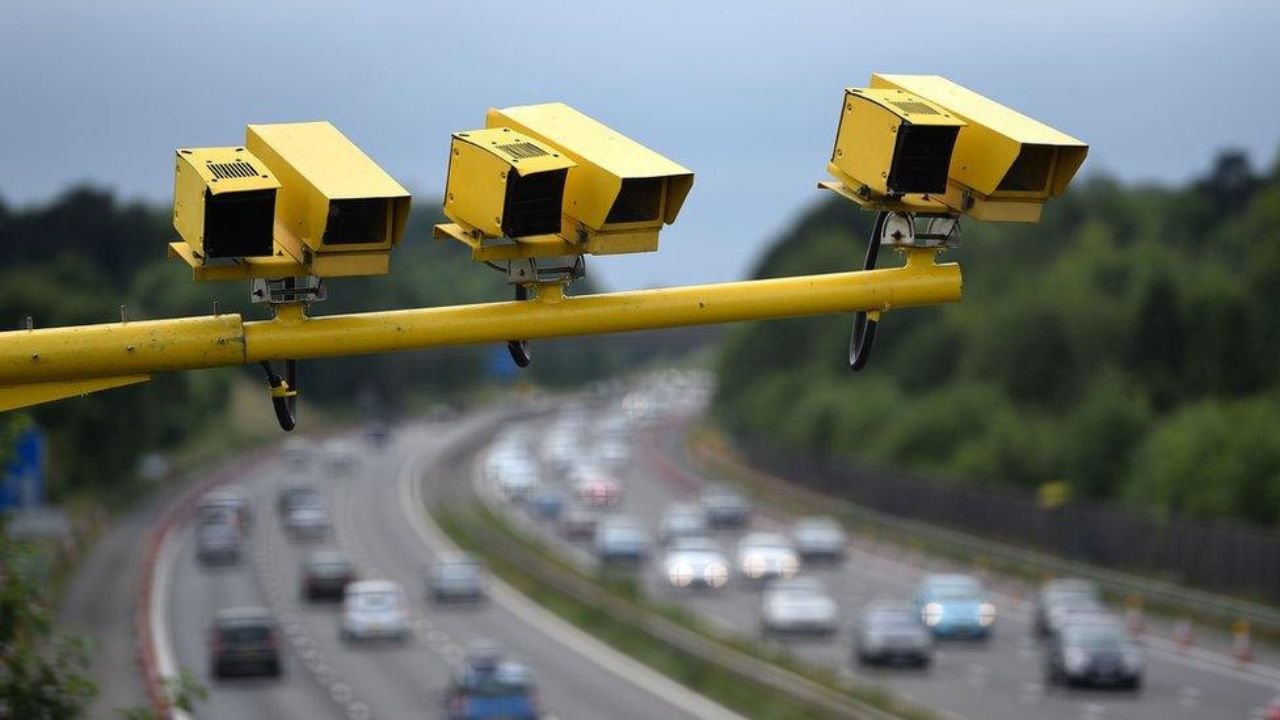

London | December 16 | England’s road enforcement system has come under scrutiny after National Highways admitted that thousands of motorists were wrongly issued speeding penalties over the past four years due to a technical fault. According to official figures, 2,650 speed camera activations since 2021 were incorrect, resulting from a lack of synchronisation between speed cameras and variable speed limit signs.
National Highways said the issue affected certain motorways and major A-roads, where variable speed limits are electronically adjusted based on traffic conditions. In these locations, a delay of around 10 seconds occurred between the updated speed limit displayed on overhead signs and the information received by enforcement cameras. As a result, some drivers were flagged for speeding even though they were complying with the newly reduced or revised limit.
Relief for affected motorists
Authorities have confirmed that drivers impacted by the error will be contacted directly by the relevant police forces. Any fines wrongly imposed will be fully refunded, and penalty points added to driving licences will be removed where applicable.
Officials clarified, however, that not every camera activation leads to enforcement action. Consequently, not all of the 2,650 incorrect activations resulted in fines. Nonetheless, all cases where penalties were imposed are now under review to ensure corrective action is taken.
National Highways acknowledges error
National Highways issued a formal apology for the mistake. Chief Executive Nick Harris said the organisation had identified a fix for the problem and stressed that road safety remains the top priority.
“All drivers should continue to observe the posted speed limits as normal,” Harris said. “Anyone who has been affected will be contacted by the relevant police force.”
He added that enforcement remains in place, and motorists should not assume speed limits are optional while the issue is being resolved.
What went wrong technically
According to National Highways, the fault stemmed from an “anomaly” in the interaction between variable speed cameras and digital sign systems. When speed limits changed—often in response to congestion or incidents—the update did not immediately reach the cameras in some cases. The cameras therefore continued to enforce the previous speed limit, incorrectly identifying compliant drivers as offenders.
The issue affected around 10% of England’s motorway and major A-road network. This includes all variable speed cameras on smart motorways and two cameras on the A14, a key route linking the North and West Midlands with East Anglia.
Putting the numbers in context
National Highways said more than six million camera activations occurred on the affected roads between 2021 and 2025. Against this backdrop, the 2,650 incorrect activations amount to fewer than two per day on average. Despite the relatively small proportion, the authority conceded that even a single wrongful fine is unacceptable, prompting a full technical review.
Police pause enforcement
In response, several police forces have temporarily suspended issuing fines from variable speed cameras until confidence is restored in the system’s accuracy. National Highways said it is working closely with law enforcement agencies to revalidate camera data and prevent any future wrongful prosecutions.
Transport department response
The UK Department for Transport also issued a statement apologising to affected motorists. A spokesperson said safety had not been compromised and emphasised that corrective measures are being implemented in coordination with police forces.
“Enforcement remains in place, and the public can be confident that only motorists who genuinely break the rules will be penalised,” the spokesperson said.
Questions over smart motorways
The episode has renewed debate around the reliability of smart motorways and digital traffic management systems, which rely heavily on real-time data exchange. Transport experts argue that as road networks become increasingly technology-driven, system integrity, timing accuracy, and real-time synchronisation are critical to maintaining public trust.
For now, authorities insist the fault has been identified and addressed. Drivers have been assured that future enforcement will be based on accurate, verified data, and that no motorist will be penalised for failures in the system rather than their own actions.
