

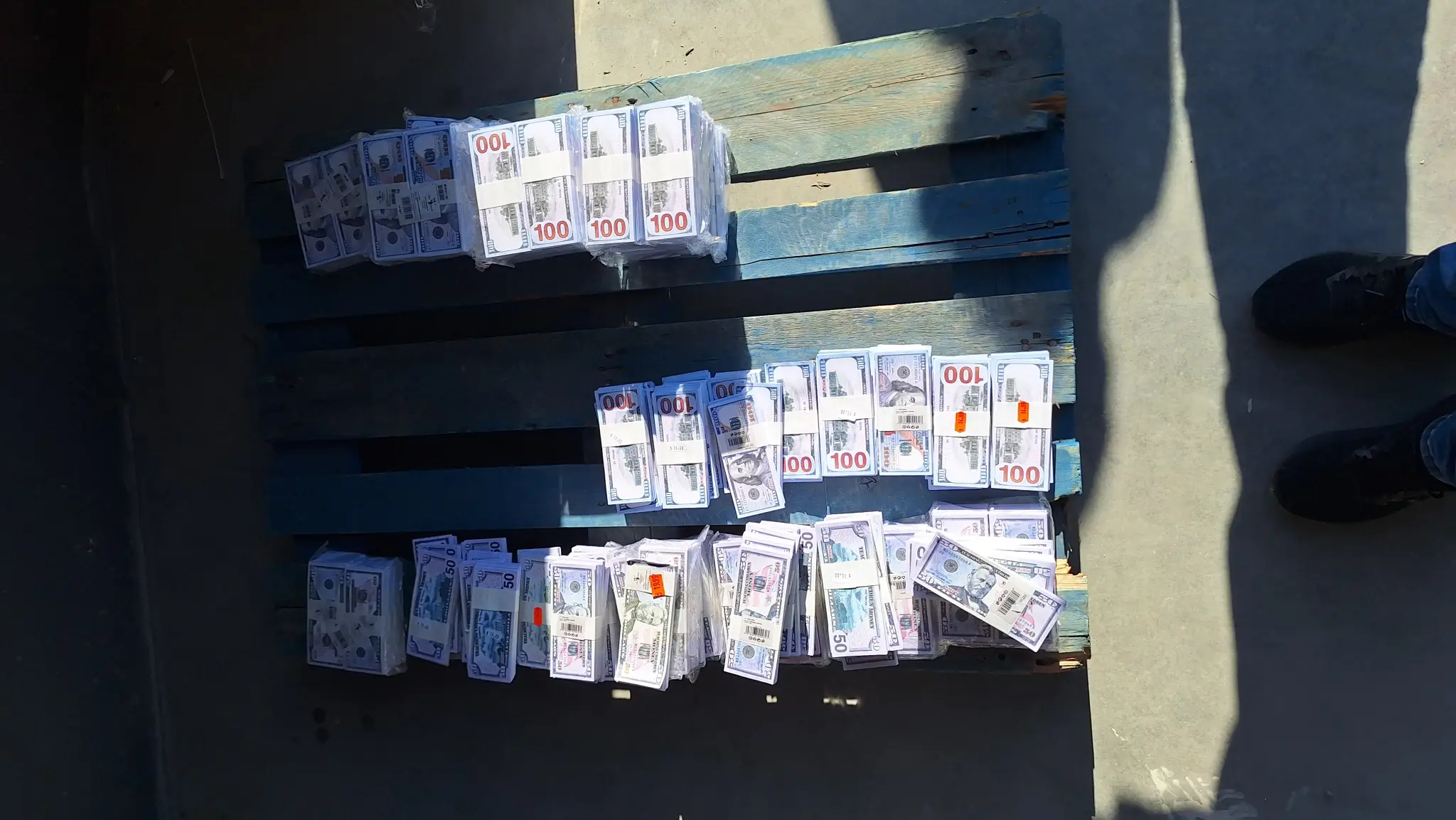

In a sweeping, months-long operation spanning 18 countries, European law enforcement agencies intercepted more than seven million counterfeit banknotes and coins — most traced back to shipments from China — preventing an estimated €1.2 billion in fake currency from entering circulation.
A Postal Trail of Fake Cash
Between June and November 2025, customs and police authorities across Europe quietly tracked suspicious parcels moving through international mail networks. By the time the six-month operational phase concluded, officers had seized 379 shipments containing counterfeit currency.
The coordinated action, known as Operation DECOY III and led by Austria, Portugal and Spain under the coordination of Europol, focused on criminal networks that relied on postal and courier services to distribute forged banknotes and coins. According to officials, the strategy centered on identifying high-risk consignments, intercepting them at entry points and tracing their routes back to organized suppliers.
The scale of the seizures was striking. In total, authorities intercepted more than seven million counterfeit items. The estimated face value of the confiscated banknotes and coins was €1.2 billion — currency that investigators say was destined for markets across Europe and beyond.
The operation triggered 70 new criminal investigations into the networks believed to be orchestrating production, shipment and distribution.
Certified Cyber Crime Investigator Course Launched by Centre for Police Technology
The Scale and Composition of the Seizures
Of the seven million counterfeit items seized, the largest share consisted of euro currency. Authorities reported confiscating 4.8 million euro banknotes and coins. In addition, officers seized 2.3 million counterfeit U.S. dollar items, 23,302 British pound notes and coins, and 4,800 Swiss franc items.
Officials described the counterfeit notes as altered-design imitations, often produced in high volumes and shipped in bulk parcels to distributors within Europe. The quantities suggested an industrial-scale operation rather than isolated acts of forgery.
Romanian authorities alone intercepted over 4.8 million altered-design euro banknotes during the operation. In a separate action, they dismantled a storage facility that contained more than 223,000 counterfeit notes that had been shipped from China.
Elsewhere, three separate seizures in Portugal, the United Kingdom and the United States uncovered more than 220,000 counterfeit coins denominated in euros, pounds and U.S. dollars. Investigators said all of those consignments were traced back to China.
A Network Spanning Continents
More than 90 percent of the seized counterfeit currency was linked to shipments originating in China, underscoring what officials described as a major external source of forged cash entering European markets.
The operation involved law enforcement agencies from Austria, Bulgaria, Croatia, Czechia, France, Germany, Greece, Ireland, Italy, the Netherlands, Poland, Portugal, Romania, Serbia, Spain, Türkiye, the United Kingdom and the United States.
Europol and the European Anti-Fraud Office (OLAF) supported the action by facilitating intelligence exchanges, identifying suspicious parcels and refining risk indicators for future interceptions. Authorities said cooperation across customs services and police units was critical in tracking parcels as they moved across borders.
The structure of the criminal networks remains under investigation, but officials indicated that distribution relied heavily on postal routes to minimize detection and fragment shipments into smaller consignments.
Investigations Moving Forward
The results of Operation DECOY III are being released following the conclusion of the operational phase and subsequent debriefings among participating agencies.
Law enforcement officials said the seizures represent both a disruption of existing supply chains and the beginning of further inquiries. The 70 investigations launched during the operation are expected to examine the production sources, financial beneficiaries and distribution channels behind the counterfeit shipments.
Authorities have not disclosed arrests or prosecutions at this stage, but they emphasized that intelligence gathered during the six-month operation will inform future enforcement actions and monitoring of cross-border postal traffic.
For now, officials say, the removal of millions of counterfeit banknotes and coins from circulation has interrupted a pipeline that spanned continents and relied on the speed and anonymity of international mail — a system that investigators believe had been quietly exploited for years.
