

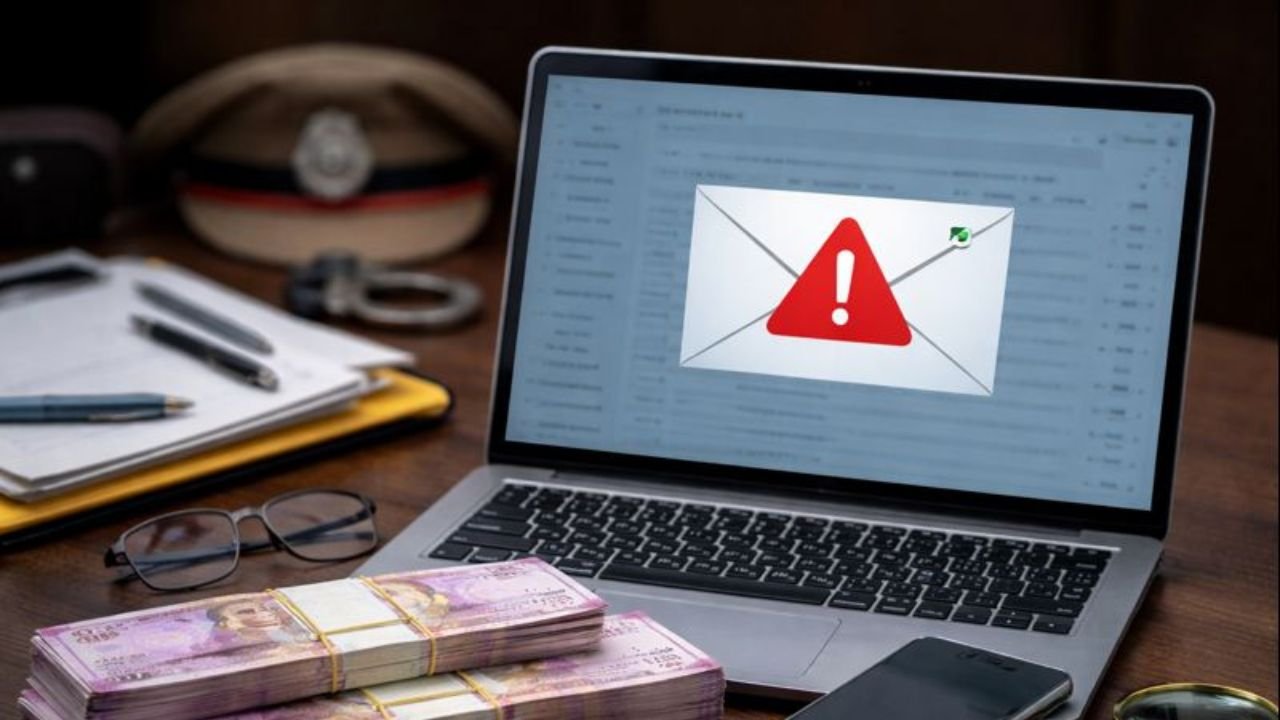

Bengaluru | Bengaluru Cyber Crime Police have busted a well-planned email spoofing fraud and successfully recovered ₹2.16 crore that had been siphoned off through fraudulent means. The amount was due as a business payment to Hyderabad-based pharmaceutical major Dr. Reddy’s Laboratories and had been diverted by cybercriminals using forged email identities.
According to officials, the fraud was executed by an international cyber network that gained unauthorised access to business email communication and used deceptively similar fake email addresses to manipulate the payment process.
Certified Cyber Crime Investigator Course Launched by Centre for Police Technology
How the Fraud Was Executed
Investigators said a Bengaluru-based pharmaceutical supplier was expecting a payment of ₹2.16 crore as part of a routine commercial transaction. Cybercriminals intercepted the email correspondence between the two companies and, just before the scheduled transfer, sent forged emails altering the bank account details.
The fake emails closely replicated the language, format, and domain structure of the genuine business accounts, making detection difficult. As a result, the funds were transferred in phases into a mule bank account controlled by the fraudsters.
Swift Bank Action Prevents Loss
Upon receiving the complaint, Cyber Crime Police immediately alerted the concerned bank. Acting on the notice, a branch of Bank of Baroda in Ahmedabad, Gujarat, froze the suspicious account without delay, preventing any further withdrawal or misuse of the funds.
Police officials said the mule account was registered in the name of an elderly woman, who was allegedly used as a conduit. Preliminary findings suggest the account holder was not the actual beneficiary of the crime.
Foreign Link Established
Technical analysis confirmed that the spoofed email ID used in the fraud had been created specifically for this operation. Digital trails traced the origin of the email activity to Nigeria, confirming the involvement of an overseas cybercrime network.
Officials said the modus operandi indicates that similar frauds may have been attempted against other companies using identical techniques.
Court Orders Release of Funds
After completion of legal formalities, the court passed an order on January 5, 2026, directing the release of the frozen amount. The entire ₹2.16 crore was subsequently returned to the concerned pharmaceutical company.
Police described the recovery as the result of timely coordination between investigators and the banking system, which helped avert a major financial loss.
Probe Continues, Accused Being Traced
Cyber Crime Police are continuing efforts to identify, trace, and apprehend the accused linked to the international fraud syndicate. Investigators are also examining whether any domestic facilitators or local operatives assisted the network.
Authorities have advised corporate entities to strengthen safeguards around high-value digital transactions, including strict email verification protocols, domain authentication checks, and multi-layer approval mechanisms.
The case once again underlines how a single lapse in digital security can lead to losses running into crores — and how swift institutional response remains the most effective defence against cyber fraud.
About the author — Suvedita Nath is a science student with a growing interest in cybercrime and digital safety. She writes on online activity, cyber threats, and technology-driven risks. Her work focuses on clarity, accuracy, and public awareness.
